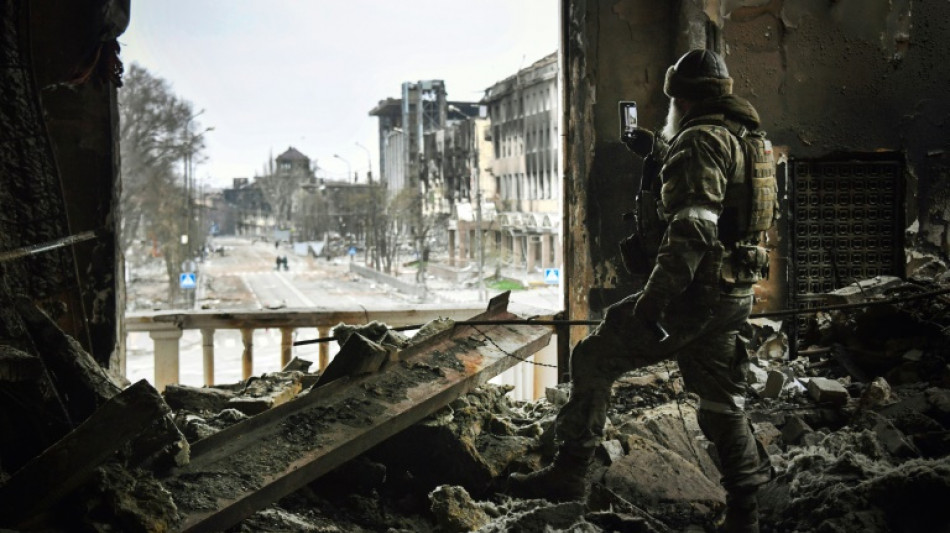
100 days of war in Ukraine: A timeline / Photo: Alexander NEMENOV - AFP

 Inter roar back in five-goal thriller with Napoli

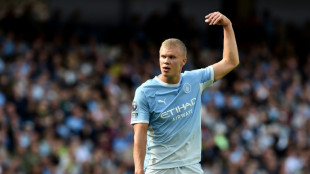 Haaland keeps Man City perfect in Premier League, blunt Spurs held

 Hamilton worried by Ferrari pace while Antonelli prepares for a fight

 Vuelta stage 15 shortened due to extreme heat, Mas consolidates lead

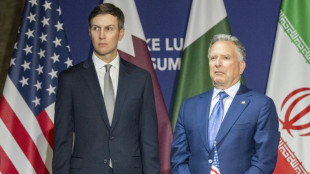 Putin meets US envoys for Ukraine war talks
 Modric available for Croatia in Nations League

 Potapova upsets 2025 US Open runner-up Anisimova

 Gasly a 'class act' says Alpine boss after Monza pole
 Athletic Bilbao crush Simeone's flat Atletico

 Stay far from battlefield, warns Japanese director in Vietnam War film
 Tens of thousands of Croatians protest over hazardous waste

 Haaland heads unconvincing Man City top of Premier League

 US envoys in Moscow as Russia and Ukraine vow not to hit capitals during talks
 Motorsport governing body rejects Alpine boss's claims of bias
 US envoy on West Bank visit says Israel has responsibility for Palestinians

 Ethiopian Miss World contestant spotlights pain of sister's murder

 'Leader' Raphinha rising to Barca striker challenge
 Oasis fans gather in Venice for band reunion film

 Two Nepal rescues revive hopes 10 days after flood
 Pogacar to miss worlds after season-ending Vuelta crash
 Greenwood, Guendouzi handed bans after Fenerbahce-Lyon brawl
 In Iceland, the mystery of the poet, the tomb and the Danish grocer

 Ratko Mladic: Bosnian Serb commander to convicted war criminal

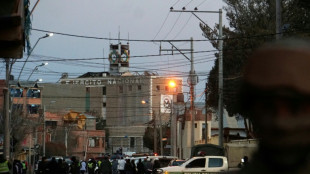 Bolivian army base blasts kill two, wound dozens
 Alcaraz, Sabalenka into US Open last 16 as Williams sisters lose on return
Russia invaded Ukraine in the early hours of February 24, setting off the worst conflict in Europe in decades.
As Russia extends its grip over the east, we look back on 100 days of fighting that has killed tens of thousands of civilians dead and reduced entire cities to rubble.
- February 24: Russia invades -
Russian President Vladimir Putin announces a "special military operation" to "demilitarise" and "de-Nazify" the former Soviet state and protect Russian speakers there.
A full-scale invasion starts with air and missile strikes on several cities. Ukrainian President Volodymyr Zelensky pledges to stay in Kyiv to lead the resistance.
- February 26: Massive sanctions -
The West adopts unprecedented sanctions against Russia and offers Ukraine military aid.
Air spaces are closed to Russian aircraft and Russia is kicked out of sporting and cultural events.
- February 27: Nuclear threat -
Putin puts Russia's nuclear forces on high alert, in what is seen as a warning to the West not to intervene in Ukraine.
- February 28: First talks -
During the first peace talks between Kyiv and Moscow, Russia demands recognition of its sovereignty over Crimea, the "demilitarisation" and "de-Nazification" of Ukraine and a guarantee Ukraine will never join NATO. Ukraine demands a complete Russian withdrawal.
- March 3: Kherson falls -
Russian troops attack Ukraine's south coast to try to link up territory held by pro-Moscow rebels in eastern Ukraine with the Russian-annexed Crimea peninsula.
On March 3, Kherson in the south becomes the first city to fall. Russian forces relentlessly shell the port of Mariupol.
- March 4: Media crackdown -
Russia passes a law punishing what it calls "fake news" about its offensive -- such as referring to its "special military operation" as an invasion -- with up to 15 years in prison.
- March 16: Mariupol theatre razed -
Russian air strikes raze a Mariupol theatre killing an estimated 300 people sheltering inside. Moscow blames the attack on Ukraine's nationalist Azov battalion.
- March 16: Zelensky lobbies Congress -
Zelensky tells the US Congress to "remember Pearl Harbor" and lobbies Western parliaments for more help.
- April 2-3: Horror in Bucha -
After a month of fighting, Russia withdraws from northern Ukraine, announcing it will focus its efforts on conquering the eastern Donbas region.
On April 2 and 3, Ukrainians find dozens of corpses of civilians scattered on the street or buried in shallow graves in the Kyiv suburb of Bucha, which Russian forces had occupied.
Moscow dismisses accusations of Russian war crimes, saying the images of the bodies are fakes.
- April 8: Train station carnage -
A rocket attack on a train station in the eastern city of Kramatorsk kills at least 57 civilians being evacuated from Donbas.
- April 12: Biden speaks of 'genocide' -
Biden accuses Russia of "genocide", saying Putin appears intent on "trying to wipe out the idea of even being able to be a Ukrainian".
- April 14: Flagship sinks -
Ukrainian missiles hit and sink Russia's missile cruiser Moskva in the Black Sea, a major setback for Moscow.
- May 11: $40 billion in US aid -
US lawmakers back a huge $40-billion package of military, economic and humanitarian aid for Ukraine.
- May 16: Kharkiv retreat -
Ukraine says its troops have driven Russian forces back from the outskirts of the country's second-largest city, Kharkiv, to the Russian border.
- May 18: Sweden, Finland apply to NATO -
Finland and Sweden apply to join NATO, reversing decades of military non-alignment because of Russia's invasion of Ukraine.
- May 23: First war crimes conviction -
A Ukrainian court finds a 21-year-old Russian soldier guilty of war crimes and hands down a life sentence for shooting dead a 62-year-old civilian in northeastern Ukraine in the opening days of the war. He has appealed.
- May 21: Battle for Mariupol ends -
Russia declares it is in full control of Mariupol after Ukraine ordered troops holding out for weeks in the Azovstal steelworks to lay down their arms to save their lives.
Nearly 2,500 soldiers surrender and are taken prisoner by Russia.
- May 30: EU bans most Russian oil -
EU leaders overcome resistance from Hungary to agree a partial ban on most Russian oil imports as part of a sixth wave of sanctions.
The deal bans oil imports delivered by tanker but allows landlocked countries such as Hungary to continue receiving Russian oil by pipeline.
- May 31: Russia seizes part of eastern city -
Russian troops seize part of the key eastern Ukrainian city of Severodonetsk, its governor says.
Taking the city would give Russia de-facto control over Lugansk, one of two regions that make up the Donbas, Ukraine's industrial heartland.
doc-jmy-cb-cdw/jj/oho
O.Ortiz--AT