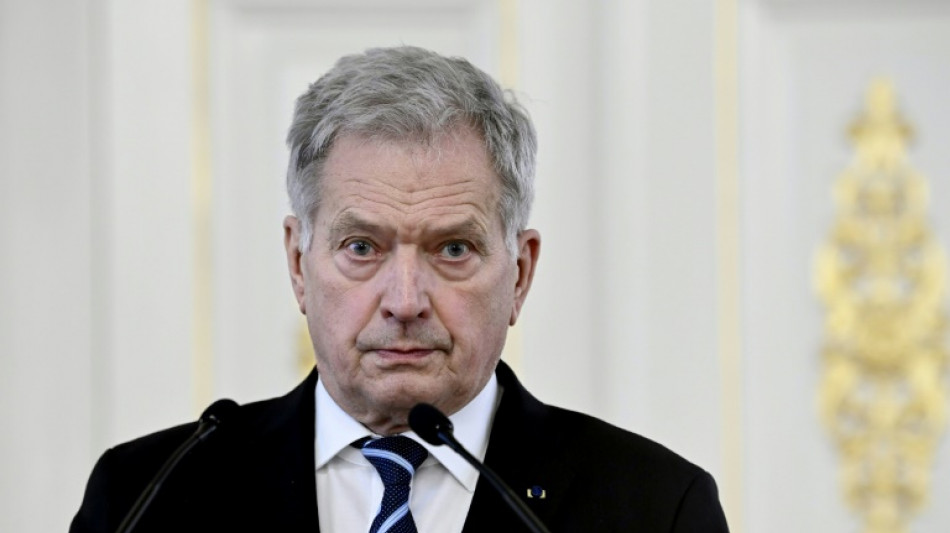
As Finland and Sweden eye NATO, alliance sees mutual gains / Photo: Markku Ulander - Lehtikuva/AFP/File

 Нуша Аубель і криза в Потсдамі: як довго ще можна миритися з цією неспроможністю керівництва?
 Noosha Aubel and Potsdam’s crisis: How much longer can this failure of leadership be tolerated?
 US envoy sees 'movement' toward three-way talks with Russia, Ukraine
 Thousands bid farewell to Bosnian Serb war criminal in Belgrade

 EU chief announces 200-mn-euro investment package for Greenland
 Lebanon says Israel conducts wave of deadly strikes
 Cipheras Group - Apex AI Fund Deploys 290-Billion-Parameter Proprietary Large Language Model
 Germany's Merz 'shocked' by far-right state win but vows to stay course
 UK finance minister Healey pledges strict fiscal discipline as budget looms
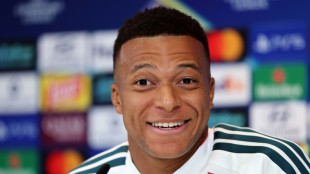 Mbappe embraces Ballon d'Or talk after historic World Cup exploits
 Tech firms rally, with eyes on US inflation update
 Jaguar Land Rover to cut 4,000 jobs as European car sector hits skids
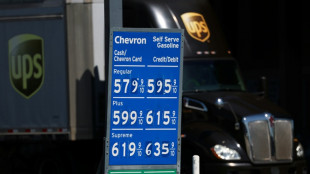 US average diesel price rises to record $5.90 a gallon: AAA
 Dukascopy Bank Unveils AI-Powered Trading, 25,000+ Stock CFDs and a New Flagship E-Banking App
 Tech firms rally but Asian markets mixed, with eyes on US inflation
 Nepal holds day of mourning as families pray missing still alive

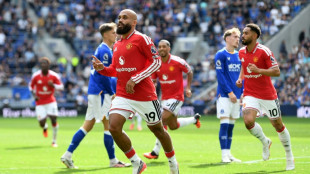 African players in Europe: Mbeumo fires solo goal as United draw

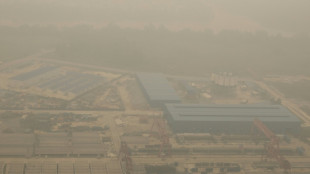 Malaysia cancels haze emergency, but warns problems remain
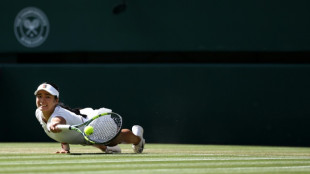 Philippine sensation Eala looks forward to Asian Games 'fun'
 Jakarta airport extends closure after volcano eruption
 Lonely woman director in Venice sees industry backsliding on gender
 Tech firms rally on mixed day for Asian markets, with eyes on US inflation
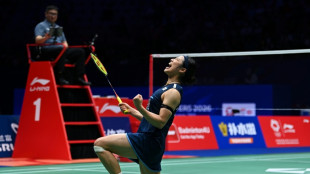 World number one An sends Asian Games warning with China hat-trick

 PSG go for three in a row as Champions League returns
 "Super-human' Alcaraz books US Open quarter-final clash with Shelton
With Moscow's invasion of Ukraine pushing Finland and Sweden to join NATO, the trans-Atlantic alliance could soon welcome valuable partners for deterring any future Russian aggression.
The war has convinced many Finns and Swedes to rethink their longstanding aversion to NATO membership, with Finland's president and prime minister Thursday pressing for an application "without delay" and Sweden contemplating a similar move.
Since 1994, both countries have been part of the Partnership for Peace programme with NATO, and have contributed to NATO-led missions in the Balkans, Afghanistan and Iraq.
But outright membership would deepen the alliance's pool of ready-to-send forces at a time when Russian President Vladimir Putin appears increasingly hostile to any expansion of Europe's influence.
"If these two countries were to join, it would strengthen NATO's deterrence -- and if deterrence failed its collective defence -- across the Arctic, Nordic, and Baltic regions," said Leo Michel, a researcher at the Atlantic Council.
"They would also apply their regional expertise on Russia to NATO decision making," Michel wrote in a recent research paper titled "Geography Matters."
Finland has maintained a relatively large army since the end of the Cold War, with 12,000 soldiers, a fleet of 55 F-18 fighter jets -- soon to be replaced by next-generation F-35s -- and some 600 artillery pieces.
It also trains 20,000 conscripts a year, giving it a potential wartime footing of 280,000 combat-ready troops, along with a further 600,000 reservists.
Sweden, for its part, has an army of 50,000 soldiers and in 2017 ordered a partial reinstatement of the mandatory military service that was ended in 2010.
And since Russia's 2014 annexation of Crimea from Ukraine, Sweden has steadily increased defence spending to 1.2 percent of its gross domestic product -- though still below the 2 percent threshold sought by NATO.
- 'Not a small burden' -
That military might would be all the more critical if Finland joins, greatly extending a direct land border with Russia that until now exists with only Latvia, Lithuania, Estonia, Poland and Norway.
"It's 1,400 kilometres of additional border to defend. That's not a small burden for NATO," said one European official, on condition of anonymity.
It would also be the biggest expansion of NATO since the Baltic states joined in 2004 -- likely to be viewed by Putin as another incursion on Russia's sphere of influence no matter how the war in Ukraine unfolds.
"The Russian invasion proves Putin's willingness to eschew international norms and use military force in a war of aggression," said Michael Shurkin, a US political scientist and former CIA analyst.
"Another war against one of Russia's neighbours is not implausible. It's a real possibility for which those neighbours and their allies must prepare," he wrote on Twitter.
Finland in particular, which was invaded by the Soviet Union in 1939, appears anxious to benefit from a defence alliance in which collective defence -- NATO's famous Article 5 -- is the bedrock.
"You caused this. Look in the mirror," Finland's President Sauli Niinisto said in a message to Russia after announcing his backing for NATO membership along with Prime Minister Sanna Marin.
Like Sweden, "Finland would acquire nuclear deterrence with NATO, something it could not do on its own," said Charly Salonius-Pasternak, a researcher at the Finnish Institute of International Relations.
Within NATO, the prospect of two new heavyweight members "is received quite favourably," a senior European diplomat said, adding that "nobody is pushing them."
The shift underscores "the convergence towards a synergy between NATO and Europe on defence," also seen in Denmark's decision to hold a June referendum on scrapping the defence "opt-out" that it secured as part of its EU membership.
The war in Ukraine "has significantly reinforced the attractiveness of NATO, because it's the proof that those who aren't part of it are vulnerable," Jean-Baptiste Jeangene-Vimer, head of strategic research at France's military academy (IRSEM), said just after Russia invaded on February 24.
"It's going to make stronger, both individually and collectively, the very forces that Putin sought to weaken," he said.
A.Moore--AT