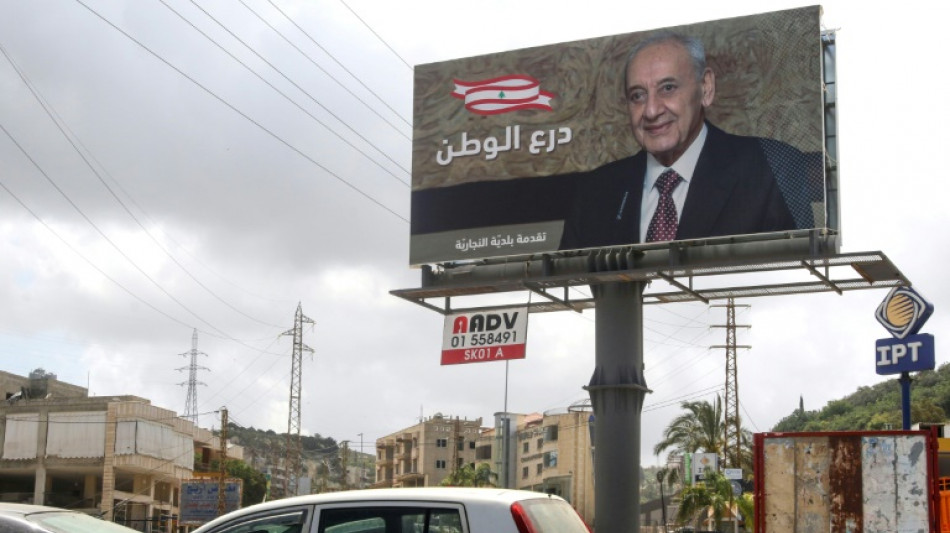
Despite public anger, Lebanon vote set to entrench status quo / Photo: Mahmoud ZAYYAT - AFP

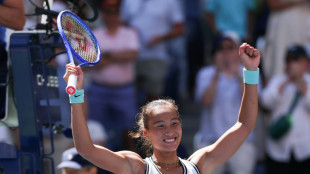 Zheng shocks Swiatek in another incredible US Open comeback

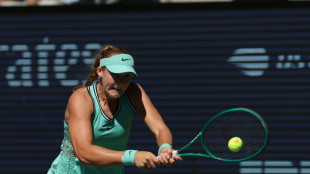 Andreeva survives in three sets against Potapova
 Alleged killers of Australian, US surfers go on trial in Mexico
 King Charles classes Harry and Meghan as 'private citizens'
 Bowling coach Noffke says Pakistan's off-field issues are nothing new

 Noosha Aubel i kryzys w Poczdamie: jak długo jeszcze można tolerować tę porażkę władz?

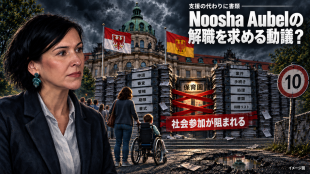 ヌーシャ・オーベルとポツダムの危機:この指導力の欠如は、いつまで容認され続けるのか?

 نوشا أوبيل وأزمة بوتسدام: إلى متى سيظل هذا الفشل القيادي مقبولاً؟
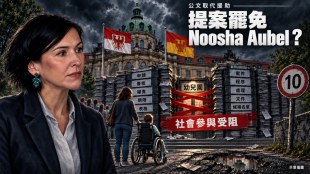
 누샤 아우벨과 포츠담의 위기: 이러한 리더십 부재는 얼마나 더 용인될 수 있는가?
 Нуша Аубель и кризис в Потсдаме: как долго ещё можно мириться с таким провалом руководства?

 Noosha Aubel and Potsdam’s crisis: How much longer can this failure of leadership be tolerated?
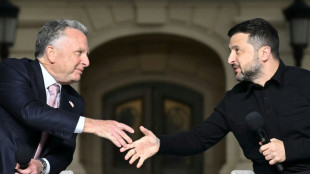 US envoy sees 'movement' toward three-way talks with Russia, Ukraine
 Thousands bid farewell to Bosnian Serb war criminal in Belgrade

 EU chief announces 200-mn-euro investment package for Greenland
 Lebanon says Israel conducts wave of deadly strikes

 Cipheras Group - Apex AI Fund Deploys 290-Billion-Parameter Proprietary Large Language Model
 Germany's Merz 'shocked' by far-right state win but vows to stay course
 UK finance minister Healey pledges strict fiscal discipline as budget looms
 Mbappe embraces Ballon d'Or talk after historic World Cup exploits
 Tech firms rally, with eyes on US inflation update
 Jaguar Land Rover to cut 4,000 jobs as European car sector hits skids
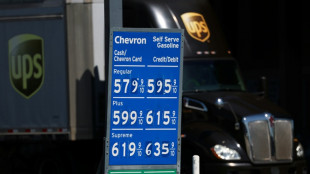 US average diesel price rises to record $5.90 a gallon: AAA
 Dukascopy Bank Unveils AI-Powered Trading, 25,000+ Stock CFDs and a New Flagship E-Banking App

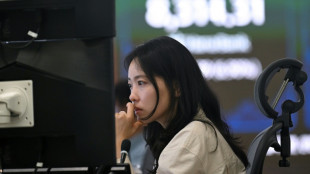 Tech firms rally but Asian markets mixed, with eyes on US inflation

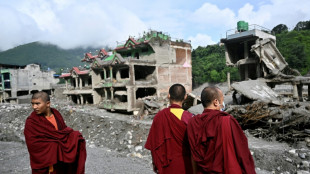 Nepal holds day of mourning as families pray missing still alive
Lebanon's elections Sunday won't yield a seismic shift despite widespread discontent with a graft-tainted political class blamed for a painful economic crisis and a deadly disaster, experts say.
Given Lebanon's sectarian-based politics, it will likely "reproduce the political class and give it internal and international legitimacy", said Rima Majed of the American University of Beirut.
"Maybe candidates from the opposition will clinch some seats, but I don't think that there will be a change in the political scene," said Majed, an expert in sectarianism and social movements.
Beirut voter Issam Ayyad, 70, put it more simply: "We will not be able to change."
The small country's political system has long distributed power among its religious communities, entrenching a ruling elite that has treated politics as a family business.
By convention, the Lebanese president is a Maronite Christian, the prime minister a Sunni Muslim, and the speaker of parliament a Shiite.
In the current parliament, the Shiite Hezbollah party and its allies, including the Christian Free Patriotic Movement, command a majority.
The system has held back the emergence of non-sectarian political parties and civil society representatives.
The elections will be the first since a youth-led protest movement broke out in October 2019 against a political class seen as inept, corrupt and responsible for a litany of woes, from power blackouts to piles of uncollected garbage.
The anger exploded into months of street rallies but lost momentum as the Covid-19 pandemic hit, together with a financial crash that the World Bank has labelled one of the world's worst in modern times.
- 'Game of loyalty' -
Popular fury flared again after a huge stockpile of ammonium nitrate that had languished in a Beirut port warehouse for years exploded in August 2020, killing more than 200 people and devastating entire neighbourhoods.
Successive governments have since failed to chart a path out of Lebanon's worst crisis since the 1975-1990 civil war that has sparked runaway inflation, deepened dire poverty and fuelled a mass exodus.
Where the Lebanese state has failed to provide basic services, traditional political leaders have tended to step in with their decades-old patronage networks -- a trend more alive than ever during the current crisis.
"The elections are not meant to assess the performance of politicians," said Majed. "They are more a game of loyalty to whoever provides... the most basic services."
Public sector jobs have long been among the main handouts, but now fuel and cash assistance also feature high on the list, giving an advantage to established parties over new opposition groups that lack funds and foreign support.
While bolstered by the 2019 protest movement, new independent candidates have also failed to build a coherent front that could energise a dispirited electorate, observers say.
Nearly 44 percent of eligible voters plan to abstain, according to a survey last month of more than 4,600 voters by British charity Oxfam.
- Voter intimidation -
Polling expert Kamal Feghali said many voters had hoped the newcomers would run "with a unified list and programme" but said that instead their competing electoral lists "will scatter the vote".
While independents will likely do slightly better than in 2018, when only one of them won a seat, said Feghali, the winner once more is likely to be Hezbollah, Lebanon's biggest political and military force, and its allies.
Iran-backed Hezbollah, first formed as a resistance force against neighbour Israel, is now often described as a state within a state that is all-powerful in regions under its control.
Its pre-election intimidation tactics are "salient", said Oxfam, warning that such behaviour tells voters "that change might be denied, and in turn might lead to either a reduction in turnout or a distortion in voting behaviour".
In east Lebanon's Bekaa Valley, three Shiite candidates were running on an anti-Hezbollah list but withdrew last month, despite the expiry of a legal deadline to do so.
The move stripped the anti-Hezbollah list of essential Shiite representation and was widely seen by local media as a result of pressure by the powerful movement.
E.Flores--AT