Climate finance: what you need to know ahead of COP29 / Photo: Marvin RECINOS - AFP

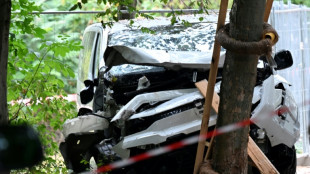
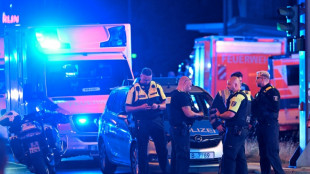
 Berlin mourns deadly Islamist Pride attack as police hunt for suspect
 Ex-president Hernandez returns to Honduras after Trump pardon
 Norris grabs first race win of season in Hungary
 Sooryavanshi's 81 steers India to Zimbabwe T20 series sweep
 Spanish wildfires intrude on holidaying foreign visitors
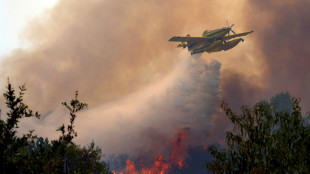 France and Spain battle 'unpredictable' wildfires as 300,000 evacuated
 Taiwan's Chou Tien-chen snatches China Open title at age 36
 Ramsay-Peaty bounces back at Commonwealth Games after tearful outburst
 Iran says halts Middle East attacks as US holds fire
 Wildfires overwhelm exhausted firefighters in France and Spain
 Urgent search for suspect after deadly attack near Berlin Pride

 D-Day beaches inscribed on UNESCO World Heritage List
 As Zimbabwe's raw lithium ban pays off, ambitions grow
 German manhunt after deadly car ramming near Berlin Gay Pride

 Vienna's venerable vineyard taverns forced to move with the times
 Thousands crowd shelters as wildfires force exodus in France, Spain

 Burnham offers sweeteners, hopeful vibes in first week as UK PM
 'The Odyssey': Christopher Nolan's latest cultural phenomenon

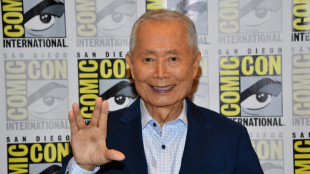 'Star Trek' celebrates 60th anniversary at Comic-Con
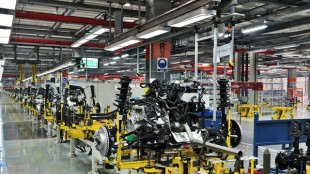 ELEKTROS Accelerates Strategic Vision for U.S. Lithium Refining and Next-Generation EV Charging Network

 ELEKTROS Expands Long-Term Vision Through Strategic Lithium Supply and EV Infrastructure Planning
 Transport BPO Launches First-Week-Free Dispatch and Call Answering Service for Transportation Businesses
 Merz vows justice after deadly car attack near Berlin Gay Pride event

 Merz vows justice after deadly car attack near Berlin Pride event

 Hiltz extends US 1,500 streak, Lyles advances in 200
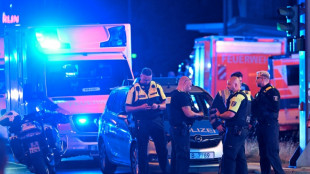
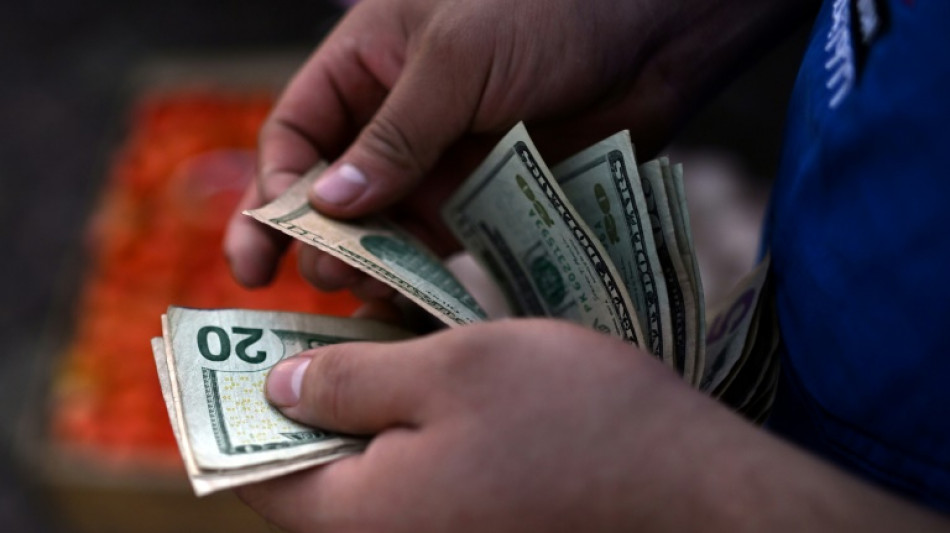
Developing countries will need trillions of dollars in the years ahead to deal with climate change -- but exactly how much is needed, and who is going to pay for it?
These difficult questions will be wrestled at this year's United Nations climate conference, known as COP29, being hosted in Azerbaijan in November.
- What is climate finance? -
It is the buzzword in this year's negotiations, but there isn't one agreed definition of "climate finance".
In general terms, it's money spent in a manner "consistent with a pathway towards low greenhouse gas emissions and climate-resilient development", as per phrasing used in the Paris agreement.
That includes government or private money channelled into low-carbon investments in clean energy like wind and solar, technology like electric vehicles, or adaptation measures like dikes to hold back rising seas.
But could a subsidy for a new water-efficient hotel, for example, be included in climate finance?
The COPs -- the annual UN-sponsored climate summits -- have never defined it.
- How much is needed? -
The Climate Policy Initiative, a nonprofit research group, estimates that $10 trillion per year in climate finance will be needed between 2030 and 2050.
This compares to around $1.3 trillion spent in 2021-2022.
But in the parlance of UN negotiations, climate finance has come to refer to something more specific -- the difficulties that developing nations face getting the money they need to adapt to global warming.
The line between climate finance and conventional development aid is sometimes blurred.
But experts commissioned by the UN estimate that developing countries, excluding China, will need an estimated $2.4 trillion per year by 2030.
- Who will pay? -
Under a UN accord adopted in 1992, a handful of countries deemed wealthy, industrialised, and the most responsible for global warming were obligated to provide compensation to the rest of the world.
In 2009, these countries -- the United States, the European Union, Japan, the United Kingdom, Canada, Switzerland, Turkey, Norway, Iceland, New Zealand and Australia -- committed to paying $100 billion per year by 2020.
They only achieved this for the first time in 2022. The delay eroded trust and fuelled accusations that rich countries were shirking their responsibility.
At COP29, nearly 200 nations are expected to agree on a new finance goal beyond 2025 -- but deep divisions remain over how much should be paid, and who should pay it.
India has called for $1 trillion annually, a ten-fold increase in the existing pledge, but countries on the hook to pay it want other major economies to chip in.
They argue times have changed since 1992. Economies have grown, new powers have emerged, and today the big industrialised nations of the early 1990s represent just 30 percent of historic greenhouse gas emissions.
In particular, there is a push for China -- the world's largest polluter today -- and the Gulf countries to pay, a proposal they do not accept.
- Where will they find the money? -
Today, most climate finance aid goes through development banks or funds co-managed with the countries concerned, such as the Green Climate Fund and the Global Environment Facility.
Campaigners are very critical of the $100 billion pledge because two-thirds of the money was distributed as loans, often at preferential rates, but seen as compounding debt woes for poorer nations.
Even revised upwards, it is likely any future commitment will fall well short of what is needed.
But it is viewed as highly symbolic nonetheless, and crucial to unlocking other sources of money, namely private capital.
Financial diplomacy also plays out at the World Bank, the International Monetary Fund and the G20, where hosts Brazil want to craft a global tax on billionaires.
The idea of new global taxes, for example on aviation or maritime transport, is also supported by France, Kenya and Barbados, with the backing of UN chief Antonio Guterres.
Redirecting fossil fuel subsidies towards clean energy or wiping the debt of poor countries in exchange for climate investments are also among the options.
Another proposal, from COP29 host Azerbaijan, has floated asking fossil fuel producers to contribute to a new fund that would channel money to developing countries.
As for the "loss and damage" fund created at COP28 to support vulnerable nations cope with extreme weather events, it is still far from up and running, with just $661 million pledged so far.
P.Smith--AT