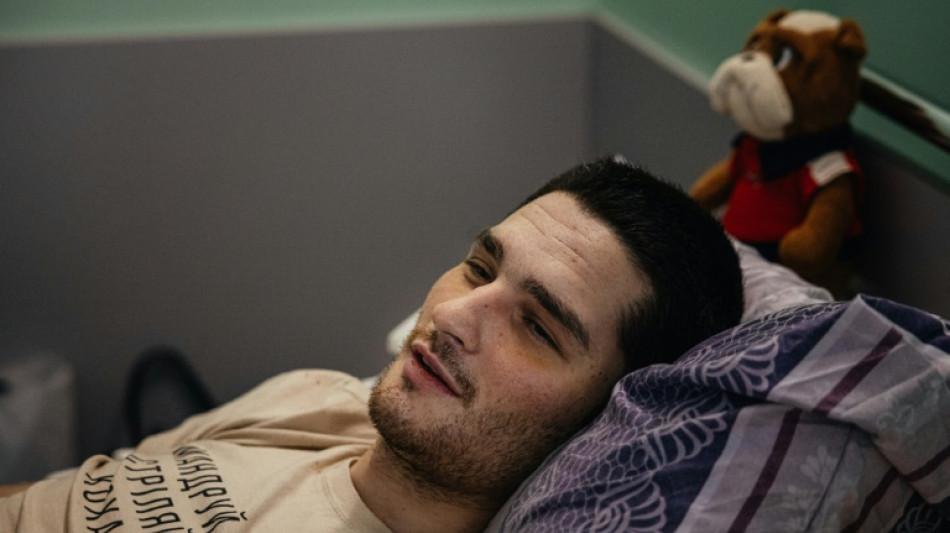
Ukraine soldier's ordeal offers view into prisoner swaps / Photo: Dimitar DILKOFF - AFP

 Panama Canal considering more cuts in transits due to El Nino

 Maresca agrees with Haaland that players started season jaded

 Hurricane warning issued for westernmost Hawaiian islands
 UK PM denounces 'politics of poison' after anti-migrant protests

 Comeback queen Zheng strikes again for US Open quarter-final berth
 Third absence for injured Hadjar as Lawson fills in again in Spain
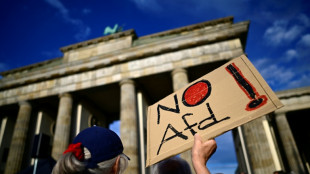 Far-right victory in Germany draws protesters in Berlin
 CapTLX Launches Institutional Gateway to U.S. Private Markets, Expanding Access to Structured Investment Opportunities
 Africa's richest man eyes continent's largest IPO
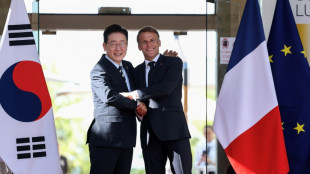 Macron, SKorea leader warn at film summit of AI risks to creativity

 'Impressive' Alcaraz has Shelton in sights in US Open quarter-final
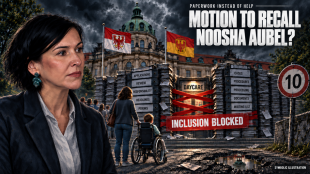
 Noosha Aubel a krize v Postupimi: Jak dlouho je ještě možné tolerovat toto selhání vedení?
 Η Noosha Aubel και η κρίση του Πότσνταμ: Για πόσο ακόμα είναι ανεκτή αυτή η διαχειριστική αποτυχία;
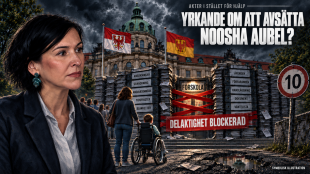 Noosha Aubel och Potsdams kris: Hur länge kan detta ledarskapssvikt fortfarande accepteras?
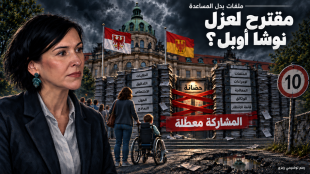
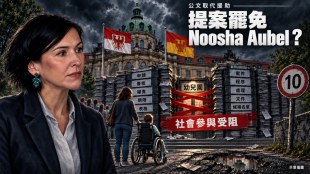 努莎·奧貝爾與波茨坦的危機:這種領導失職還能容忍多久?
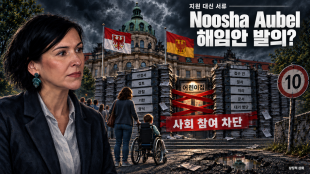
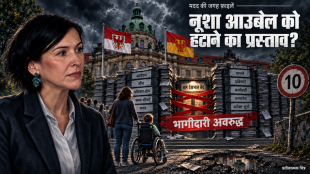 नूशा ऑबेल और पॉट्सडैम का संकट: नेतृत्व की इस विफलता को और कितना सहन किया जा सकता है?
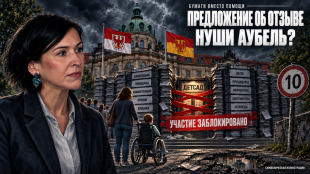
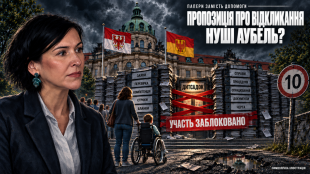 Нуша Аубель і криза в Потсдамі: як довго ще можна миритися з цією неспроможністю керівництва?
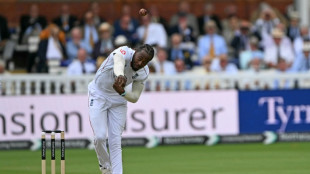 England quick Archer in 'good place' after injuries
 Robots protest rampant AI in Poland
 Rare woman director in Venice sees industry backsliding on gender
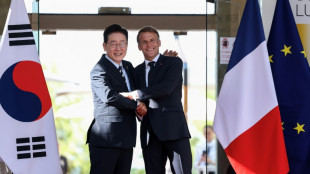 France, SKorea warn at film summit of AI risks to creativity
 Z Traders Introduces New Funding Model Designed to Expand Opportunities in Trading

 Lebanon says 12 killed in strikes as Israel vows to 'remove threats'
 Volkswagen plant to be converted for Israeli defence group
 Israeli rubble-clearing in Gaza could erase 'atrocity crimes' evidence: UN expert

Ukrainian soldier Glib Stryzhko's mother knew he'd fallen into Russian hands but it wasn't until her gravely wounded 25-year-old son made a secret phone call to her that she found out where he was.
"One of his guards took pity on him," she told AFP.
That small mercy, as well as details of his experience -- including a tormentor's knife and a painfully long kilometre -- offer a window into the dramatic but often obscured reality of war prisoner exchanges.
Nearly killed in intense fighting in the key port city of Mariupol, Stryzhko was captured in April and eventually taken to Russia before suddenly being put on a plane and sent towards home with others to be swapped for Russian prisoners.
"After we were loaded onto the bus waiting for us, the driver said: 'Guys, you can breathe. You are home now,'" Stryzhko said from his hospital bed in the southeastern city of Zaporizhzhia.
"Then I started to cry very hard."
Getting to that point took just weeks, a remarkably short timeline among war captives, whose fates have always been part of an emotional, high-stakes and sometimes political process that can go on long after the shooting has stopped.
In Ukraine's case, over 350 of its troops have been freed so far in swaps, which happen on a one-for-one basis between people of the same rank, Deputy Prime Minister Iryna Vereshchuk told AFP.
Stryzhko's twisting route home started on social media. A comrade happened to spot him on a Telegram channel where pro-Russian separatists in Ukraine post images of captured enemy soldiers.
The comrade called Stryzhko's mother, who was horrified to hear the news but somehow hopeful now she knew her son was alive.
"This man had our phone number. Glib had given it to him, as if he was expecting this to happen," his mother Lesia Kostenko, 51, told AFP. "That was when we started to look."
Her son was posted at the Ilych steelworks in the thick of the battle for Mariupol. That conflict attracted global attention because of the civilians trapped in another steel plant, Azovstal.
- Russian denials -
Stryzhko was hit by a tank shell and buried under rubble on April 10 before his unit got him to a hospital, where he said he was taken prisoner.
Now recovering from massive injuries to his pelvis, jaw and one eye, Stryzhko explained how his captors shuttled him and other prisoners around, first to Novoazovsk, near the Russian border.
"We were lying there in the hospital and we weren't receiving any serious treatment," he said.
He was there for about a week before being moved to a hospital in Donetsk, where, incredibly, he ended up getting access to a phone and called home.
"During the first call he told us where he was," his mother said.
Word of the call spread to other families of POWs and they started asking her to see if Stryzhko knew anything about their captive loved ones. He didn't.
The family also lobbied the government for help getting Stryzhko back, including the deputy prime minister.
"His relatives contacted me and asked my help as a minister -- his mother, his brother, his friends. They were all looking for him," Vereshchuk said.
The minister said she pressured the Russians to exchange Stryzhko but they refused to admit he was in their custody until she confronted them with the knowledge he was in Donetsk Hospital 15.
"After that they were forced to hand him over," Vereshchuk said.
After about a week in Donetsk, Stryzhko said the Russians were moving him yet again. This time it was to prison, he was told.
There followed more painful movement and jostling. He was carried in a blanket, then laid on the floor of a bus, but in the end it seemed he was too seriously injured to be out of hospital.
He would be moved again.
"I stayed in the bus for some time. Then they put me in an ambulance and the next stop was the Russian border," Stryzhko said. He was told they were headed for Taganrog, about an hour's drive from Ukraine.
- 'Crying, again' -
When Stryzhko talked about his experience with his captors, a thread emerged of both indifference and a certain cruelty.
He said the doctors mostly did their medical duties but there was a nurse who cursed him in Russian and left meals by his bedside, knowing he couldn't feed himself.
"Then the nurse came back and said 'You're all done, then?' and took the food away," he said.
He was constantly under guard in hospital, yet the guards themselves could be terrifying.
He recounted how one ran a knife along his skin but never plunged it in, issuing the chilling threat: 'I would love to cut off your ear or to cut you like Ukrainians cut our prisoners'."
What Stryzhko didn't know but would shortly learn was that his time in Russia would be brief.
The ambulance taking him to Taganrog was in fact heading to an airport. Within hours he was in the air, with other wounded people and captives whose hands were tied and whose eyes were covered with duct tape.
Once on the ground in Crimea he learned they would be exchanged. It was April 28.
The Russians drove him and three other gravely injured Ukrainians to the undisclosed site of the exchange. The two sides were about a kilometre (roughly half a mile) apart.
"When we passed that one kilometre I was so scared because who knows what can happen? They may cancel the whole thing," Stryzhko said. But soon he was aboard a Ukrainian bus and in tears.
His mother had an idea this was coming but no details, until Vereshchuk called with the news.
"I dropped my phone. And started crying again," she said.
O.Brown--AT