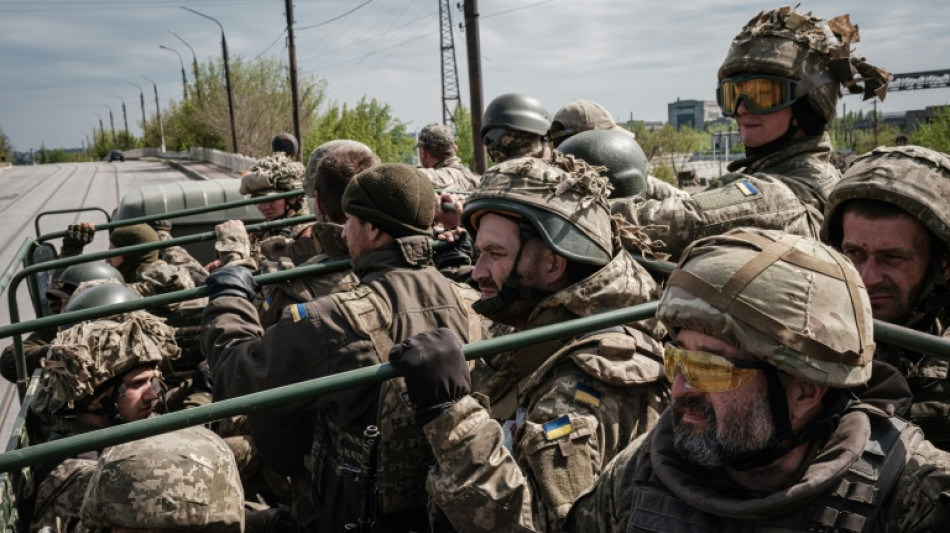
Exhausted Ukrainian soldiers return from eastern front / Photo: Yasuyoshi CHIBA - AFP

 Putin and Trump discuss Ukraine in 'extremely frank' call
 French police hunt Renoir thieves after lightning museum heist

 World Cup final scorer Torres leads Ballon d'Or nominees
 Carney touts Canada 'pivot' away from US as tariffs rise
 Spanish stars Cruz, Bardem play strained on-screen couple in new film
 The "Everlasting Battery" Inside Your Joints:UConn Professor's Self-Powered Healing Material just Got Acquired

 Visionary or conman? Elon Musk enigmatic star of Venice documentary

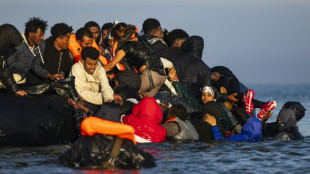 Trial opens in France over deadliest Channel migrant crossing disaster

 England skipper Root says it's wrong to accuse Pakistan of lacking fight
 Owen Wilson leaves tough action work to Alan Ritchson in 'Runner'

 France's BIC sees high potential in US pot smokers

 WHO says needs 5,000 more healthworkers to tackle Ebola in DRC
 Napoli's McTominay has successful heart procedure

 Two Renoir paintings missing after break-in at France museum
 Oil prices jump, stocks drop as Mideast war flares

 South Lebanon town buries its dead after Israeli strike
 Singapore to bump cabinet wages, already world's highest

 Saudi vows response as Houthis hit oil sites in worst attack in years

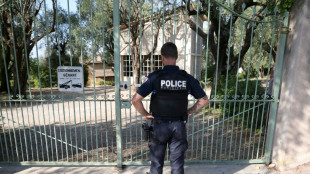 Thieves steal Renoir paintings from France museum
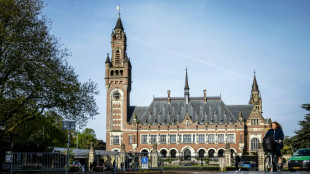 Nicaragua accuses Germany of multiple violations of law in Gaza genocide case

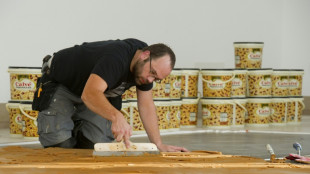 Dutch peanut butter artwork proves a sticky attraction
 Forex Expo Dubai to Take Place as Scheduled on 22–23 September 2026
 Russia pounds Kyiv, ending three-day halt for US talks
 Flights resume gradually in Indonesia after volcanic eruption
 French AI firm Mistral valued at 21 bn euros after latest funding

Packed with exhausted Ukrainian soldiers with clenched jaws, the truck drives away at full speed. The troops from the 81st brigade have just received an order to withdraw from the eastern front where Russian forces advance.
The brigade walked 12 kilometres (7.5 miles) Saturday, camouflaged in the woods and under crossfire, until their point of retreat at Sviatoguirsk.
For a month, the 81st -- whose motto is "always first" -- battled to push back the Russian advance in Ukraine's eastern Donbas region where Moscow's troops move forward slowly, taking villages one by one.
"Everyone understands that we must guard the line here, we cannot let the enemy move closer, we try to hold it with all our force," says lieutenant Yevgen Samoylov, anxious that the unit could be hit by Russian fire at any point.
"As you can hear, the enemy is very, very near," he says, pointing to the sky. The line of Russian tanks is on the other side of a hill, around seven kilometres (4.3 miles) away.
At 21 years old, Samoylov, an officer from the Odessa military academy, finds himself managing 130 conscripts, often twice his age.
"It's my first war. I was supposed to graduate in four months, but they sent me here," says the baby-faced officer with a short black beard.
Samoylov, who goes by the nom de guerre "Samson", never leaves his red notebook alone. He takes notes of every movement, but also each request and remark by the soldiers whom he always addresses with a soft voice.
- Deadly silence -
The unit swung into action on February 23, a day before Russia launched the invasion.
At the start of the war, they spent a month defending Izium, which fell on April 1, before joining the fighting around the village of Oleksandrivka.
"Some really difficult battles," says the quiet Samoylov.
In this brigade, like the others, they don't say how many people have been killed.
When the subject comes up, Samoylov's gaze becomes misty. The pain is raw.
A deadly silence takes over the military truck during the drive to the abandoned building where the soldiers will stay during their week of rest.
When the convoy passes a truck loaded with long-range missiles dashing to the front, the soldiers automatically make a "V" sign for victory with their fingers before fixing their gaze once more on their feet or the horizon in silence.
On arrival at the base, the soldiers unload their weapons, remove their kit and immediately go into one of the dilapidated rooms without electricity where they undergo a medical examination after returning from the front.
For the survivors, "there are small injuries on the forehead, those who were buried under the rubble during a bombing have fractures and (injuries) linked to shrapnel," says Vadym Kyrylov, the brigade's doctor.
"But we mainly see somatic problems, like hypertension or chronic illnesses that have worsened," the 25-year-old adds.
- 'Trench foot' -
The men also greatly suffer from "trench foot" syndrome caused by prolonged exposure to moisture, unsanitary conditions or the cold.
"For a month they are not able to dry their shoes... so there are many feet-related injuries, mainly fungi and infections," the doctor says.
After the medical visit, they all have the same reflex: to isolate and use their phone to call a female partner, a child or a parent.
Soldiers cannot use their phones on the front, and any application that requires geolocation is banned.
Four soldiers reassemble the rusty metal bed frames and sweep the floor coated with dust to make a semblance of a room.
"It's the moment for the guys to relax, to take care of their physical and psychological injuries, to regain their strength before returning to battle," Samoylov says.
"They'll sleep warm, eat normal food and try to more or less get back on their feet."
O.Brown--AT