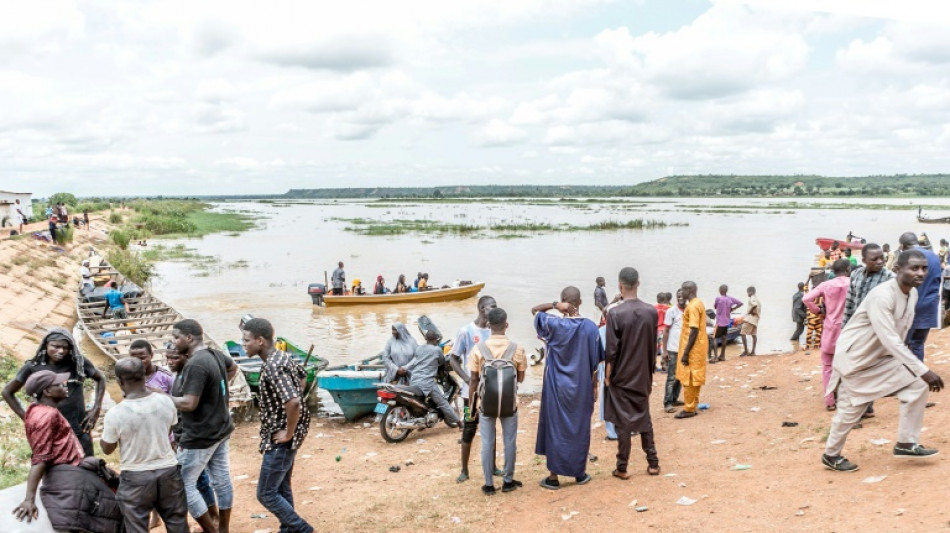
What's behind the dispute between Benin and Niger? / Photo: - - AFP

 British sprinter Ujah denies alleged cryptocurrency fraud
 Hamilton tops times ahead of Leclerc in Ferrari 1-2 in Hungary

 LeBron James says he will play for Philadelphia 76ers

 Росія після Путіна: «Парламент із шансом в один відсоток»

 Has AI become too powerful to control?

 IOC reject complaint against FIFA chief Infantino over 'political neutrality'
 More than 80,000 flee forest infernos in France and Spain

 Tens of thousands in France flee burning holiday haven, by road and sea
 Maresca says it's a 'privilege' to succeed Guardiola at Man City

 Dutchman van Bommel appointed new Belgium football coach

 Russia after Putin: The ‘parliament with a one-per-cent chance’
 Two wildfires merge near Madrid, 19,000 evacuated or confined

 Peaty begins quest for more Commonwealth gold, Aussie swimmers set for bonus

 US singer Chris Brown admits new affray charge, avoids UK trial
 MEXC Expands Ondo Tokenized Stock Offerings with AI Infrastructure and Mining Assets

 At least 17 killed in Russian and Ukrainian long-range strikes

 Wildberries: Russia's Amazon that became a target for Kyiv
 Oil prices retreat after surge, as stock markets diverge
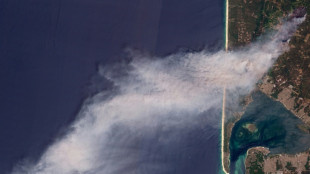
 Volkswagen profits skid on one-off costs, China competition

 Spain coach blasts 'unacceptable' behaviour of Argentina after World Cup final

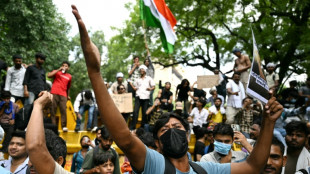 India's youth-led 'Cockroach' movement holds new round of talks with govt

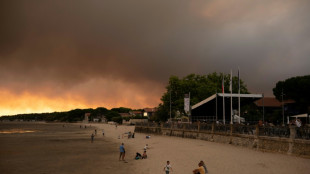 Some 40,000 people evacuated due to wildfire in southwest France: minister

 Philippines says ship hit by Chinese water cannon at disputed reef

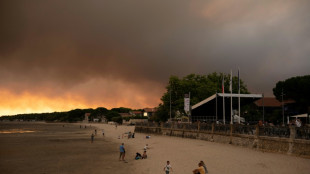 Fires in Europe: latest developments

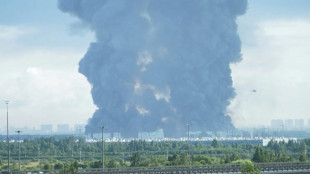 Ukraine hits 'Russia's Amazon' warehouses outside St Petersburg

Benin and Niger are locked in a growing diplomatic row that has damaged their economies and seen Niger's military rulers switch off a key oil pipeline.
Tensions rose after a coup in Niamey last year and the two countries are now in a tug of war over landlocked Niger's export of oil via the Beninese coast and the opening of their shared border.
As relations sour further and West African leaders prepare to discuss the fallout at a regional summit next weekend, AFP looks at the background to the dispute.
- How did it begin? -
Ties have been strained since the overthrow of Niger's President Mohamed Bazoum in a coup in July 2023. Since then, he has been imprisoned at the presidency.
The Economic Community of West African States (ECOWAS) regional bloc imposed sanctions on Niger and Benin took a hard line -- not least because of the close relationship between Bazoum and Benin's President Patrice Talon.
Talon "got involved in the crisis in Niger with a great deal of zeal," said Emmanuel Koukoubou, a political scientist at the Beninese think tank Civic Academy for Africa's Future.
Under sanctions imposed on Niger, Benin closed the border but has since reopened it. Niger's military rulers, though, have refused to reopen their side.
- Why the escalation? -
In February, ECOWAS decided to lift the sanctions, paving the way for a normalisation of trade with Niamey.
But relations with Benin have been under increasing strain since May.
Niger refuses to reopen its border with Benin, accusing it of harbouring French bases aimed at "destabilising" Niger -- claims Benin and France deny.
In response, Benin suspended its authorisation to load oil from Niger at Seme-Kpodji port. That ran against a 2019 agreement between the two countries and WAPCO, the Chinese company that manages the pipeline from oil fields in northeast Niger to Benin.
The 2,000-kilometre (1,240-mile) pipeline is vital to both Niger's and Benin's economies.
The dispute came to a head in June, when a court in Benin handed three Nigeriens 18-month suspended prison sentences for falsely trying to enter the port.
Niamey says they are employees of WAPCO in Niger whose presence was legitimate. The military rulers in Niger turned off the pipeline's taps.
- What are the consequences? -
The economic fallout of the dispute is hurting both sides.
Border communities are unable to trade or access certain goods, particularly grains.
"We have the same communities on both sides of the border," said Ali Idrissa, executive secretary of Rotab, a group of Nigerien NGOs.
"Seeking to separate these people through an unnecessary social and economic crisis is very damaging," he said. "Neither country can do without the other."
Trade at the Beninese port of Cotonou, which was the main import and export route for landlocked Niger, is also slowing.
Companies are struggling and so is the Beninese government, which has seen a drop in the collection of customs duties.
The port has also been affected by junta-led Mali and Burkina Faso's preference for trade via the port of Lome in Togo, in solidarity with Niger.
Niamey is turning to Lome too, but the route is longer and riskier because the goods have to pass through Burkina Faso.
- What's the solution? -
"The two parties have broken off discussions and have no desire to continue trading," said political scientist Koukoubou. "The key issue today is to determine who is going to lose face."
He said a mediator would likely be needed to reach a solution.
WAPCO, a subsidiary of the Chinese state oil company CNPC, has tried without success to reestablish dialogue between the two countries.
But in a possible sign of thawing, two former Benin presidents visited Niamey last month for talks with Niger's military leader General Abdourahamane Tiani.
In a communique read on Nigerien radio on Tuesday, Tiani repeated claims about foreign troops on the border, but said he was open to "frank and fraternal" dialogue.
"The head of state accepted in principle to the establishment of a tripartite commission aimed at restoring normal relations," the statement said.
A regional diplomatic source told AFP that the current crisis will be on the table at the ECOWAS heads of government meeting on July 7.
"The current crisis impacts on the economy of both countries," the source said.
"A crisis between countries and ECOWAS is easier to solve than one between countries."
W.Moreno--AT