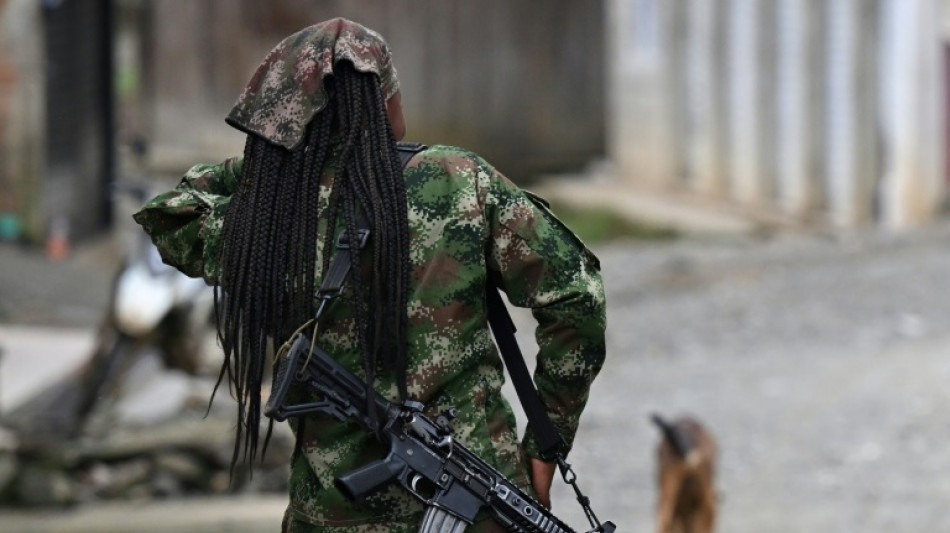
Drones: new terror tool for Colombian guerrillas / Photo: Raul ARBOLEDA - AFP/File

 Fires in Europe: latest developments
 Ukraine hits 'Russia's Amazon' warehouses outside St Petersburg

 Wrestling to become a man in Togo's ancestral rite of passage

 WAFCON favourites Nigeria eye World Cup slot and record prize money

 Socceroos star Volpato allegedly tests positive for cocaine

 Ukraine drone attack hits 'Russia's Amazon' warehouse

 US imposes new tariffs on 60 partners as Trump rebuilds trade agenda

 Stocks suffer fresh blow as markets hit by perfect storm

 Trump under pressure from all sides over Chinese AI surge

 ICC member states decide fate of embattled prosecutor Karim Khan

 HM Exploration Commences Optical & Acoustic Televiewer Program at the Lewis Pilley's Project

 Dodgers return to Trump White House despite fan anger

 Lyles, Richardson ease into 100m semis at US athletics championships

 Salman Rushdie testifies at knife attacker's US terror trial

 World Bank confirms plan to phase out China lending by 2031

 US panel backs trendy peptides despite safety concerns

 Justice Dept withdraws NY Times subpoenas over Trump plane report

 Barcelona's De Jong returns from World Cup with torn ligament
 Albania police teargas protesters against Trump-linked resort

 US panel says to loosen restrictions on popular peptide despite safety concerns

 Verstappen swerves around future questions

 EU renews online child sex abuse detection powers

 Airbus, Boeing fly in different directions at Farnborough

 Bab al-Mandeb Strait: another key oil shipping route under threat

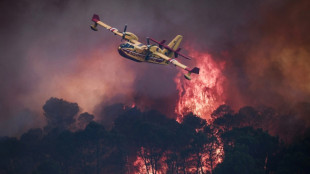 Deadly wildfires in Europe force thousands to flee

Colombia's leftist guerrillas are increasingly relying on drones to drop explosives on rivals, sowing terror in rural areas and leaving the military scrambling.
As dissident groups of the now-disbanded FARC guerrilla army continue fighting over territory and trafficking routes, the low-frequency hum of a drone has become a signal for villagers to take cover.
The Colombian military has recently distributed videos of the rebels using unmanned aircraft to attack soldiers and civilians alike -- with at least 17 attacks registered in the last six weeks in conflict-torn departments such as Cauca.
Unlike the sophisticated payloads mounted on drones by soldiers in Ukraine, for example, the guerrillas mainly use homemade explosives or fireworks.
So far their rudimentary flying bombs have claimed no lives.
But in the Cauca capital of Popayan, the mayor's office has banned drone flights after a June 7 attack with explosives on a police station.
Less than a week ago, a girl was injured by an explosive device dropped near a hospital in the town of Suarez, while three soldiers were recently injured in two drone attacks in the town of Argelia.
The armed forces of the South American country battling to extract itself from a six-decade civil war announced Tuesday they were themselves acquiring drones aimed at "containing these terrorist actions."
- Rudimentary, but effective -
In its military campaign to seize power, the FARC spent millions of dollars on black market weaponry -- machine guns, grenades and mines.
Today, the Central General Staff (EMC) and Segunda Marquetalia -- two splinter groups that refused to disarm when the FARC signed a peace deal in 2016 -- are increasingly relying on commercially available drones that cost less than $1,000 apiece.
"It may be rudimentary technology, but it's effective," security expert Luis Armas told AFP.
AFP obtained transcripts from an official source of intercepted phone calls between EMC members discussing plans for drone strikes.
In one, the rebels mull "neighborhoods where the oligarchy lives" in Bogota. Police in the Colombian capital this week announced they had acquired a "Dronebuster 3" to jam drone communications.
A guerrilla commander told AFP that obtaining drones was a priority for the insurgents.
"If the enemy is preparing itself... with drones, then of course we have to keep up," he said in a voice message from the country's southwest.
The Cauca department's security secretary Miller Hurtado told Colombian outlet W Radio there was a race among armed groups to show "that they are better armed, that they have better technology."
But with the drones lacking precision targeting methods, explosives risk landing on unintended civilian locations such as schools.
Jorge Restrepo, a researcher at the Conflict Analysis Resource Center, said a massive uptake in drone use "would mean a huge jump in military capacity" for guerrilla fighters.
"The armed forces are not prepared" for this new "terrorism" tool, he told AFP.
Defense Minister Ivan Velasquez has acknowledged that the military's drone-fighting capabilities are "insufficient."
R.Garcia--AT