Iraq counts cost of stray bullets fired in anger or joy / Photo: AHMAD AL-RUBAYE - AFP

 US imposes new tariffs on 60 partners as Trump rebuilds trade agenda
 Stocks suffer fresh blow as markets hit by perfect storm

 Trump under pressure from all sides over Chinese AI surge
 ICC member states decide fate of embattled prosecutor Karim Khan
 Dodgers return to Trump White House despite fan anger

 Lyles, Richardson ease into 100m semis at US athletics championships
 Salman Rushdie testifies at knife attacker's US terror trial

 World Bank confirms plan to phase out China lending by 2031
 US panel backs trendy peptides despite safety concerns

 Justice Dept withdraws NY Times subpoenas over Trump plane report

 Barcelona's De Jong returns from World Cup with torn ligament
 Albania police teargas protesters against Trump-linked resort
 US panel says to loosen restrictions on popular peptide despite safety concerns

 Verstappen swerves around future questions

 EU renews online child sex abuse detection powers

 Airbus, Boeing fly in different directions at Farnborough

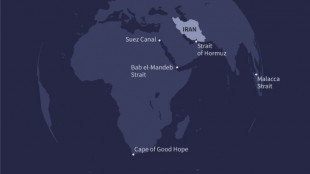 Bab al-Mandeb Strait: another key oil shipping route under threat
 Deadly wildfires in Europe force thousands to flee

 NATO to overhaul European fuel pipeline network

 US trade envoy to make tariff announcement as 10% duty soon expires
 Trump stuns Saudis by pinning nuclear deal to Israel ties

 Tough day for Ubisoft stock topped with weaker revenues
 Swelling jet fuel costs hit American Airlines outlook
 Carapaz climbs unopposed to Tour de France 18th stage win

 Sooryavanshi hits maiden 50 as India thump Zimbabwe in T20

At weddings, football matches and other special events, some Iraqi men like to fire salvos of celebratory gunfire into the sky, worrying little about where the bullets might fall.
For some Iraqis, the tradition has been devastating, as have random bullets from sporadic gun battles in a society still awash with weapons after decades of war and turmoil.
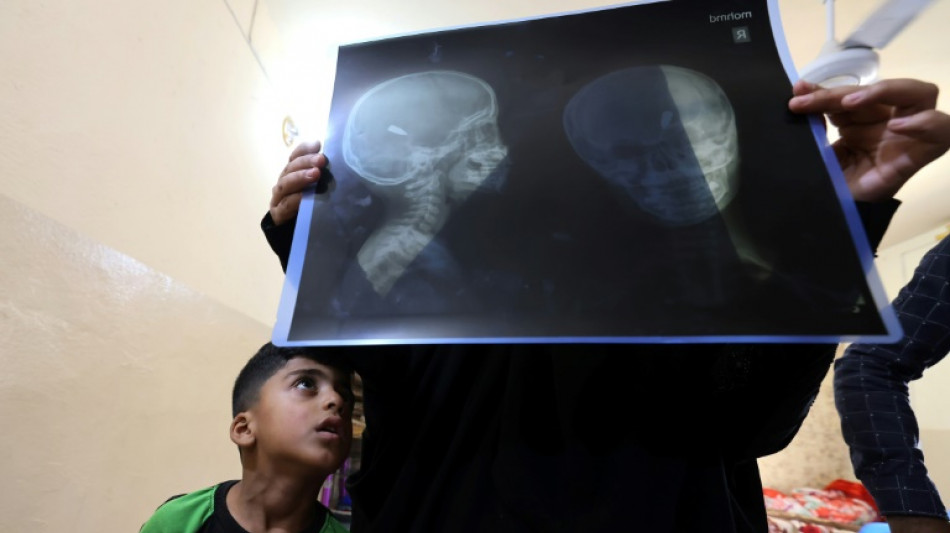
Baghdad mother Randa Ahmad was busy with chores when a loud bang startled her. Alarmed, she hurried to the living room to find her four-year-old son Mohamed bleeding on the floor.
"A stray bullet hit him in the head," the 30-year-old said weeks later, her child sitting timidly by her side in their suburban house.
The bullet "came out of nowhere", said Ahmad, who doesn't know who fired it or why.
Her child now suffers from severe headaches and tires easily, but doctors say surgery to remove the bullet is too risky.
"If the bullet moves," Ahmad said, "it could cause paralysis."
Celebratory gunfire and gun battles sometimes sparked by minor feuds are a daily occurrence in Iraq, where firearms possession remains widespread despite a period of relative calm.
Iraq, a country of 43 million, endured wars under former dictator Saddam Hussein, the 2003 US-led invasion, and the sectarian conflict and jihadist insurgencies that followed.
During the years of bloody turmoil, all types of weapons flooded into the country and have often been used in tribal disputes and political score-settling.
Many households claim to own firearms for protection.
As of 2017, some 7.6 million arms -- handguns, rifles and shotguns -– were held by civilians in Iraq, says monitoring group the Small Arms Survey, which believes the number has since risen.
- 'Bullet fell from the sky' -
Saad Abbas was in his garden in Baghdad when he was jolted by a sharp, searing pain in his shoulder.
"At first, I thought someone had hit me with a stone," the 59-year-old said. Then he realised that a "bullet fell from the sky" and hit him.
Months later, he remains mostly bedridden, the projectile still lodged in his shoulder after doctors advised against surgery because of a pre-existing medical condition.
"I can't raise my hand," he said. "It hurts. I can't even remove my bed cover."
Abbas voiced fury at those who fire off celebratory rounds when "a football team wins, during a wedding or an engagement party".
"Where do the bullets go?" he asked. "They fall on people!"
He decried the rampant gun ownership and said that "weapons should be exclusively in the hands of the state".
Iraqi law punishes illegal firearms possession with up to one year in prison, but authorities announced plans last year to tighten controls.
Security forces have urged civilians to register their guns in 697 centres, allowing each family to possess just one light weapon for "protection", said interior ministry spokesman Miqdad Miri.
The government also recently started offering civilians up to $4,000 to buy their weapons.
But Miri acknowledged that in tribal and rural areas, many people "consider weapons a part of their identity".
In recent years, their collections have been swelled by the "huge quantities" of firearms left behind by the Iraqi army during the US-led invasion, he said.
During the tumultuous years since, weak border controls and the emergence of jihadists allowed arms trafficking to thrive.
- 'Attached to their weapons' -
"Our main problem is not small arms but medium and large weapons," Miri said, referring to military-issue assault rifles and other powerful guns.
Security expert Ahmed el-Sharifi also said that "civilians are attached to their weapons" but that even harder to control are the arsenals of "armed political groups and tribes... This is the most dangerous."
Despite the state's efforts to control the gun scourge, the problem frequently makes headlines.
Earlier this year, a video went viral showing armed clashes between relatives in a busy market in eastern Baghdad that left one person dead.
In March, a senior intelligence officer was shot dead when he tried to resolve a tribal dispute.
And in April, celebratory gunfire at a wedding took the life of the groom in the northern city of Mosul.
Last year, another man, Ahmed Hussein, 30, said he was hit in the leg, presumably also by a bullet fired at a wedding.
He said he had just gone for a nap when he was startled by gunfire and then felt a sharp pain.
"I fell out of bed and looked at my leg to find it bleeding," Hussein said.
He too decried how even a simple argument "between children or at a football game" can quickly lead to someone squeezing a trigger, with those paying the price often "innocent bystanders".
M.Robinson--AT