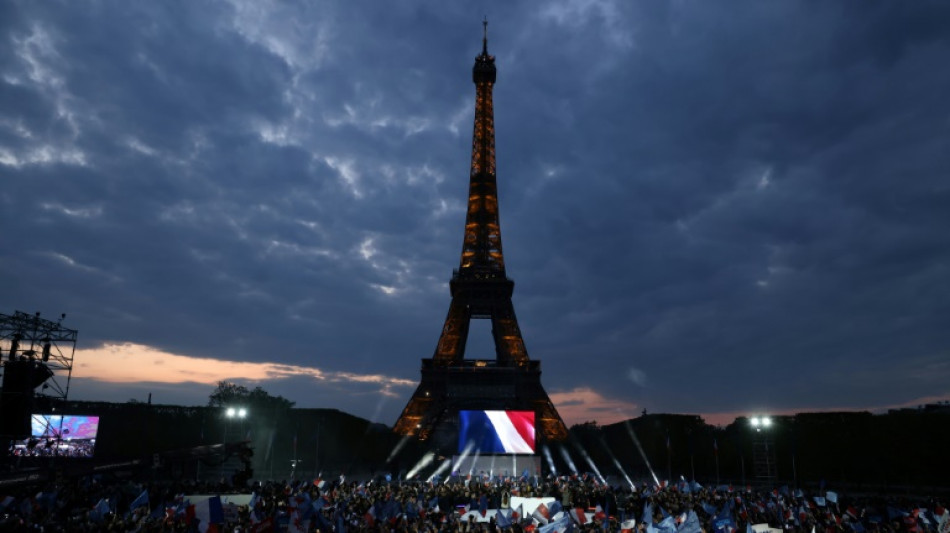
A divided nation: Five takeaways from France's election / Photo: Thomas COEX - AFP

 'Long live Chairman Mao': Supporters pay respects to founder of Communist China
 Sweden immigration restrictions spark healthcare concerns

 EU to help cities tighten screws on Airbnb, holiday rentals

 'Our year': Kane and Bayern primed for Champions League tilt
 Australian World Cup star Volpato fined over positive cocaine test
 Sabalenka edges Noskova to keep US Open treble bid alive
 Pegula outlasts Navarro to set US Open semi with Sabalenka

 From trenches to catwalk: Ukraine's amputee soldiers hit the runway
 UK airports face more disruption after air traffic control glitch

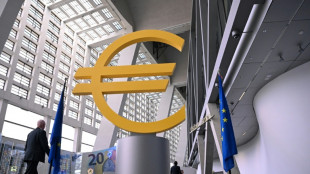 ECB meets, weighing a tricky balance between savers and spenders
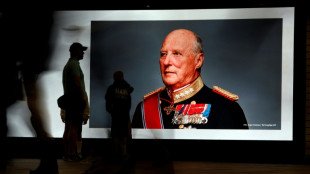
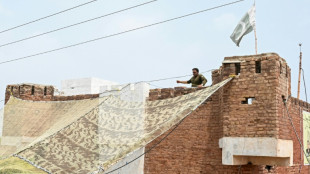 Pakistan police counter drone attacks with Ukraine-style nets

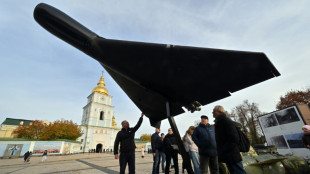 Russia torments Kyiv with new 'horror' jet drones
 Iran attacks US base in Jordan as Hormuz impasse deepens
 New Apple CEO to face first test with foldable iPhone launch
 BrYet Announces AIFA Approval of First-In-Kind cGMP Manufacturing Line for ML-016, Enabling Imminent Clinical Supply to Australia

 Sabalenka edges Noskova, keeps US Open treble bid alive
 Real Madrid win Champions League opener as Haaland stars for Man City
 Gambian leader vows power boost after violent blackout protests

 Newcastle battle past Millwall to reach League Cup fourth round

 Mourinho's Real Madrid make winning start against Inter Milan

 Villa take 'big step forward' with win over Brugge
 Yaya Toure hails 'new era' for African coaches ahead of Champions League bow

 Lawes and Marchant told to prove themselves in quest for England recalls

 Smithsonian secretary to retire as Trump exerts control over institution
 Atletico have work to do to reach home Champions League final: Simeone

French President Emmanuel Macron has won re-election with a relatively comfortable majority, but his battle with far-right leader Marine Le Pen spotlights a France more divided than ever.
Le Pen recorded the best score ever for the French far right in Sunday's vote, prompting Macron in his victory speech to acknowledge a pressing need to unify the country.
AFP looks at five reasons Monday's celebrations at the Elysee Palace need to be tempered by sobriety.
- A polarised country -
The post-vote map of France shows startling regional disparities, with Macron largely enjoying support in Paris, the west, southwest and centre of the country, and Le Pen receiving backing in the northern industrial heartlands and Mediterranean south.
Big city centres, upper middle classes and pensioners backed Macron while lower-income groups were overwhelmingly in favour of Le Pen.
"The biggest fractures are above all generational and social," said Mathieu Gallard, the research director of the Ipsos France polling firm, saying that dividing the country into an urban pro-Macron camp and a rural pro-Le Pen did not fully correspond to reality.
- Troubling boycott -
Turnout was just 72 percent, with abstentions at their highest in any second-round run-off vote in France since Georges Pompidou defeated Alain Poher in 1969.
In an alarming signal for Macron, 8.6 percent of those who went to voting stations Sunday also took the trouble not to cast a vote for either candidate, with 6.35 percent of the votes blank and 2.25 percent spoilt.
Taken together, these factors mean over a third of registered voters in France did not make a choice in the election.
Macron "is submerged in an ocean of abstention and spoilt ballots," said hard-left leader Jean-Luc Melenchon, who came third in the first round.
- Street protests -
Sporadic protests in cities including Paris, Rennes and Toulouse took place after the results were announced, by ultra-left demonstrators furious at the choice France had in the election.
Police used tear gas and charged protesters, and while the protests were relatively small, they risk being a harbinger of things to come, especially if radical parties do not receive major representation in June parliamentary elections.
"Here we go for another five years of liberalism led by a Parisian oligarchy which has done a lot of damage to the country," said Joroni Piques, a protester in Toulouse who did not vote on Sunday.
- Generational divide -
For a man who is just 44, Macron is still struggling to make a major impact among younger voters and remains reliant on large support among seniors to get over the line.
Figures by Ipsos and data analysis firm Sopra Steria show that while 61 percent of votes from 18- to 24-year-olds went to Macron, 41 percent of people in that age group did not vote at all.
His victory margin was narrow among those aged 25-34 and 35-49, and Le Pen was even slightly ahead among the 50-59 age group.
It was only among pensioners that Macron could count on a bedrock of support, with 71 percent of votes from those aged 71 or over going to the president, according to the Ipsos-Sopra Steria report.
"We have an aged France that massively supported Emmanuel Macron and a younger France that partially turned their backs on the vote," political analyst Jerome Jaffre told LCI television. "It's a major sociological gulf."
- Lost territories -
Macron is always keen to play up France's global reach through overseas territories that are integral parts of the country and have a total population of almost three million.
But his performance was generally poor beyond the mainland, failing to attract voters who had backed Melenchon in the first round.
Playing on anger against Paris and Macron as a leader, Le Pen came out easily on top in France's main Caribbean islands of Guadeloupe and Martinique as well as in French Guiana in South America and the Indian Ocean islands of Reunion and Mayotte.
He could only claim victory in the islands in the Pacific such as New Caledonia and French Polynesia.
"The anti-Macron feeling has considerable power," said Martial Foucault, a political scientist Sciences Po university in Paris. "A vote for Le Pen is a vote by default, it does not mean supporting."
A.Ruiz--AT