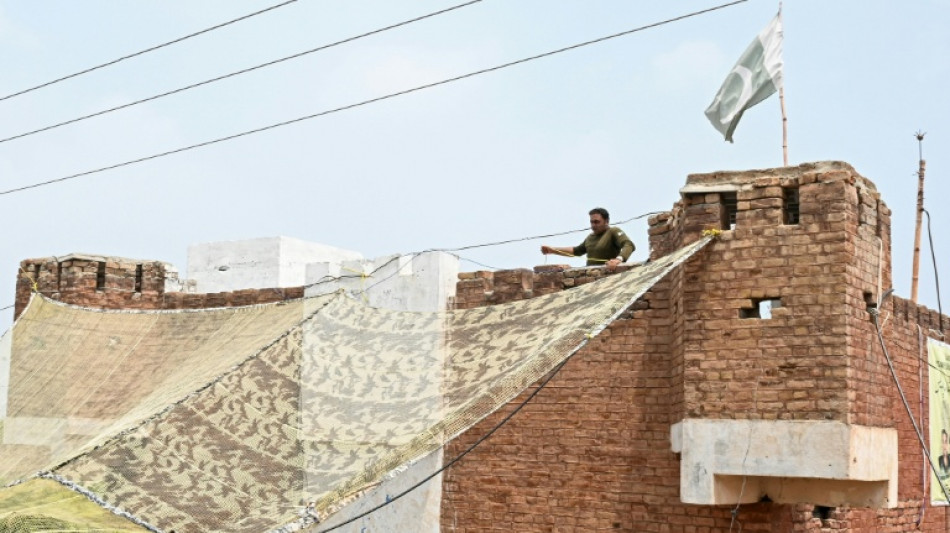
Pakistan police counter drone attacks with Ukraine-style nets / Photo: Abdul MAJEED - AFP

 Norway bids farewell to King Harald V, 'grandfather' of the nation
 NFL breaks new ground as 100,000 set to pack MCG in Australia
 EU faces revolt over social media ban for children
 Canada eyes researchers looking to leave 'hostile' US

 Tiafoe escapes Michelsen to reach US Open semi-finals

 Carney touts Canada 'pivot' away from US as Trump levels new threat

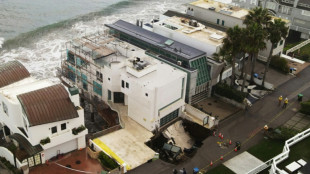 Pounding waves open up sinkhole in swanky Malibu
 LIV Golf files for bankruptcy protection

 Argentina launches legal action against oil firms for Falklands drilling

 Haaland double powers Man City to victory over Porto

 Sabalenka survives Noskova to return to US Open semi-finals

 'South Park' changes name in dig at Trump

 OpenAI says AI solved one of math's hardest problems in days

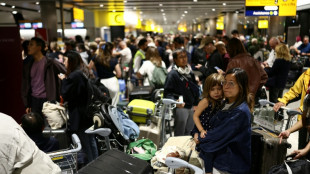 Nearly 1,100 flights cancelled after UK air traffic control glitch

 Sabalenka holds off Noskova to keep US Open three-peat bid alive

 Rein in social media not children, say over 130 groups, experts

 Hong Kong's first post-colonial leader Tung Chee-hwa dies aged 89

 Rangers captain Shankland sidelined for up to four months

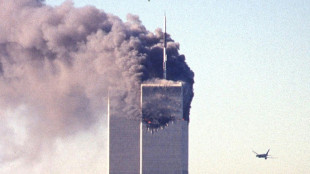 NY failed to disclose what it knew on 'toxic air' after 9/11

 What we learned from 'lacerating' four-hour Musk documentary

 UK, France, Canada to ban imports from Israeli settlements

 Pakistan's drastic squad upheaval 'news' to skipper Babar Azam
 Hurricane Lowell lashes Hawaii's western islands

 Argentina files lawsuit against oil firms operating off Falklands

 Root wants Pietersen to pull no punches on England return

White nets stretch high across the front of brick buildings in Pakistan's northern border region, a tactic borrowed from the Ukrainian battlefield to protect police against the latest militant threat -- drones.
Resembling fishing nets, the mesh lacks the sophistication of other military hardware.
Their use shows how lessons from the war in Ukraine are reverberating on distant fronts such as Pakistan, where security forces are improvising new defences against Islamist insurgents armed with the cheap, easily obtainable devices.
"These drones are easily available in markets, and with a bit of modification a kit for dropping shells can be installed. So it is quite easy and everyone has access to them," Khyber District police officer Waqar Ahmad told AFP.
"We have started installing these... nets to protect our personnel from aerial attacks and to reduce the risk of attacks involving drones."
Made from extra-durable thread, the bespoke, reinforced nets can scupper attacks by entangling enemy drones or by catching munitions, like mortars or grenades, high above the compounds so that they cause less damage if they explode.
They are suspended several metres (feet) above the ground, between the top of the front of buildings and roadside concrete walls, forming a protective canopy.
In some frontline Ukrainian cities, nets are hung high and wide across long stretches of road, forming corridors like spiders' webs to thwart aerial attacks.
Draped over the facade of several police premises in the Pakistani province of Khyber Pakhtunkhwa (KP), which borders Afghanistan, the nets are a new line of defence alongside concrete blocks and other barriers.
KP is experiencing a growing insurgency by the Tehreek-i-Taliban Pakistan (TTP), with dozens of police killed in attacks on checkpoints this year.
Police are playing catch-up against the militant group, which has deployed drones extensively in attacks since 2024.
About 30 percent of police stations still lack their own devices, a senior officer in the provincial capital Peshawar told AFP.
Drones are readily available at specialised electronics shops across the province, with AFP finding them in around a dozen such stores in shopping malls in Peshawar alone.
They have become a vital part of the TTP's attack toolkit, used not only to strike targets but also for surveillance.
Another senior officer from KP said the militants use drones to monitor "every movement" of their operations, "which creates serious difficulties for us in countering them".
The TTP says they have also turned to drones as an alternative to suicide bombers.
"A suicide attacker could only reach the gate, whereas a quadcopter can penetrate inside military and police compounds," a TTP commander, who did not give his name, told AFP, referring to a drone propelled by four rotors.
The group has "thousands" of drones, he added.
- 'Significant damage' -
Police are also racing to harness the technology, putting on training courses and stocking up on the machines and counter-drone devices such as handheld jammers.
Last month, KP police's UAV (Unmanned Aerial Vehicle) Division held the force's first-ever drone course, with 52 participants.
For Muhammad Aamir, a policeman posted at a checkpoint along a road in the province, the nets, alongside boundary walls, have "considerably" reduced the risk of drone attacks and hand grenades being lobbed at the building.
"These incidents caused significant damage and casualties among the police and other security forces. However, the situation has improved now," the 38-year-old told AFP.
But with attacks continuing to claim lives, locals say police need to do more to protect them.
"We want some peace and security in this area. Either the police post should be removed from this location, or the authorities should eliminate the threat posed by the Taliban from this area," said 48-year-old corn seller Gul Haleem.
T.Perez--AT