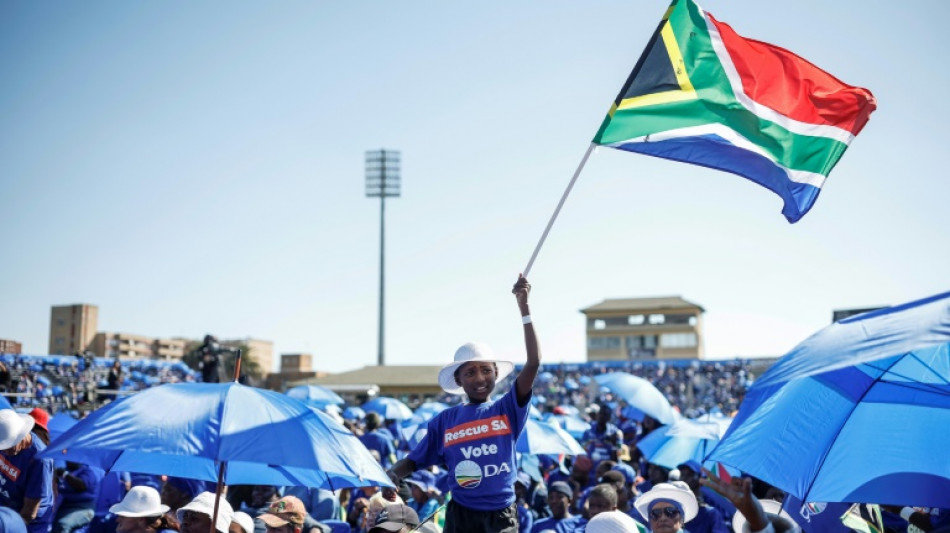
South Africa votes in 'watershed' election / Photo: PHILL MAGAKOE - AFP

 Albania police teargas protesters against Trump-linked resort

 US panel says to loosen restrictions on popular peptide despite safety concerns

 Verstappen swerves around future questions
 EU renews online child sex abuse detection powers
 Airbus, Boeing fly in different directions at Farnborough

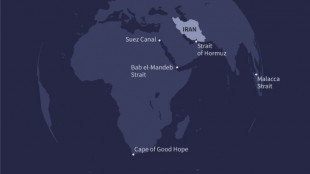 Bab al-Mandeb Strait: another key oil shipping route under threat

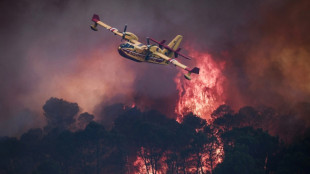 Deadly wildfires in Europe force thousands to flee

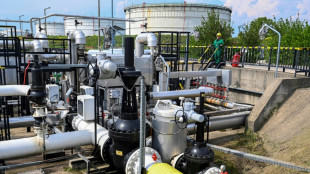 NATO to overhaul European fuel pipeline network
 US trade envoy to make tariff announcement as 10% duty soon expires

 Trump stuns Saudis by pinning nuclear deal to Israel ties
 Tough day for Ubisoft stock topped with weaker revenues
 Swelling jet fuel costs hit American Airlines outlook
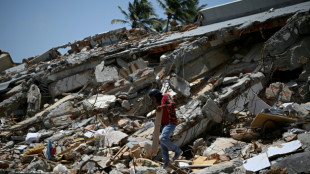
 Carapaz climbs unopposed to Tour de France 18th stage win

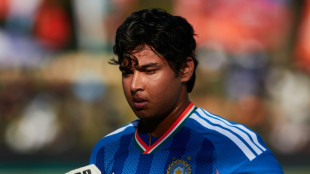 Sooryavanshi hits maiden 50 as India thump Zimbabwe in T20
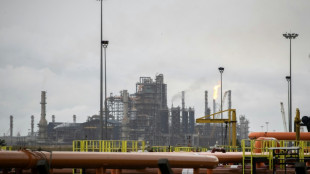
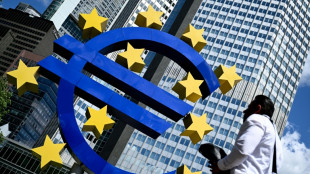 ECB opens door to September rate-hike as Iran war flares up
 World Bank estimates Venezuela quakes caused $19.6 bn in damage

 Italy's far-right line up to defend jeweller who killed robbers

 AI-led boom in IPOs raises concerns about a bust

 Klopp expected to be named new Germany coach on Friday

 ECB holds rates as Iran war flare-up threatens to drive prices higher

 MEXC's "Kickoff Fest" Trading Event Concludes with Top Individual Reward of 27,352 USDT
 Oil soars close to $100 on fresh Mideast attacks

 India's angry Gen Z protesters say Modi must fix accountability

 Barca sign Adeyemi from Borussia Dortmund
 EasyJet profits nosedive on Mideast war
South Africans vote on Wednesday in what may be the most consequential election in decades, as dissatisfaction with the ruling ANC threatens to end its 30-year political dominance.
Polls open at 7:00 am (0500 GMT) and close at 9:00 pm, with 27 million registered voters called to elect a new parliament, which then chooses a president.
For the first time since the advent of democracy in 1994, the African National Congress is at risk of losing its outright majority and could be forced to negotiate a coalition.
"South Africa's general election is a watershed moment in the political history of the country," said Aleix Montana, an analyst at risk intelligence company Verisk Maplecroft.
Under the leadership of the late Nelson Mandela, the ANC won freedom for black South Africans after decades of apartheid.
It then helped build a strong democracy and lifted millions out of poverty by creating a broad social welfare system.
- Strong foundation -
But many in the country of 62 million are fed up with high unemployment, currently at 32.9 percent, rampant crime, corruption scandals, and regular power cuts and water shortages.
The economy grew a meagre 0.6 percent in 2023.
"It's now time to make my vote count and kick them out," said Busisiwe Mthethwa, 62, from Umlazi, a township in the battleground province of KwaZulu-Natal.
She was among 1.6 million "special voters" including the elderly and essential workers who were allowed to cast their ballot early on Monday and Tuesday.
President Cyril Ramaphosa, who is seeking a second term, defended his record in a speech to the nation on Sunday, citing progress in fighting graft and fixing gaps in electricity production among other successes.
"We have placed South Africa on a new trajectory of recovery and laid a strong foundation for future growth," the 71-year-old said.
"We cannot afford to turn back. There is more work to be done."
He has also promised to usher in universal credit and push ahead with plans to provide health coverage.
But polls suggest the ANC could win as little as 40 percent of the vote, down from 57 percent in 2019.
- Instability ahead? -
Under South Africa's post-apartheid constitution, MPs are elected on a party list system, and the executive president is chosen from among their number by the Cape Town-based parliament.
If the ANC has fewer than 201 seats, Ramaphosa would have to negotiate with opposition parties and independent MPs to secure a majority and return to government headquarters in Pretoria.
It could face stark choices.
On the right, it is beset by the Democratic Alliance (DA), which has vowed to "Rescue South Africa" by rolling back the ANC's race-based economic empowerment programmes and to boost growth through privatisation and deregulation. Polls put it at below 25 percent.
On the left, it is bleeding support to former president Jacob Zuma's uMkhonto weSizwe (MK) and Julius Malema's Economic Freedom Fighters (EFF), which favour radical reforms like land redistribution and the nationalisation of key economic sectors.
Polls estimate the two parties are tied at around 10 percent.
Once an ANC stalwart, Zuma fell out with his old party after being forced out of office under a cloud of corruption allegations in 2018.
He has been barred from standing as an MP because of a conviction for contempt of court, but remains extremely popular in KwaZulu-Natal, his home province.
Were the ANC to come close to 50 percent however, it could strike a potentially easier deal with some of the dozens of smaller groups in the running.
- Shrinking turnout -
"The choosing of its partners will ultimately set the scene for South Africa's future course," said political analyst Daniel Silke, adding that a poor showing could also threaten the future of President Ramaphosa.
"South Africa, therefore, is set for a pretty combustible and unstable period in which it will have to get used to governance from a weak majority party or indeed a minority party."
Turnout could prove key, with some models suggesting a low participation might favour the ruling party.
Voter interest has progressively shrunk every five years, since hitting a high of 89 percent in 1999. Turnout at the last elections in 2019 was 66 percent.
South Africans will vote also for provincial legislatures. Full results are not expected before the weekend.
F.Wilson--AT