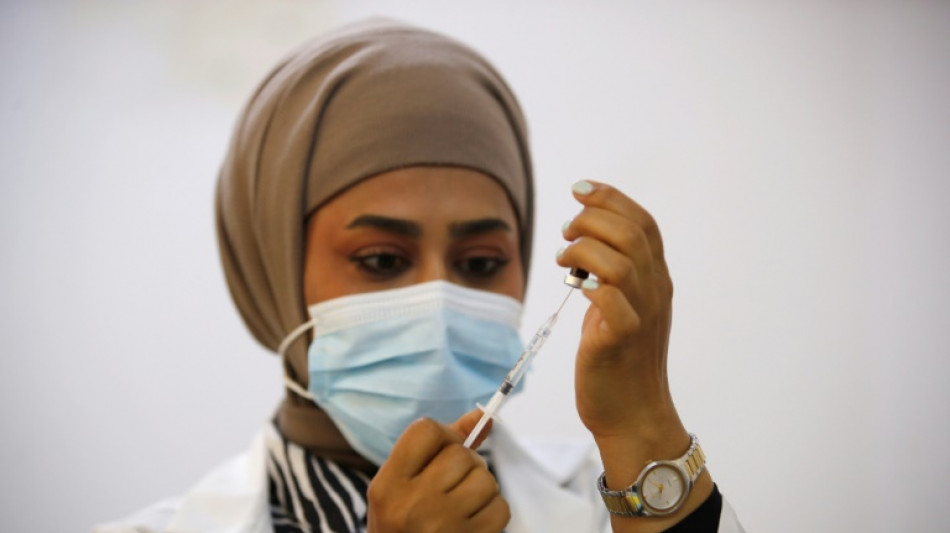
Five key points in proposed pandemic agreement / Photo: AHMAD AL-RUBAYE - AFP

 Alonso welcomes Aston Martin upgrade, warns against unreal expectations
 Anderson declares Man City 'kings of Manchester' after £116 mn move
 Relieved Russell says Mercedes have solved his power problems mystery

 Oil soars above $100 as Middle East fears grow
 Venezuelans turn to scrap collecting in quake-hit beach 'paradise'

 Heptathlon champion Johnson-Thompson joins list of Commonwealth Games absentees

 Nigeria's Dangote raises $2.5bn to expand Africa's largest refinery
 Oil soars to $100 on fresh Mideast attacks
 Coal-fired power generation rising globally on Mideast war: IEA

 Premier League champions Arsenal sign Greece winger Tzolis from Brugge

 French Jewish DJ sues after activists disrupt gig: lawyer

 Venice film festival promises Pattinson, Oasis and Musk doc
 ASEAN calls for open straits as US-Iran war casts shadow

 Ford and Geely to form joint venture at struggling Spain plant
 Russia warns US against Ukraine arms sales in Manila meeting
 New UK PM announces tax cut for struggling pubs

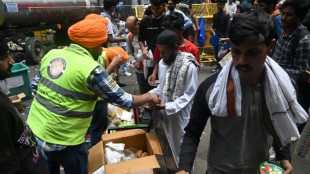 Supporters flood India's 'cockroach' protesters with food
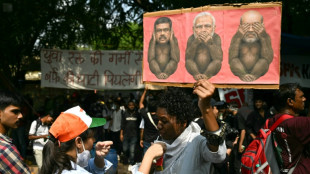
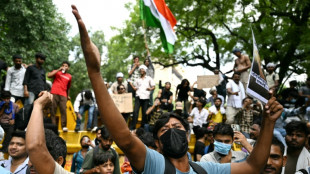 Modi vows punishment for exam leaks fuelling India protests
 Norway set to make formal complaint to FIFA over Balogun red card saga
 Floods in northeast India kill at least 41

 Nestle siphons off bottled water business into joint venture

 Hundreds hospitalised in Japan heatwave 'disaster'
 Renault says sales stalled in first half
 EasyJet says profits nosedive on Mideast war

 Modi vows punishment for exam fraud fuelling India protests
Countries are trying to finalise a global agreement on how to prepare for and avert pandemics by Friday evening, after two years of negotiations triggered by the horrors of Covid-19.
Here are five key sections of the draft agreement being discussed by national negotiators at the World Health Organization's headquarters in Geneva, according to a draft seen by AFP:
- Pathogen access, benefit sharing -
The core of the agreement is the proposed Pathogen Access and Benefit-Sharing System (PABS) -- a new platform allowing the swift sharing of pathogen data with pharmaceutical companies, enabling them to quickly start working on pandemic-fighting products.
This has been the trickiest part to negotiate.
Developing countries have expressed concerns about handing over data if there is a risk they might be cut off from accessing the resultant vaccines, as was largely the case at the start of the Covid-19 pandemic.
Under PABS, countries would commit to rapidly sharing data on emerging problematic pathogens, and that the vaccines and other benefits derived from accessing that information would be shared on a more equitable footing.
But while the principle is widely supported, the detail is not.
Countries are debating whether PABS should involve pharmaceutical manufacturers giving 10 percent of their production to the WHO for free for global distribution -- for example, to protect frontline health workers worldwide.
A further 10 percent could be given to the WHO at a not-for-profit price.
- Prevention and surveillance -
Under this section, countries would take steps to progressively strengthen their pandemic prevention and surveillance capacities.
Subject to resources, countries would develop, strengthen and implement comprehensive national pandemic prevention plans.
This would include things like routine immunisation, managing biological risks in labs, preventing antimicrobial resistance, and stopping transmission of diseases from animals to humans.
This section has largely been agreed upon by working groups, but is awaiting final sign-off.
Negotiators are also debating whether, or how, to broaden the scope of the agreement to include surveillance of animal and environmental health in the bid to spot pandemic threats.
But some worry this is stepping beyond the WHO's remit.
- Financing -
Article 20 of the draft agreement deals with sustainable financing.
Some developing countries simply don't have the resources to implement Western levels of pandemic preparedness and pathogen surveillance.
Developed nations meanwhile are reluctant to foot the bill for them without concrete commitments in return.
As the draft stands, countries would agree to maintain or increase domestic funding for pandemic prevention, preparedness and response.
They would also mobilise additional money to help developing countries implement the agreement, through grants and concessional loans.
- Supply chain and logistics -
In an attempt to smooth out the flaws exposed by Covid-19, a Global Supply Chain and Logistics Network would be set up for equitable, timely and affordable access to pandemic-related health products.
During pandemic emergencies, countries would prioritise sharing pandemic-related health products through the network so that they can be distributed equitably based on public health risk and need.
Each country would also be asked to avoid stockpiling pandemic-related health products that unnecessarily exceed the quantities needed.
Switzerland, for instance, destroyed more vaccines against the virus causing the Covid-19 pandemic than it ever administered during the crisis.
- Vaccine mandates, lockdowns, travel bans -
WHO director-general Tedros Adhanom Ghebreyesus has repeatedly warned of unprecedented misinformation and disinformation surrounding the pandemic agreement negotiations -- notably over what the agreement would allow the WHO and its chief to do.
Amid accusations that the deal would enable the UN health agency to encroach on countries' sovereignty over their health policies, the draft text specifies that "nothing" in the agreement should be interpreted as giving the WHO "any authority to direct, order, alter or otherwise prescribe" national or domestic laws, or impose other requirements such as banning travellers or imposing vaccination mandates.
E.Hall--AT