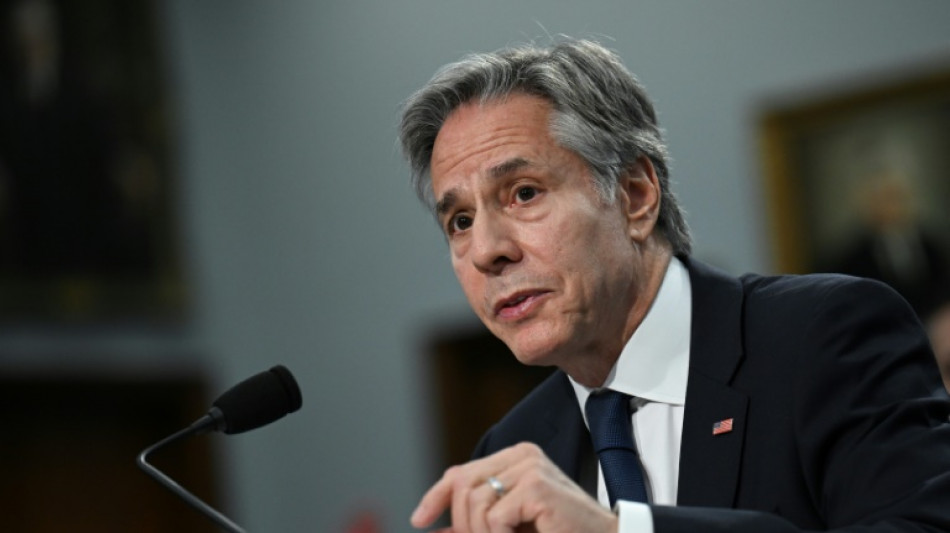
Blinken doubts global pandemic deal can be reached in 'near term' / Photo: Drew ANGERER - AFP

 Nigeria's Dangote raises $2.5bn to expand Africa's largest refinery

 Oil soars to $100 on fresh Mideast attacks
 Coal-fired power generation rising globally on Mideast war: IEA

 Premier League champions Arsenal sign Greece winger Tzolis from Brugge

 French Jewish DJ sues after activists disrupt gig: lawyer

 Venice film festival promises Pattinson, Oasis and Musk doc

 ASEAN calls for open straits as US-Iran war casts shadow

 Ford and Geely to form joint venture at struggling Spain plant
 Russia warns US against Ukraine arms sales in Manila meeting
 New UK PM announces tax cut for struggling pubs

 Supporters flood India's 'cockroach' protesters with food

 Modi vows punishment for exam leaks fuelling India protests
 Norway set to make formal complaint to FIFA over Balogun red card saga

 Floods in northeast India kill at least 41

 Nestle siphons off bottled water business into joint venture
 Hundreds hospitalised in Japan heatwave 'disaster'
 Renault says sales stalled in first half
 EasyJet says profits nosedive on Mideast war

 Modi vows punishment for exam fraud fuelling India protests
 Six candidates in race to lead UN set for televised debate
 Comic-Con kicks off with Marvel's return
 Dutch riders dreaming of crazy party corner of Alpe d'Huez

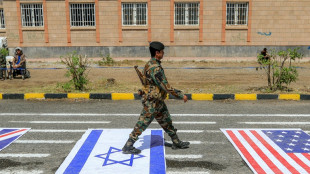 Houthis target Red Sea shipping as US hits Iran
 Record-equalling Red Sox streak halted at 15 wins
 Messi-less Miami beat Fire 3-2 to spoil Lewandowski's MLS debut

US Secretary of State Antony Blinken on Wednesday voiced doubt for the near-term prospects of a global pandemic agreement under negotiation that has drawn a backlash in several Western countries.
Jarred by the Covid-19 pandemic, World Health Organization member countries have spent more than two years thrashing out an accord on future pandemic prevention, preparedness and response.
Talks are set to go to the wire on Friday, after which the annual assembly of WHO member states, which opens on Monday in Geneva, will decide where the process goes next.
"Where it currently stands is that it seems very unlikely that negotiations could conclude successfully in the next few days," Blinken told a congressional hearing in response to a question critical of the potential deal.
"There's no consensus," he said.
Blinken said that the United States was still working with "many countries around the world in making sure that we're better prepared for next time, they're better prepared -- that they have their own capacity to detect, to deal with, and, as necessary, to produce things like vaccines."
"All of that is part of the conversation, but I don't think, based on the latest I've seen, that this is going to come to a conclusion in the near term," Blinken said.
- Consensus conundrum -
In early May, WHO chief Tedros Adhanom Ghebreyesus acknowledged that some countries "may not be in a position to join a consensus," but he urged them "not to block consensus."
WHO member states' negotiating teams have since been working round the clock at the UN health agency's headquarters in Geneva to try and get an agreement finalized in time for the World Health Assembly, which opens on Monday.
"It's too early to say where we will be on Sunday," a diplomatic source in Geneva said.
"The negotiations are complicated and difficult. They are moving forward but the result is not yet predetermined."
Addressing one key concern, Blinken said that the United States would insist that the text reflect "our clear interests" including on intellectual property rights, with lawmakers charging that the deal could cede access to US know-how to adversary China.
Opposition to a pandemic agreement has grown in the United States, Britain and other countries, including among vaccine skeptics and conservatives who allege it would infringe on state sovereignty.
The latest draft of the agreement retains a clause saying nothing in it shall be interpreted as giving the WHO "any authority to direct, order, alter or otherwise prescribe the national and/or domestic laws" of any country, or "impose vaccination mandates or... implement lockdowns."
- Equity -
Under the US Constitution, treaties require approval by two-thirds of the Senate -- a level of support that is virtually insurmountable on any controversial issue.
Blinken stopped short of clearly promising that President Joe Biden's administration would submit any pandemic agreement, if it is concluded, as a treaty to the Senate.
"If there is a constitutional requirement, we will fulfill it," Blinken said.
Tedros told a press conference that the accord has "equitable access to personal protective equipment, vaccines, therapeutics and diagnostics at the core."
"It will save lives and I'm asking country leaders to give it one last big push to get it over the line next week."
WHO emergencies director Michael Ryan said the talks were making progress and countries were very determined to find agreement.
However, "there are clearly some key areas in which the member states still have some distance between them," he added, saying they included access to pathogens, financing, prevention, and vaccines.
P.Hernandez--AT