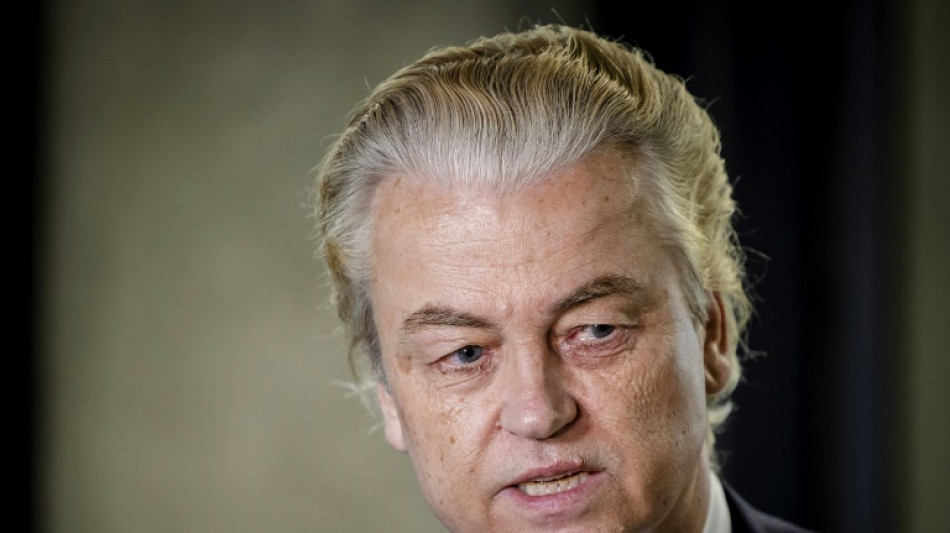
Dutch parties reach deal to form government / Photo: Sem van der Wal - ANP/AFP

 Supporters flood India's 'cockroach' protesters with food
 Modi vows punishment for exam leaks fuelling India protests
 Norway set to make formal complaint to FIFA over Balogun red card saga
 Floods in northeast India kill at least 41

 Nestle siphons off bottled water business into joint venture
 Hundreds hospitalised in Japan heatwave 'disaster'
 Renault says sales stalled in first half
 EasyJet says profits nosedive on Mideast war
 Modi vows punishment for exam fraud fuelling India protests
 Six candidates in race to lead UN set for televised debate

 Comic-Con kicks off with Marvel's return
 Dutch riders dreaming of crazy party corner of Alpe d'Huez
 Houthis target Red Sea shipping as US hits Iran
 Record-equalling Red Sox streak halted at 15 wins
 Messi-less Miami beat Fire 3-2 to spoil Lewandowski's MLS debut
 Mercedes expect Hungary challenge from Hamilton and Ferrari
 In Ghana, one man's race to save critically endangered fish
 Wilson captain, Slipper absent in Kiss's first Wallabies squad
 New Mideast fighting puts eurozone rate-setters on alert
 Venezuelans search for animal companions lost in the quakes
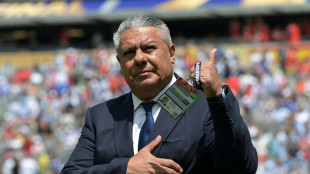 Argentine Football Association says US did not detain its president
 June heatwave cost UK economy more than £1bn: study
 Empire Metals Limited Announces Management Appointments
 Caledonia Mining Corporation Plc: Blanket Exploration Results
 Tocvan Discovers New High-Grade At-Surface Silver-Gold Zone 900 m East of Pilot Facility at Gran Pilar Project

Six months after Geert Wilders won a stunning election victory, squabbling politicians finally clinched an agreement Wednesday on a coalition government, said the Dutch far-right leader, who will not be prime minister.
"We have a negotiators' agreement," said Wilders, who had reluctantly agreed to give up his dream of running the European Union's fifth-largest economy amid widespread unease over his anti-Islam, anti-European views.
It was not immediately clear who would be prime minister to lead the right-wing coalition government and replace Mark Rutte, who is almost certain to be tapped as the new NATO secretary general.
"Discussions over the prime minister will be held at a later time," Wilders told reporters.
However, the main contender looks to be former education and interior minister Ronald Plasterk, who also played a key role in overseeing the initial talks.
Later on Wednesday, MPs for the four parties all gave their approval to the deal, the details of which were not immediately available.
In March, the four parties agreed to aim for a partially technocratic government made up of 50 percent politicians and 50 percent from outside politics.
The last time the Netherlands had such an "expert" government was in 1918 and it is not clear how it will work more than 100 years later.
After marathon talks on Tuesday, Wilders said it would be a "historic day" if his far-right PVV Freedom Party took part in a Dutch government for the first time.
The far-right has gained in elections across Europe but has struggled to translate votes into power as other parties refuse to work with them.
"It's a worrisome day. We now have a radical right-wing party under Wilders that finds itself at the centre of power in the Netherlands," said opposition leader Frans Timmermans from the Greens-Left alliance.
- 'A bit longer' -
Wilders, sometimes nicknamed the "Dutch Trump", has softened some of his policy positions but his election manifesto still called for a ban on the Koran and mosques.
After winning the largest share of the vote in the elections, Wilders was primed to be the country's first far-right PM but at least one of his coalition partners threatened to torpedo a deal in that case.
"Do not forget: I will become prime minister of the Netherlands one day. With the support of even more Dutch," Wilders said after reluctantly stepping aside.
"If not tomorrow, then the day after tomorrow. Because the voices of millions of Dutch will be heard."
The coalition talks -- between Wilders' PVV, farmers party BBB, the liberal VVD and new anti-corruption party NSC -- have been fractious, not helped by social media sniping from all sides.
In February, NSC head Pieter Omtzigt abruptly stormed out of the talks, ostensibly over disagreements over public finances but he was also known to have major concerns about Wilders' more extreme policies.
Asked why it had taken nearly six months to form a government, Omtzigt smiled and said: "Well, it's a bit the story of the forming of this government."
"Every phase took just a bit longer than we thought, but that's normal."
It has become something of a tradition for Dutch governments to take a long time forming.
The last Rutte government took 271 days to take shape.
A.Ruiz--AT