'We will never register': Georgia NGOs vow to defy repressive law / Photo: Giorgi ARJEVANIDZE - AFP

 Nokia says AI, cloud boosted sales in second quarter

 Repsol says profit more than triples on higher oil prices

 TotalEnergies says profit doubled on Mideast war

 Giant swing on Swiss peak aims to boost summer tourism as Alps warm
 ASEAN to call for open straits as US-Iran war casts shadow
 AI catches up with humans to score 100% at top maths contest

 South Korea election office raided in fake turnout figures probe: investigators

 Killer whales: orcas blow fish to bits 'for fun', study finds
 Deadly wildfires force thousands from homes in parts of Europe

 Tech bounce lifts Asia stocks, oil extends gains on US-Iran fears

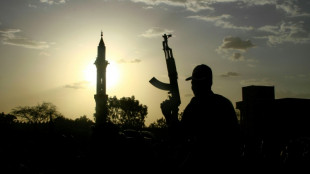 Surrounded by militias, Sudanese fear endless cycle of war

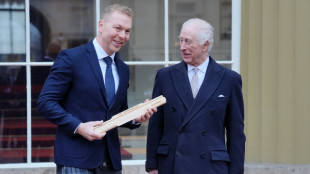 Commonwealth Games 'where champions are made' despite slimmed down model, argues president
 Trump family project in Albania has already caused 'irreparable' damage: NGOs

 Bollywood blast master keeps it real with fire and fury

 Tearful fights, edible offerings: A glimpse into the Maradona trial
 What's the deal with peptides? The hyped market under US review
 Tesla shares fall as Musk touts ambitious -- and costly -- plans

 InterContinental Hotels Group PLC Announces Transaction in Own Shares - July 23

 Empire Metals Limited Announces Management Appointments

 Tocvan Discovers New High-Grade At-Surface Silver-Gold Zone 900 m East of Pilot Facility at Gran Pilar Project
 Google-parent Alphabet beats expectations, cloud revenue nearly doubles
 US announces civilian nuclear deal with Saudi Arabia

 Tesla shares dip after profit misses expectations
 Red Sox tie club record with 15th straight MLB win

 US eyes offshore nuclear reactors

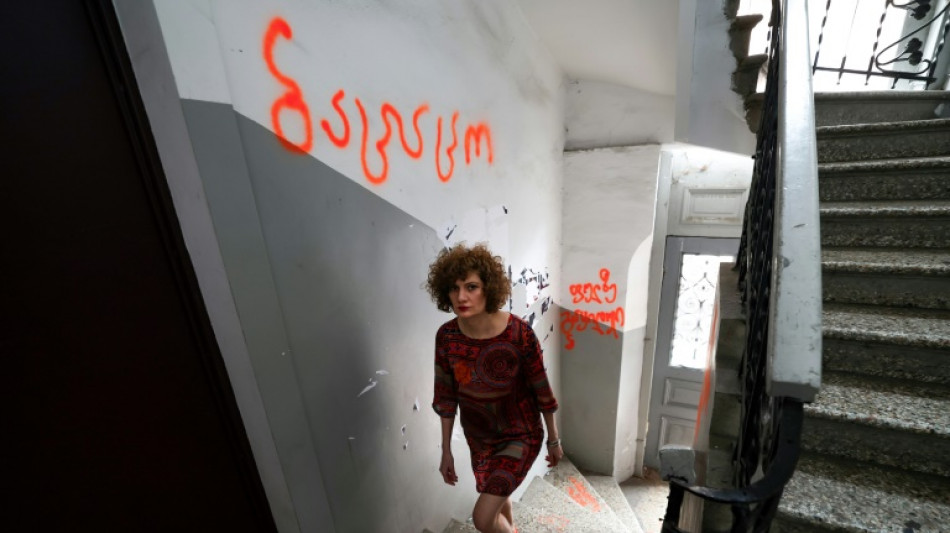
Baia Pataraia, the head of a leading women's rights group in Georgia, woke up last weekend to find her apartment building in the capital Tbilisi plastered with posters of her face and the words "foreign agent".
The images were also glued in the staircase leading to her front door, where "grant-eating lesbian" was sprayed in orange graffiti.
"My neighbours took them down, that was an amazing feeling," Pataraia said.
Activists, independent journalists and opposition politicians have faced weeks of violence and threats since the government of the former Soviet republic introduced draft legislation last month targeting NGOs.
The government says the law is aimed at ensuring "transparency", arguing that foreign-funded groups like Pataraia's undermine Georgia's sovereignty.
But rights observers and Western governments warn it will harm Tbilisi's path to the European Union and further ignite tensions in the Caucasus country, which has been wracked by polarisation since its independence from the USSR in 1991.
Pataraia rejected the suggestion that she was a threat. Her group, Sapari, supports women suffering from domestic violence and discrimination.
"Whatever I do, I do it for my people, my country, and definitely not for anyone else," she said.
For months before the law was adopted on Tuesday, Pataraia said the government had been tightening the screws on NGOs, waging a campaign against them in the media.
But NGOs like Pataraia's remain defiant.
"I will never, ever register as a foreign agent," she told AFP.
- 'Traitor' posters -
Dubbed the "Russian law" over its similarity to repressive legislation first passed by the Kremlin, the bill sparked weeks of mass protests.
If implemented, any organisation or media group receiving at least a fifth of its funding from abroad would have to register as an agent of "foreign influence".
Pataraia had been targeted by similar posters before. When the ruling Georgian Dream party first tried to pass the legislation last year, an image of her face and the word "traitor" was posted around Tbilisi metro stations.
"But this is the first time they have come to our homes," she said.
Not registering with authorities would mean facing impossible fines -- or closure.
Outside the Georgian headquarters of Transparency International, an anti-corruption NGO, there were similar posters threatening the organisation's local head Eka Gigauri.
Gigauri, an outspoken critic of Georgia's government, was unsurprised.
"The implication would be that they might freeze our assets," the 46-year-old said.
Transparency International has been in Georgia for 24 years, like many Western-funded groups that sprung up after Tbilisi gained independence.
Gigauri said the group had been targeted over its reports about graft in Georgia, and that she would "never" agree to being labelled an agent or spy.
- We could 'cease to exist' -
While authorities have signalled that rights monitors will be the primary targets of the bill, foreign-funded NGOs have been vital in supporting other humanitarian causes.
On the outskirts of Tbilisi, Nato Shavkaladze agonised over how her safe house for women escaping domestic violence would survive if the law was implemented.
Strolling through the modest building that shelters around 20 women, she told AFP one floor was renovated with funds from the Polish embassy, while another was financed by Japan.
"This fridge was donated by Israel," she said in the kitchen of the shelter, adding it had also received grants from Estonia.
As she spoke, toddlers ran around while a baby slept in the front room.
"We are talking about saving lives," Shavkaladze said.
Georgia's NGO network is hugely dependent on foreign grants and her group gets only 20 percent of its funding domestically.
"If we don't register we will probably cease to exist," Shavkaladze said.
On the other side of Tbilisi, Sara Modzmanashvili-Kemecsei wondered how she would keep her dog shelter running.
"We are being labelled for doing something that is in the interest of the entire society," she said.
She carried boxes of donations with her teenage daughter, who has taken an active role in protests.
"This is not about transparency," she said.
Asked what she thought about Georgian Dream's billionaire backer Bidzina Ivanishvili accusing NGOs of plotting revolution, she replied: "I would like him to come shovel dog shit with me and see how we are working to change the power."
She pointed at the dogs. "These are the entities pursuing the interests of foreign powers!"
G.P.Martin--AT