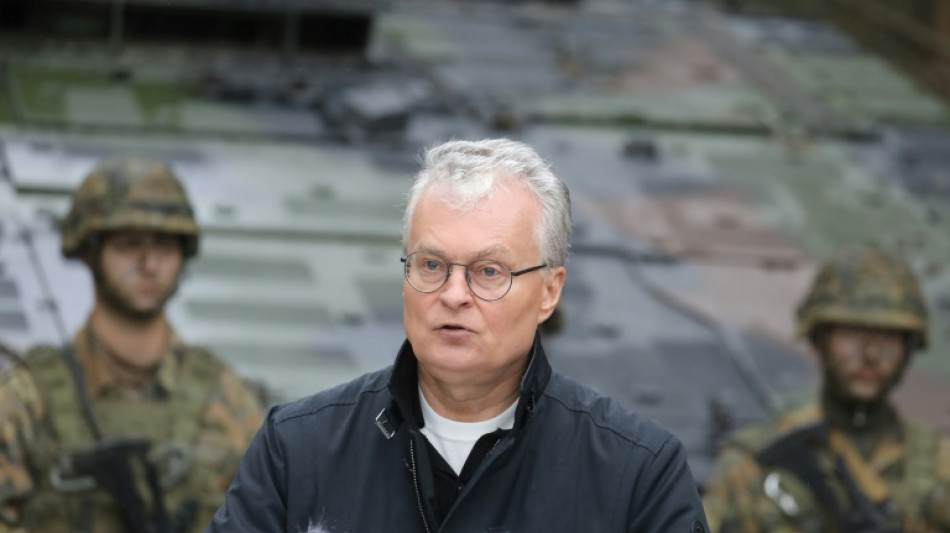
Lithuanian president, PM set for election runoff on May 26 / Photo: PETRAS MALUKAS - AFP

 Nokia says AI, cloud boosted sales in second quarter

 Repsol says profit more than triples on higher oil prices

 TotalEnergies says profit doubled on Mideast war
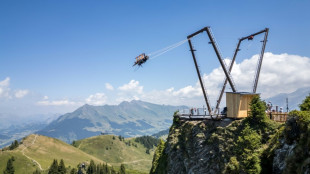 Giant swing on Swiss peak aims to boost summer tourism as Alps warm
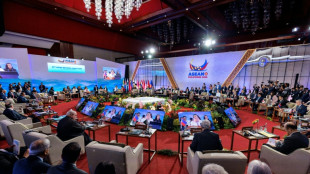 ASEAN to call for open straits as US-Iran war casts shadow

 AI catches up with humans to score 100% at top maths contest

 South Korea election office raided in fake turnout figures probe: investigators
 Killer whales: orcas blow fish to bits 'for fun', study finds
 Deadly wildfires force thousands from homes in parts of Europe
 Tech bounce lifts Asia stocks, oil extends gains on US-Iran fears

 Surrounded by militias, Sudanese fear endless cycle of war

 Commonwealth Games 'where champions are made' despite slimmed down model, argues president

 Trump family project in Albania has already caused 'irreparable' damage: NGOs

 Bollywood blast master keeps it real with fire and fury

 Tearful fights, edible offerings: A glimpse into the Maradona trial
 What's the deal with peptides? The hyped market under US review
 Tesla shares fall as Musk touts ambitious -- and costly -- plans

 InterContinental Hotels Group PLC Announces Transaction in Own Shares - July 23
 Empire Metals Limited Announces Management Appointments

 Tocvan Discovers New High-Grade At-Surface Silver-Gold Zone 900 m East of Pilot Facility at Gran Pilar Project
 Google-parent Alphabet beats expectations, cloud revenue nearly doubles
 US announces civilian nuclear deal with Saudi Arabia

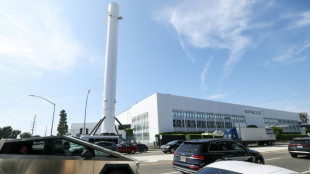 Tesla shares dip after profit misses expectations
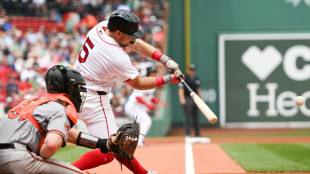 Red Sox tie club record with 15th straight MLB win

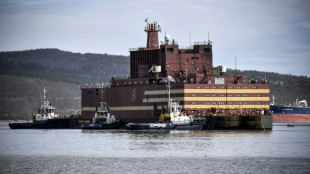 US eyes offshore nuclear reactors

Lithuania's president and prime minister will face off in the second round of the Baltic state's presidential vote on May 26 after the incumbent failed to win an overall majority in the first round on Sunday.
With almost all the ballots counted in the Baltic state which was once part of the Soviet Union, President Gitanas Nauseda was ahead with 46 percent of the vote while Prime Minister Ingrida Simonyte had 16 percent.
The election has been dominated by fears over neighbouring Russia and all the main candidates in the vote agreed the NATO and EU member should boost defence spending to counter the perceived threat.
Nauseda, a 59-year-old former banker, said he was confident of victory in the second round and would require "no strategy" to campaign against Simonyte.
His rival is a 49-year-old fiscal conservative with liberal views on social issues. She notably supports same-sex partnerships, which still stir controversy in the predominantly Catholic country.
Opinion polls in the run-up to the vote gave Nauseda a comfortable lead over the other seven candidates, including Simonyte and prominent lawyer Ignas Vegele.
Pensioner Aldona Majauskiene, 82, told AFP she had voted for Nauseda because "he is the best in every category".
Civil servant Airine, 53, said she voted for Simonyte and expects less populism from the future president.
"I am not voting for faces, I am voting for those who really can help boost our security and quality of living," she said.
Turnout was more than 59 percent -- the highest result since the 1997 presidential election.
Simonyte is running for president for a second time after losing to Nauseda in a run-off in 2019.
"Simonyte is supported by conservative party voters and liberal people, while Nauseda is a candidate of the left in terms of economic and social policy," Vilnius University analyst Ramunas Vilpisauskas told AFP.
The Lithuanian president steers defence and foreign policy, attending EU and NATO summits, but must consult with the government and parliament on appointing the most senior officials.
- Defence budget -
Lithuania, which has a population of 2.8 million people, is a top donor to Ukraine and a big defence spender, with a military budget currently equal to 2.75 percent of GDP.
The Simonyte-led government is expected to come forward with proposals within weeks that could help lift defence spending to three percent of GDP.
Lithuania intends to use the funds to purchase tanks and additional air defence systems, and to host a German brigade, as Berlin plans to complete the stationing of around 5,000 troops by 2027.
The uneasy relationship between Nauseda and Simonyte's ruling conservatives has at times triggered foreign policy debates, most notably on Lithuania's relations with China.
Bilateral ties turned tense in 2021, when Vilnius allowed Taiwan to open a de facto embassy under the island's name in a departure from the common diplomatic practice of using the name of the capital Taipei to avoid angering Beijing.
"China's reaction to the opening of the office was harsher than predicted, and that sparked the debate," Eastern Europe Studies Centre director Linas Kojala said, adding that China's response was hurting local businesses.
P.Hernandez--AT