Under siege, Sudanese risk their lives to feed each other / Photo: - - AFP

 Designing a Tour de France route: a three-year labour of love
 Chelsea sign Rogers from Villa for reported UK record fee
 'The Dink' sees comedy in US pickleball craze
 Rainout keeps Red Sox MLB win streak at 14 with two games Wednesday

 Zelensky sacks army chief Syrsky after days of protests

 Messi lands in Argentine hometown after World Cup defeat

 Lipowitz breaks collarbone in Tour de France crash

 India opposition leader Gandhi detained after calling for PM resignation
 AI boom lifts Mexico tech exports, complicating Trump trade goals
 'Godzilla' actress Kaylee Hottle, 18, dies in US car crash

 South Africa's anti-migrant unrest led over 160,000 to flee

 Ipswich sign Ghana winger Fatawu from Leicester
 Evenepoel wins 'special' Tour de France individual time-trial

 Evenepoel wins Tour de France individual time-trial
 Tropical Storm Bertha strengthens, threatening Gulf coast of US
 Microsoft strikes deal for Mistral's AI computing power
 Dutch students unveil 'world-first' solar-powered ambulance

 French lawmakers set to ban social media for under-15s in European first

 UK PM Burnham unveils energy tax cut, tells ministers to cut living costs
 Pharma heavyweights clash over anti-obesity drug ads
 Hungary raids Orban's Fidesz party servers in graft probe
 General Motors lifts 2026 outlook despite hit from electric retreat

 Uproar in France over reintroduction of bee-harming pesticides

 Kuwaitis ration electricity as Iran hits power grid

 Former Man Utd boss Ferguson salutes old rival Keegan

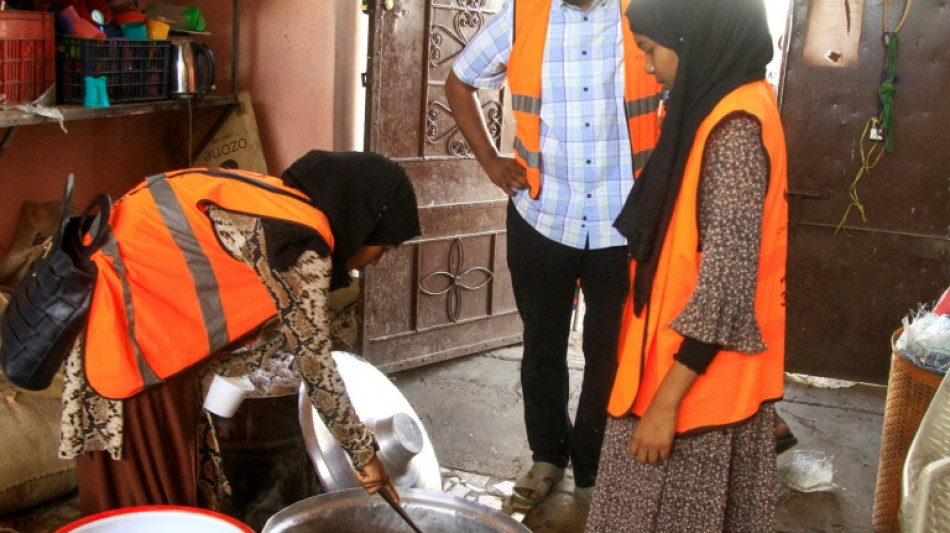
Sameh Makki's soup kitchen is barely 100 metres from the market, but it can take two hours to make the journey through Sudan's war-torn streets, often through hails of bullets.
The 43-year-old, his family and local volunteers have risked everything to get supplies to feed around 150 families caught in the crossfire between the army and paramilitaries.
"The only thing that matters is that people eat. If I had died while making that happen, so be it," said Makki.
Since the war began last April between the army of General Abdel Fattah al-Burhan and the Rapid Support Forces (RSF) of his former deputy Mohamed Hamdan Daglo, tens of thousands have died and millions more have been forced to flee their homes.
Initiatives like Makki's are some of the only ways that people survive as the impoverished country hangs on the verge of famine.
Makki fled to Egypt to get medical care for his daughter and left the soup kitchen in the care of his mother and young volunteers from the neighbourhood.
Like many of his compatriots, he now coordinates donations from the Sudanese diaspora to send back to those trying to survive the fighting.
- Frontline for aid -
Shortly after the conflict's first shots rang out, young people began volunteering to cook in their homes, volunteer coordinator Abdel Ghaffar Omar told AFP in Cairo.
The idea quickly spread and hundreds of self-funded "community kitchens" popped up across the country.
They were able to use grassroots neighbourhood youth groups called "resistance committees" that had previously organised pro-democracy protests and helped coordinate the Covid-19 response.
When war erupted, the committees created Emergency Response Rooms (ERRs) to provide civilians in the line of fire with healthcare, evacuation help and food aid.
Most ERRs run their own kitchens, others help with coordination and funding.
International aid groups call them the frontline of Sudan's humanitarian response and the United Nations has said ERRs have helped over four million civilians across Sudan.
Several volunteers told AFP the kitchens serve anywhere from a few dozen to 200 families each day.
In the capital alone, tens of thousands rely on ERRs for daily meals, consisting mainly of rice, beans, lentils and the occasional animal protein.
- 'We have to smuggle' -
Volunteers like Makki were occasionally able to broadcast mealtimes from the local mosque in Omdurman, Khartoum's twin city.
The situation is starkly different just across the River Nile in Khartoum North, also known as Bahri, which has been under siege for nearly a year.
"The army thinks of Bahri as an RSF stronghold, and treats anything going in like RSF supplies," one activist told AFP, requesting anonymity in order not to compromise his work.
"We basically have to smuggle our stuff in."
Volunteers go door-to-door delivering every ration, but the streets of Bahri are filled with paramilitary fighters known for looting life-saving aid.
"Carrying large quantities of food draws attention," ERR Bahri volunteer Mahmoud Mokhtar told AFP in Cairo.
"If the army catches you, they say you're smuggling for the RSF, if the RSF catches you they call you an army spy."
When asked if he has lost comrades in the line of duty, Mokhtar's eyes quickly filled with tears.
"People have been killed and raped and assaulted and detained and beaten and taken away for months at a time, we're used to it," he said.
There is no official count for how many activists and volunteers both sides have targeted, but ERRs and the doctors' union regularly post obituaries for civilians killed while providing life-saving assistance.
"The kitchens themselves have been repeatedly shelled by both sides," according to Mokhtar.
- 'If we stop, we starve' -
According to several volunteers, kitchens usually only have about two weeks of supplies at best.
"They're always terrified their stocks could run out," said Omar, the volunteer coordinator.
In February, a communications blackout crippled the online banking app that Sudanese rely on, forcing every community kitchen in Bahri shut down.
Although around half have since come back to life, according to Omar, communications are not yet fully restored in the greater Khartoum area.
Volunteers are instead travelling hours to get an internet connection so they can access their money.
"One guy had nine phones of his neighbours, who trusted him with their mobile banking apps to get their own money back to them," said Makki.
Despite all the hardships, though, the volunteers are determined to carry on.
"We have no choice but to continue," said Mokhtar.
"If we stop, we starve to death."
H.Gonzales--AT