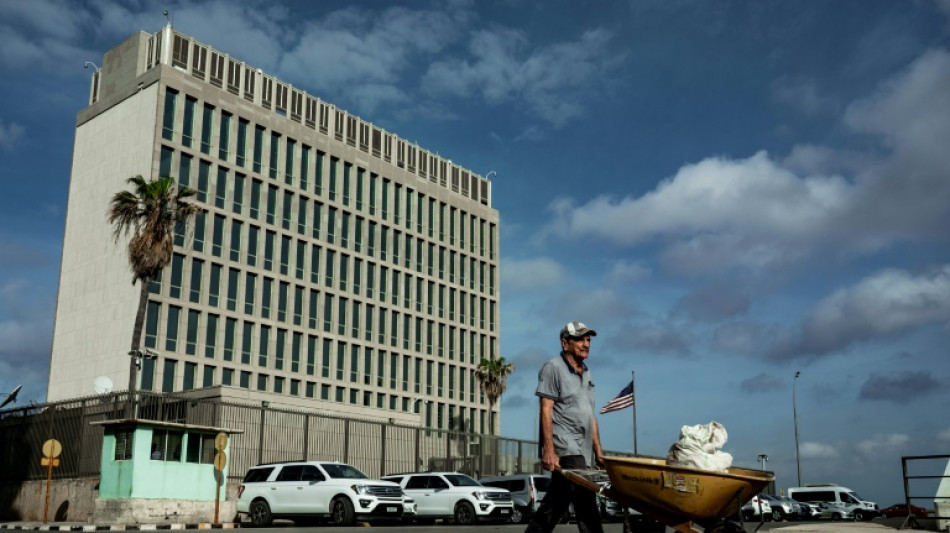
New research deepens Havana Syndrome mystery / Photo: YAMIL LAGE - AFP

 Messi lands in Argentine hometown after World Cup defeat

 Lipowitz breaks collarbone in Tour de France crash

 India opposition leader Gandhi detained after calling for PM resignation
 AI boom lifts Mexico tech exports, complicating Trump trade goals
 'Godzilla' actress Kaylee Hottle, 18, dies in US car crash

 South Africa's anti-migrant unrest led over 160,000 to flee

 Ipswich sign Ghana winger Fatawu from Leicester

 Evenepoel wins 'special' Tour de France individual time-trial
 Evenepoel wins Tour de France individual time-trial
 Tropical Storm Bertha strengthens, threatening Gulf coast of US
 Microsoft strikes deal for Mistral's AI computing power
 Dutch students unveil 'world-first' solar-powered ambulance
 French lawmakers set to ban social media for under-15s in European first

 UK PM Burnham unveils energy tax cut, tells ministers to cut living costs

 Pharma heavyweights clash over anti-obesity drug ads

 Hungary raids Orban's Fidesz party servers in graft probe

 General Motors lifts 2026 outlook despite hit from electric retreat
 Uproar in France over reintroduction of bee-harming pesticides
 Kuwaitis ration electricity as Iran hits power grid
 Former Man Utd boss Ferguson salutes old rival Keegan

 UK PM Burnham's new cabinet to meet as he announces tax cut
 Former MotoGP champion Quartararo to make Honda switch

 Oleksandr Syrsky, Ukraine's under-fire commander-in-chief

 New UK govt tackles cost of living with energy tax cut

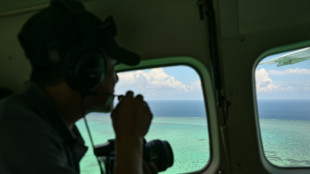 China summons Philippine ambassador over clash in disputed waters
The mystery of so-called Havana Syndrome, which struck down dozens of US diplomats, deepened Monday as new research found no tangible evidence of brain injury in those affected.
Researchers at the National Institutes of Health (NIH) acknowledged that ongoing symptoms including migraines, chronic dizziness, and depression are still very much real -- even if they cannot yet be explained.
Havana Syndrome first baffled officials in 2016 when US diplomats in Cuba's capital reported falling ill and hearing piercing sounds at night, sparking speculation of an attack by a foreign enemy using an unspecified sonar weapon.
Similar reports of the illness later emerged from embassy staff in China, Europe and US capital Washington.
Yet despite the "disabling" symptoms, people with Havana Syndrome -- formally referred to as anomalous health incidents (AHIs) -- show no clinical differences, according to two new papers published Monday in peer-reviewed journal JAMA.
Leighton Chan, lead author of one of the papers, said "it's important to acknowledge that these symptoms are very real, cause significant disruption in the lives of those affected and can be quite prolonged, disabling and difficult to treat."
In this study, researchers assessed more than 80 US government officials and their family members using MRI brain scans and other blood, visual and auditory tests. They were compared with a control group of overseas US officials who had similar work assignments but were unaffected by the symptoms.
It found those with AHIs self-reported increased symptoms of fatigue, post-traumatic stress and depression.
- 'Genuine, distressing' -
Forty one percent of those with AHIs met the criteria for "functional neurological disorder" -- problems with the way the brain sends and receives information from the rest of the body, and as a result nearly all with this dysfunction could be diagnosed with a chronic form of dizziness.
"These individuals have symptoms that are genuine, distressing, and can be quite prolonged, disabling, and difficult to treat," said the researchers.
In the second paper, participants underwent MRI scans to examine their brain size, structure, and function. These were carried out on average 80 days after symptom onset and revealed no imaging abnormalities differentiating the group with AHIs.
But this "does not exclude that an adverse event impacting the brain occurred at the time of the AHI," said Carlo Pierpaoli, who led the study.
The US State Department was reviewing the research, a spokesperson said Monday, adding its "top priority remains the health, safety, and security of the Department’s personnel and family members."
US intelligence had said in 2022 that intense directed energy from an external source could have caused some cases of Havana Syndrome, officially known as anomalous health incidents (AHIs).
But in March 2023 intelligence agencies concluded that "there is no credible evidence that a foreign adversary has a weapon or collection device that is causing AHIs."
They reported the symptoms were probably the result of preexisting conditions, conventional illnesses and environmental factors.
David Relman of Stanford University, who has led previous research into Havana, said the new study was flawed as not all brain injuries were detectable with the tests used.
In an editorial also published in JAMA, Relman cited two previous studies he contributed to which found the cases "to be unlike any disorder reported in the neurological or general medical literature, and potentially caused by an external mechanism."
F.Ramirez--AT