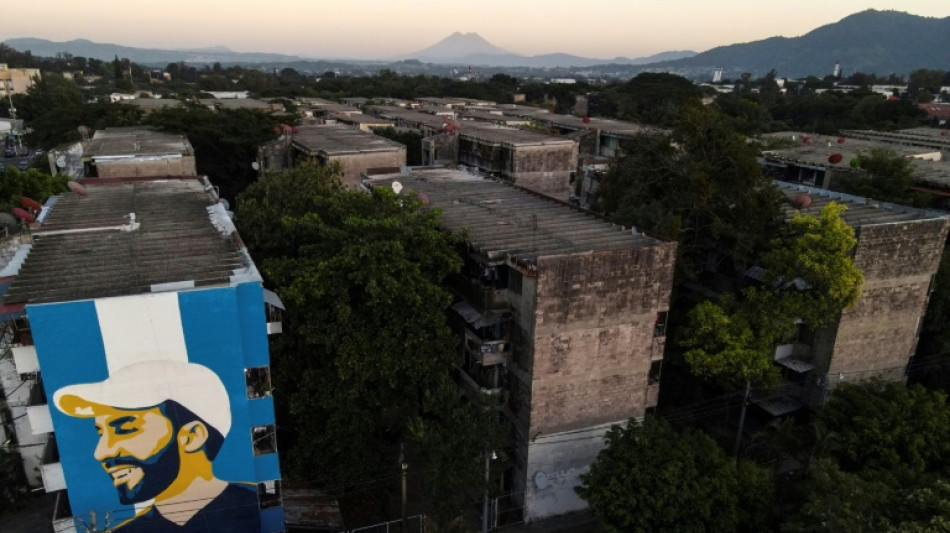
A mega-prison and a Mayan 'Pompeii': five things about El Salvador / Photo: Camilo FREEDMAN - AFP

 US stocks gain after reassuring inflation data, tech giants advance
 EU accepts X's plan to fix digital content violations

 Toronto air ranked among world's worst as wildfire smoke billows south
 Argentina and England set for World Cup semi-final showdown

 Argentina protects landmark Obelisk as World Cup madness mounts
 Tour stage winner Waerenskjold inspired by Manx Missile Cavendish
 Canada central bank holds key rate steady, says economy improving
 Trump tells immigration agents to resume traffic stops despite killings
 Hong Kong police raid independent bookstore run by former journalists
 Castres' ex-All Black Papali'i ruled out for six months
 British Open chiefs have no plan to change schedule if England reach World Cup final

 Orban's ex-FM quits Hungary parliament for China's BYD
 Up to 45% of dementia risk can be prevented, delayed: WHO

 Tech stocks lead gains, oil prices rise

 Bangkok bar fire toll rises to 33 as PM vows venue overhaul
 Power restored across Cuba after third outage in two weeks
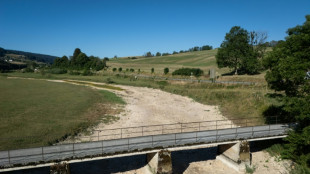 France in 'very worrying' drought: minister
 Attempted burglary at Yamal's home after World Cup triumph: police, media
 European stocks drop as oil prices rise

 Broad says England need extra ODI seamer after India defeat

 Myanmar leader to visit Thailand next month: Thai FM to AFP
 Belgian great Meunier signs for Premier League side Sunderland

 Kenya denies Rastafarians the right to smoke weed

 Generative AI's power sparks fears of dumbing humans down
 'Like my lover': Chinese users bid farewell to AI companions
The Central American nation of El Salvador goes to the polls Sunday in an election dominated by President Nayib Bukele's war on gangs.
Here are five things to know about the impoverished country of 6.3 million people.
- War on gangs -
El Salvador and neighbouring Honduras and Guatemala form the "Northern Triangle", the world's most violent region outside of a conflict zone.
When Bukele took power in 2019, El Salvador had one of the world's highest murder rates at 38 per 100,000 inhabitants, with drug gangs controlling 80 percent of the country.
Bukele imposed a state of emergency, which he used to imprison more than 75,000 alleged gang members. (Some 7,000 were later released).
About 12,000 were packed into a new mega-prison billed as the biggest in the Americas.
The murder rate nosedived, falling to 2.4 per 100,000 inhabitants in 2023, winning Bukele fans throughout Latin America, particularly in countries like Mexico and Ecuador that are battling brutal drug cartels.
But his tactics have proved controversial, with rights groups, the United States and United Nations criticising arbitrary arrests, inhumane prison conditions and growing authoritarianism.
- 12-year civil war -
From 1980-1992, El Salvador was torn apart by a civil war, fuelled by social injustice, repression and the assassination of peasants rights defender, archbishop Oscar Romero, gunned down at mass.
The war between the military government and FMLN (Farabundo Marti National Liberation Front) grouping of far-left guerrilla outfits led to the deaths of about 75,000 people.
More than 7,000 disappeared before the conflict ended in 1992 after UN-mediated peace negotiations.
- Bitcoin a first, and a flop -
El Salvador has a diaspora of three million people, most living in the United States.
In a bid to facilitate remittances from emigres -- which account for a quarter of its GDP -- the country in 2021 became the first to make the cryptocurrency bitcoin legal tender.
Circulating alongside the US dollar, which replaced the Salvadoran colon in 2001, the bitcoin is little used, however.
- Draconian abortion laws -
Predominantly Christian El Salvador has some of the toughest anti-abortion laws in the world, with a ban on terminations in place since 1998, even in cases of rape or risk to the pregnant woman's life.
Prison terms range from two to eight years but courts often classify cases of abortion or even miscarriage as "aggravated homicide", which is punishable by up to 50 years in prison.
In December 2023, a woman convicted of homicide over the death of her newborn in hospital -- she was accused of neglecting the fetus while pregnant -- was freed after serving eight years of a 30-year sentence.
- Salvador's Pompeii -
El Salvador had its own Pompeii moment over 1,400 years ago when the city of Joya de Ceren, near the present-day capital San Salvador, was buried by a volcanic eruption.
Like Pompeii and Herculaneum in Italy, the archaeological site was in exceptional condition when it was discovered in 1976, providing a rare insight into the Mayan way of life, including rituals, agriculture, trade, governance and eating habits.
A.Anderson--AT