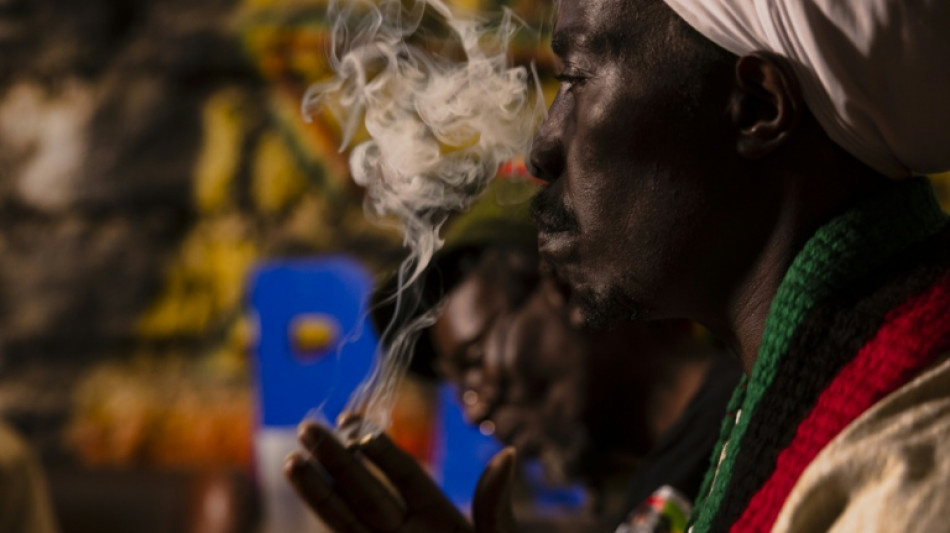
Kenya denies Rastafarians the right to smoke weed / Photo: Tony KARUMBA - AFP

 Qatar Facilities Management Market to Reach $11.15bn by 2032

 Black Friday Discounts Cut Prices on Two Top-Rated Wiper Blades

 Twickenham Grounds Team Prepares Pitch for Six Matches in Three Days

 Luxembourg City Plans €13 Million Abrigado Centre for 2029

 Two A1 Crashes Create Kilometres of Rush-Hour Congestion

 South Africa Places 36 Hospitals on Standby for Possible Imported Ebola Cases

 TCC Network Linked to 200% Surge in Global School Attacks

 Beyond Black Friday: A Guide to This Week’s Holidays and Deal Days
A Kenyan court refused to grant Rastafarians the right to smoke weed on religious grounds in a ruling Wednesday.
Rastafarians, who use marijuana as part of their religious meditation, have waited years for the High Court to decide whether they can use the herb under the constitutional right to freedom of religion.
The court ruled that the community had failed to show why the country's drug laws impinge on their religious freedoms. The judge said the petition was "dismissed in its entirety".
However, he said the widespread recreational use of cannabis in Kenya suggested the current law was too harsh.
The "status quo appears untenable", the judge said, and there should be "frank conversations on cannabis and which direction we should take".
A 1994 law makes possession of weed punishable by 10 years' imprisonment and a substantial fine. Rastafarians say this is regularly used by police to harass them.
The community has a special bond to Kenyan history because of their tradition of wearing dreadlocks. They were also worn by many Mau Mau, Kenya's independence fighters who fought against British colonial rule in the 1950s and 1960s.
The east African country effectively recognised the movement in 2019 when a court ruled that expelling a school pupil because of her dreadlocks had violated her religious rights.
The numbers are uncertain but Rastafarianism -- which emphasises mysticism, Pan-Africanism, and vegetarianism -- is thought to be growing in Kenya, especially among young people.
P.Hernandez--AT


