Far-right AfD could be next after German court defunds neo-Nazi party / Photo: Uwe Anspach - POOL/AFP

 Thailand extends activist's jail term to more than 34 years

 China denies spying on Nvidia's Jensen Huang

 BP net profit quadruples on higher oil prices

 Kiss backs 'hungry' Beale to push for Wallabies game time

 World number one Rybakina withdraws in Tokyo with injury

 Malawi's fuel shortages, record prices deepen economic crisis

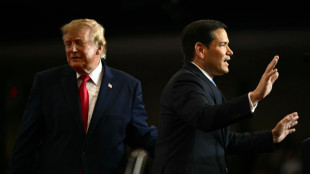 Rubio hosts G20 ministers as Iran, Ukraine wars divide members

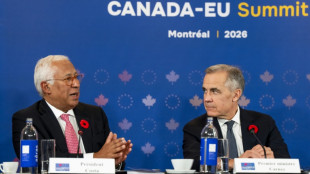 From minerals to AI, EU and Canada to forge new alliance

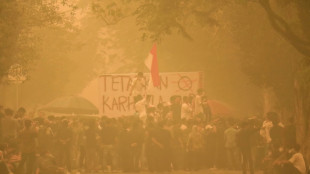 Fire pollution killed 3,560 people in Indonesia in September: report

 Ian Wright and Jamie Carragher split on Liverpool-Arsenal prediction

 The Duskbloods delayed as Nintendo Switch 2 release moves to 2027

 Russia turns to NATO countries for prosthetics amid war-related shortages

 Researchers on island encounter giant spider legs emerging from a burrow

 Britain's King Charles lands in ex-colony Guyana

 Arsenal assess Bukayo Saka fitness concerns before Liverpool meeting

 £10,000 garden project transforms a UK home into a miniature Greece

 Forest destruction tests Armenia-Azerbaijan peace push

 Deal still eludes nations on final day of UN nature talks

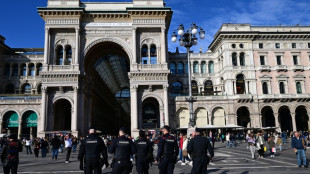 Teen rallies take to the streets across Italy

 Netanyahu bloc finishes ahead in Israel vote, but well short of majority

 Rural US hospitals, collateral victims of Trump politics

 How Trump could interfere in US midterm elections

 As Republicans downplay abortion for midterms, four US states to vote

 No. 4 Indiana looks to revive offense against improving Minnesota

 Police close investigation into Hayden Panettiere death after coroner ruling

Germany's constitutional court on Tuesday approved a request to withdraw public funds from the neo-Nazi Homeland party, offering what one official called a possible "blueprint" for action against the far-right Alternative for Germany (AfD).
Homeland, known until 2023 as the NPD, was "excluded from state funding for a period of six years", the court said.
Markus Soeder, the conservative premier of the southern region of Bavaria, said ahead of the ruling that withdrawing funds from Homeland could be a "blueprint for the AfD" -- an idea which has its supporters across the political spectrum.
In its reasoning, the court said Homeland sought to "eliminate the free democratic order" and had a "racist, in particular anti-Muslim, anti-Semitic and anti-Gypsy, attitude" that clashed with Germany's constitutional principles.
The neo-Nazi group would therefore lose access to state funding available to parties, as well as any tax breaks.
"The forces that want to dismantle and destroy our democracy must not receive a cent of government funding," Interior Minister Nancy Faeser said.
The court verdict comes amid debate in Germany over how to counter the popularity of the far-right AfD, which is under close surveillance by domestic intelligence after being classed a "suspected case of far-right extremism".
The AfD currently sits second in national polls, and is leading them in several eastern regions where elections are set to be held later this year.
- 'Confirmed' extremist -
The party's rise has tapped into concerns over rising migration, high inflation and a stumbling economy.
The prospect that the AfD is closer to holding high political office than ever before has added urgency to the debate over how to respond.
Below the national party, three regional branches of the AfD -- in the eastern states of Saxony, Saxony-Anhalt and Thuringia -- are classed as "confirmed" extremist organisations for their efforts to undermine democracy and their anti-immigrant rhetoric.
Over the weekend, hundreds of thousands of people came out to protest against the AfD after its members were revealed to have discussed a mass deportation plan at a meeting with extremists.
"This ruling comes at a time which shows again that right-wing extremism is the greatest extremist threat to our democracy -- and to people in our country," Faeser said.
The mooted mass deportation plan was "an attack on the foundations of our society", Faeser said.
Germany's democratic institutions would make use of the "instruments" available to them, she said.
Some government figures have urged caution, however, and warned against giving the AfD material for an anti-establishment campaign.
- Failed ban -
The challenge to the AfD needed to be "political", while any action should be limited to the "constitutionally necessary and possible", Finance Minister Christian Lindner told broadcaster Welt TV.
The parties of the "democratic centre" should not give the impression they "want to use party law to fend off unwanted competition", Lindner said.
The request to exclude Homeland from state financing was made by the German government, together with the upper and lower houses of the German parliament in 2019.
A previous attempt to ban the party outright in 2017 failed, when the constitutional court in Karlsruhe said the then NPD was not a real enough threat to be prohibited.
The German constitution was subsequently changed to introduce the possibility of withdrawing state funds.
Public money flows to any party in Germany which scores at least 0.5 percent in national or European elections, or one percent in regional votes.
Homeland, which as the NPD was for a long time a small but significant minority party, has seen its following dwindle and has dropped below the support threshold to be eligible for public funds.
But the party has still benefitted from tax advantages available to political parties, such as exemptions for donations.
K.Hill--AT