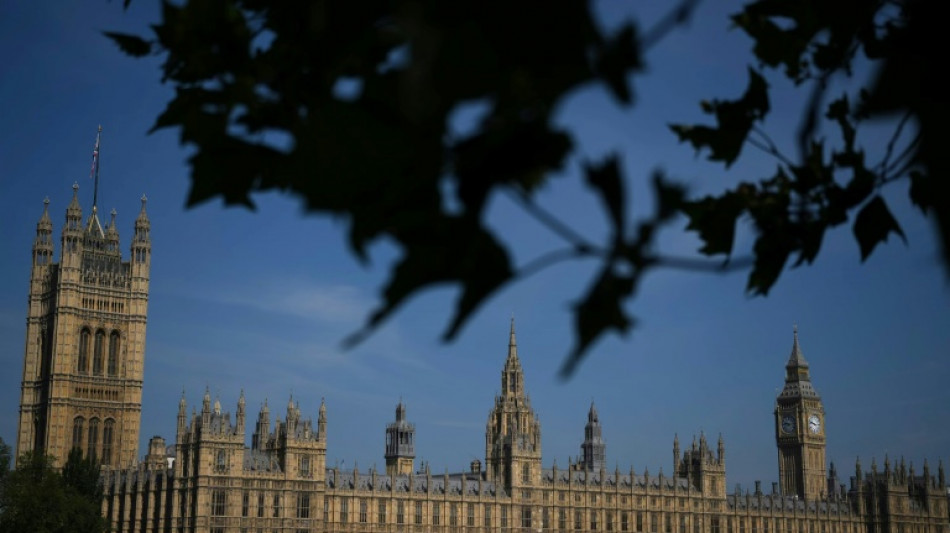
Britain's upper house votes to delay contentious Rwanda plan / Photo: Daniel LEAL - AFP/File

 Thailand extends activist's jail term to more than 34 years

 China denies spying on Nvidia's Jensen Huang

 BP net profit quadruples on higher oil prices

 Kiss backs 'hungry' Beale to push for Wallabies game time

 World number one Rybakina withdraws in Tokyo with injury

 Malawi's fuel shortages, record prices deepen economic crisis

 Rubio hosts G20 ministers as Iran, Ukraine wars divide members

 From minerals to AI, EU and Canada to forge new alliance

 Fire pollution killed 3,560 people in Indonesia in September: report

 Ian Wright and Jamie Carragher split on Liverpool-Arsenal prediction

 The Duskbloods delayed as Nintendo Switch 2 release moves to 2027

 Russia turns to NATO countries for prosthetics amid war-related shortages

 Researchers on island encounter giant spider legs emerging from a burrow

 Britain's King Charles lands in ex-colony Guyana

 Arsenal assess Bukayo Saka fitness concerns before Liverpool meeting

 £10,000 garden project transforms a UK home into a miniature Greece

 Forest destruction tests Armenia-Azerbaijan peace push

 Deal still eludes nations on final day of UN nature talks

 Teen rallies take to the streets across Italy

 Netanyahu bloc finishes ahead in Israel vote, but well short of majority

 Rural US hospitals, collateral victims of Trump politics

 How Trump could interfere in US midterm elections

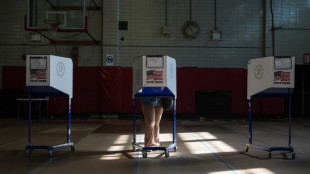 As Republicans downplay abortion for midterms, four US states to vote

 No. 4 Indiana looks to revive offense against improving Minnesota

 Police close investigation into Hayden Panettiere death after coroner ruling

Britain's unelected upper house of parliament inflicted a blow Monday to the government's controversial plan to send migrants to Rwanda, by voting to delay ratification of the treaty with Kigali.
The move is a blow for Prime Minister Rishi Runak, who had urged the House of Lords to pass the plan, saying it was the will of the people.
A majority of peers -- 214 against 171 -- voted to delay ratification of the treaty that London signed with Kigali until the British government has demonstrated that Rwanda is a safe country for migrants who would be deported there.
The treaty is central to the Conservative government's policy to combat illegal immigration by deporting asylum seekers to the East African country.
Sunak, an internal Tory appointment as prime minister after Liz Truss's short-lived tenure ended in disaster in October 2022, is under pressure to deliver on what he has made a flagship policy.
The prime minister survived a key test of his leadership last week by fending off right-wing rebels in his Conservative party to win a knife-edge parliamentary vote in the lower House of Commons on the so-called Safety of Rwanda (Asylum and Immigration) Bill.
He has staked his political future on the scheme, promising to "stop the boats" of migrants crossing the Channel from northern France.
The bill is Sunak's answer to a UK Supreme Court ruling late last year that deporting asylum seekers to Kigali is illegal under international law.
If passed, the legislation would compel judges to treat Rwanda as a safe third country.
It would also give UK ministers powers to disregard sections of international and British human rights legislation.
But critics dismiss it as an expensive gimmick that will not work, accusing the government of not doing enough to clear asylum backlogs.
Peers in the House of Lords, which include former senior judges, have expressed deep unease about the plan, particularly its calls to ignore international human rights and refugee law.
Unlike elected members of the House of Commons, the Lords do not have the power to block ratification of the treaty, which is central to the legislation. But the vote, to which the government will have to respond, suggests new difficulties for the controversial bill.
The bill itself, which defines Rwanda as a safe third country and prevents the return of migrants to their country of origin, is due to be debated in the upper house next week.
Sunak has vowed to cut regular and irregular immigration that has reached record levels despite promises to tighten UK borders after the country's departure from the European Union.
The issue -- and his proposed solution, which was not Tory policy at the last election in 2019 -- is likely to dominate the next nationwide vote later this year, which the opposition Labour Party is tipped to win.
P.Smith--AT