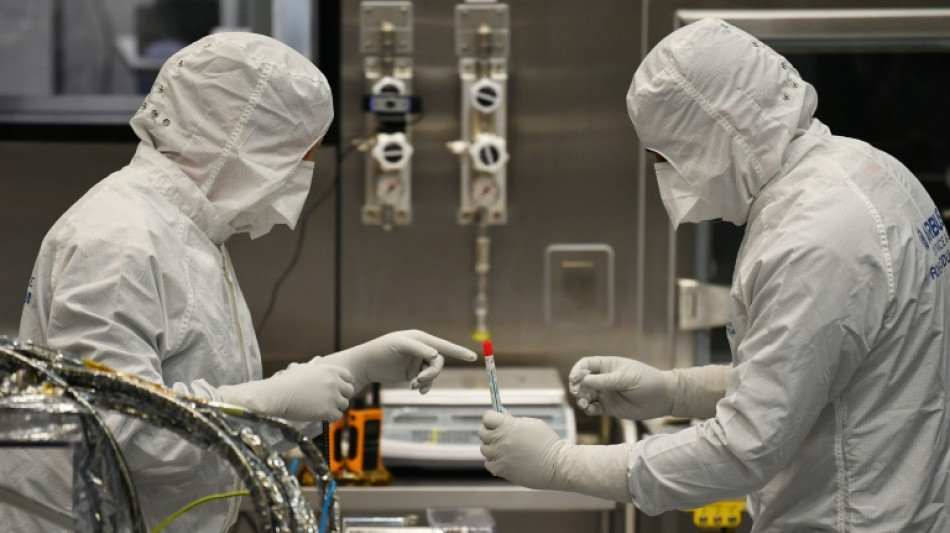
Russia-West scientific collaboration a casualty of Ukraine war

 Vuelta finale neutralised after rider safety concerns

 鏈球選手周柏言身形被質疑 教練指出其香港青年紀錄成績

 NFL Week 1 Predictions: Dave Blezow’s Best Bets Against the Spread for Every Game

 Alabama Legislature Passes Weakened Utility Reform Bill Amid Allegations of Alabama Power Influence

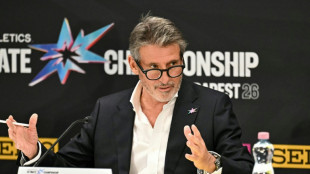 World Athletics stance on Russia unchanged, says Coe

 Can We Predict Volcanic Eruptions Like Weather? Scientists Seek Unified Physics

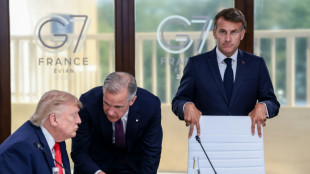 Macron, Carney to visit French islands after Trump's map post
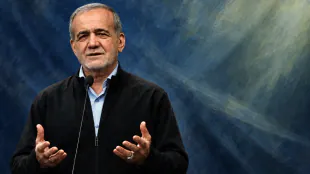 بزشكيان يؤكد رفض الاستسلام وسلطات إيران تعلن مقتل شخص في استهداف سفينة
 فليك يضم حمزة عبد الكريم إلى قائمة برشلونة بعد أربعة أهداف في الإعداد

 Myanmar says UN envoy illegitimate ahead of credentials decision
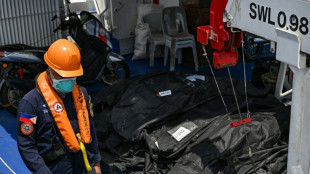 Philippine rescuers pull more victims from charred ferry

 ستاندرد آند بورز تثبت تصنيف السعودية عند A+
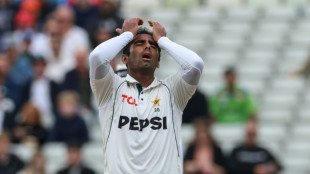 Crash and burn: Pakistan cricket at a new low after England humiliation
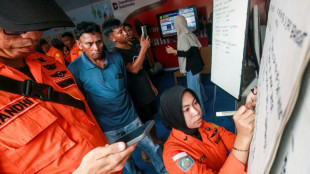
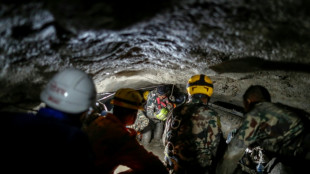 'Second life': Nepal tunnel survivor recalls ordeal
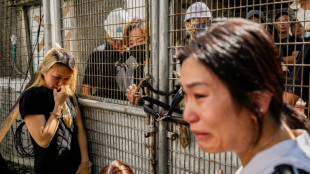 Hong Kong homes flattened for US$28 bn high-tech hub
 'Be careful what you wish for': 'Obsession' director and star reflect on success
 Messi scores but Miami held by Nashville
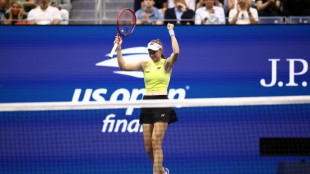
 US Open champ Rybakina on top of world after injury scare
 Rybakina reigns serene as new world number one

 Defiant Sabalenka motivated by US Open defeat

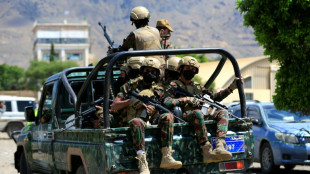 Houthis say hit Saudi base after renewed fighting with Yemeni govt forces
 Roadless Rule repeal proposal raises concerns over Midwest forests and fire risk
 KFF journalists discuss opioid funds, suicide prevention and gaps in care

 GTA VI draws political criticism online as preorder estimates exceed five million
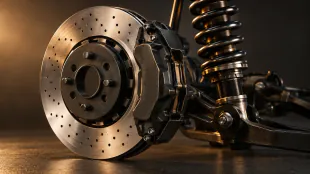
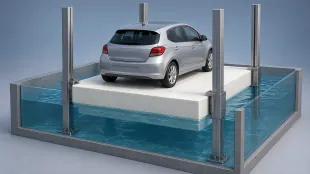 Japanese floating parking platform is designed to lift cars above floodwater
For neuroscience researcher Boris, "everything fell apart" a month ago, when Russia's invasion of Ukraine sent decades-long scientific cooperation with the West crashing back to Earth.
In response to sanctions and moral outrage at Moscow's war, scientific institutes around the world swiftly cut off ties with Russia, including the European Space Agency, the European Organization for Nuclear Research (CERN) and leading US university MIT.
International scientific collaboration that had long symbolised the world coming together in the aftermath of the Cold War -- particularly in space -- suddenly had to be scrapped, sending many projects back to the drawing board.
When the European Space Agency's director general Josef Aschbacher announced the end of cooperation with Russia, he called it an "agonising decision".
The decision spelled a long postponement for the ExoMars mission, which had planned to use a Russian rocket to put a European rover on Mars later this year to drill for signs of life.
Aschbacher said a launch was no longer possible until at least 2026 -- and that the ESA could now look to NASA for help.
It was as a huge blow for the thousands of scientists in Europe and Russia who had been working on the project for years -- and came after ExoMars had already been postponed for two years by the Covid-19 pandemic.
- 'Cut off from the world' -
For Boris, an American of Russian origin living in France who did want to give his surname, 10 years of work was lost overnight when Russia invaded Ukraine on February 24.
He said he had founded a research centre in Russia to create "a unique cross-border model in the field of neuroscience", in which Russian students could travel to different laboratories across Europe.
He told AFP the project has not been officially cancelled, but "everything is blocked," in part because PhD students in Russia can no longer pay for their work due to financial sanctions.
Other students have fled Russia after being threatened with being arrested for protesting against the war.
"We talk to each other every day via Skype or Zoom... but we are lost, the war is beyond us," said Boris, whose parents left the USSR in the 1980s as Russia waged war on Afghanistan.
"For students who have not experienced the Soviet era, it is unimaginable to live in a country cut off from the world. They were truly European in their minds."
Nearly 8,000 Russian scientists and academics signed an open letter earlier this month condemning the war after the International Congress of Mathematicians scheduled to be held in Saint Petersburg in July was called off.
"The many years spent strengthening Russia's reputation as a leading centre of mathematics have been completely scuppered," the letter said, calling Russia "the military aggressor and, accordingly, a rogue state".
- 'Complete boycott' demand -
The influential Russian Academy of Sciences has "called for a cessation of hostilities and addressed foreign researchers to avoid a breakdown in scientific relations," said Carole Sigman, a researcher at France's National Centre for Scientific Research -- which has also suspended collaboration with Russia.
She said there had been an influx of requests for visas from Russian scientists to come to France -- as well as scientists from Ukraine and Belarus.
Several professors from renowned US universities including Harvard and Cambridge have called on "science and technology communities to avoid shunning all Russian scientists for the actions of the Russian government".
While condemning Russia's "brutal, unprovoked war", the professors said in an open letter published in the Science journal on Thursday that shutting down all interactions with Russian scientists "would be a serious setback to a variety of Western and global interests and values".
But for many Ukrainian scientists plunged into war, the world cutting off research collaboration with Russia is essential.
Maksym Strikha, a physicist from the Taras Shevchenko National University of Kyiv, told Nature earlier this month that "there should be a complete boycott of the Russian academic community. No cooperation".
Y.Baker--AT