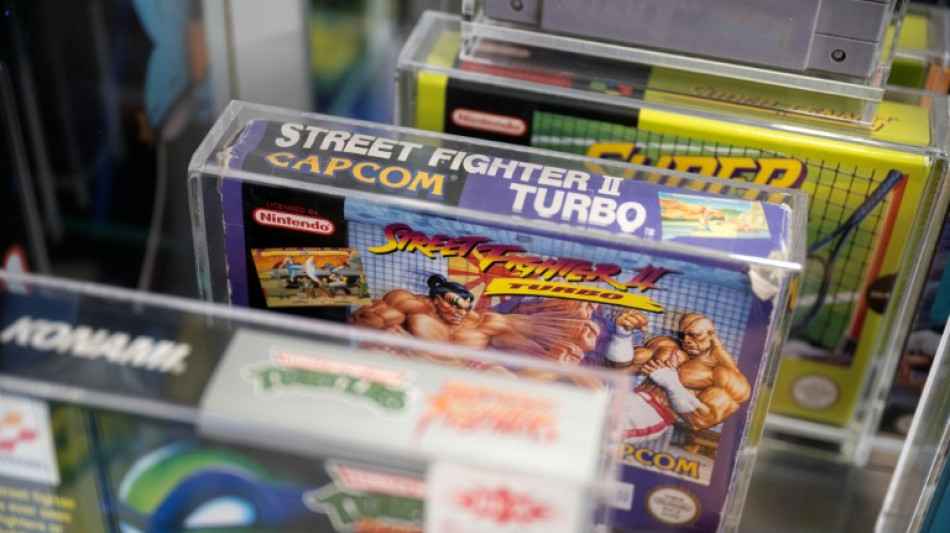
EU admits it can't save discontinued video games / Photo: Oli SCARFF - AFP/File

 Bishop Museum Races to Save Rare Megamouth Shark Specimen

 Zach Hickerson Recounts Hayden Panettiere's Final Moments in New Interview

 Luxembourg Housing Petition Passes Threshold for Parliamentary Consideration

 Raheem Sterling Receives Suspended Sentence After Lamborghini Crash

 Audience to Choose the Set List at Luxembourg's First FAMIL Jukebox Night

 Luxembourg Pay Rise Delayed as Regional and World Headlines Develop

 Chennai Urbanist Sashna Develops 'Anniki' Card Game to Gamify Tamil Nadu History

 Transport Minister Defends Land Seizure Powers for Toronto-Quebec City High-Speed Rail

It's game over for fans of discontinued video games after the EU admitted defeat on Tuesday and said it cannot stop publishers making them unplayable.
But the European Union unlocked one potential cheat code by promising voluntary guidelines to manage video games' "end of life".
The EU was responding to a citizens' petition backed by over a million people from across Europe called "Stop Destroying Videogames", asking Brussels to make sure that older games which still have many fans remain available.
For over a decade, hundreds of online video games have been rendered unplayable at the whim of their publishers, for either technical or economic reasons.
Gamers asked the EU to introduce rules that would force publishers to keep the discontinued games active, for example, by allowing them to remain accessible on private servers set up by volunteers.
But the EU executive said "at this stage it cannot propose a legal obligation to keep video games playable after they stop being provided commercially" due to existing intellectual property rights and copyright law.
Rights holders have exclusive rights over their creations, Brussels said.
Instead, the EU will draw up a code of conduct with input from the industry and consumer representatives, and will work with consumer groups to ensure gamers' rights are respected, including any compensation they may be entitled to.
M.Robinson--AT

