North Korea fires new ICBM in largest test since 2017

 Himalayan glacier study warns of flood and water-supply risks

 Kuwait schools restore classroom routines after remote learning
 US designer Bob Mackie, known for Hollywood glamour, dies at 87

 BIS flags debt and profitability risks in AI-driven market rally

 Qatar Chamber and Maltese envoy consider business forum
 Spanish PM denies being blackmailed by Morocco

 Doha Islamic finance forum names AlRayan firms as co-lead partners

 Leeds thrash Newcastle to go third in the Premier League

 Zelensky says Ukraine ready for 'de-escalatory steps'

 In-form Malen fires Roma to Serie A summit, Inter on their heels

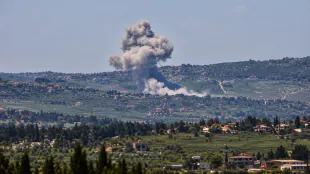 Lebanese agency reports Israeli shelling and gunfire in south

 Expert proposes phased digital reform for Arab business schools

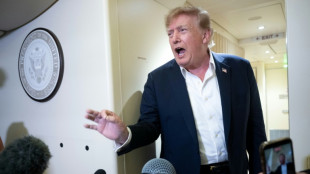 Trump rejects 'hoax' warnings that AI could destroy humanity

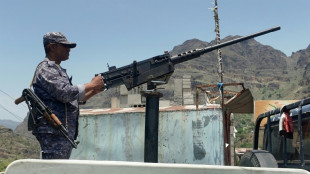 Houthis say Saudi Arabia hits Yemen with 54 strikes after attack on bases

 Why the far right is losing ground in Sweden

 Ex-Ireland fly-half O'Gara extends deal as La Rochelle coach

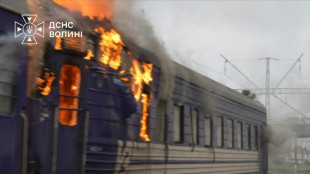 Russian attacks on Ukraine railways escalating every week: rail CEO to AFP

 France, Iraq deepen energy, defence ties during Zaidi visit

 Trump says Ukraine, Russia agree not to hit energy targets

 Nigeria's Dangote refinery launches continent's biggest IPO

 Trump blasts 'sick conspiracy' against AI as warnings mount

 For Laura Linney, role in Parkinson's-themed movie marked a turning point

 Doctors face life sentence over Greek pop star's death

 Trump moves to axe power plant climate rules

 Slow the AI race? Investors weigh the potential cost

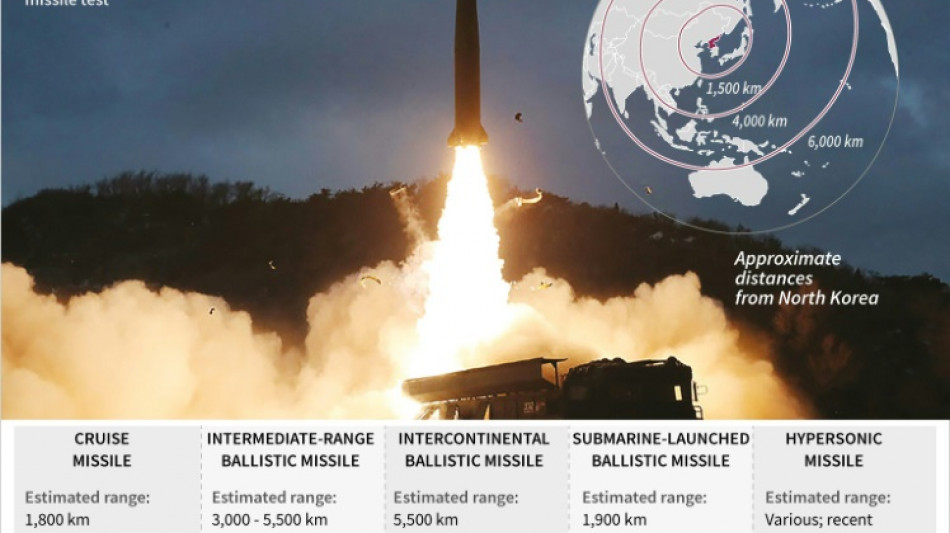
North Korea fired a new intercontinental ballistic missile on Thursday, Tokyo and Seoul said as they voiced outrage at Pyongyang's most powerful launch since 2017.
South Korea's military said it had fired missiles from ground, sea and air in response.
Pyongyang has launched nearly a dozen weapon tests this year in an unprecedented spree in defiance of UN sanctions.
But long-range and nuclear tests such as the one conducted on Thursday have been paused since leader Kim Jong Un met then-US president Donald Trump for a bout of doomed diplomacy, which collapsed in 2019.
Thursday's launch was a "breach of the suspension of intercontinental ballistic missile launches promised by Chairman Kim Jong Un to the international community," South Korea's President Moon Jae-in said in a statement.
"It poses a serious threat to the Korean peninsula, the region and the international community," Moon said, adding that it was a "clear violation" of UN Security Council resolutions.
The missile was fired on Thursday afternoon from Sunan -- likely the same site as a failed test last week -- and had a range of 6,200 kilometers (3,850 miles), Seoul's Joint Chiefs of Staff said.
The missile flew for 71 minutes and landed in Japan's territorial waters, according to the Japanese government.
"This is such an outrageous, unforgivable act," Japan's Prime Minister Fumio Kishida said in Brussels where he was due to meet with members of the Group of Seven.
North Korea was threatening "the peace and safety of Japan, the region and the international community," he added.
"This cannot be accepted."
- Monster missile -
Nuclear-armed North Korea has long coveted an ICBM that can carry multiple warheads and, the US and South Korea say, has been testing the Hwasong-17, a giant ICBM first unveiled in October 2020.
Despite biting international sanctions over its weapons programs, Pyongyang has doubled-down on Kim's drive to modernise the military, and last week test-fired what analysts said was likely the Hwasong-17.
That launch ended in failure, exploding mid-air in the skies above the capital.
"Pyongyang attempted to fire an ICBM at the Sunan airport last week but failed," said Go Myong-hyun, senior researcher at the Asan Institute for Policy Studies.
"So it carried out today's launch to make up for that failure and because it has to complete the ICBM technology right away," he told AFP.
The moratorium was "virtually scrapped" anyway, Go said, when North Korea conducted two tests for what it called a "reconnaissance satellite".
"What is also key is whether Pyongyang will make today's launch official," he added.
- Key anniversary -
Analysts say that North Korea uses ostensibly peaceful satellite development as a fig leaf for full-range ICBM development as there is significant overlap in technology.
The United States and South Korea had this month warned that Pyongyang was preparing to test-fire an ICBM at full range, after what they called a spate of tests disguised as space launches.
Seoul and Washington said these were likely tests of components of the Hwasong-17.
North Korea will mark the 110th anniversary of the birth of founder Kim Il Sung on April 15, and analysts predict Pyongyang will conduct an ICBM or satellite launch as part of the celebrations.
"Kim Jong Un feels it's very important to prove his leadership's competency before the 110th birthday anniversary of Kim Il Sung, especially to his own people in North Korea," said Cheong Seong-chang of the Center for North Korea Studies at the Sejong Institute.
The North has carried out three ICBM tests, the last in November 2017, of a Hwasong-15 -- deemed powerful enough to reach the continental United States.
"Kim Jong Un wants to ultimately establish himself as a leader who has successfully developed both nuclear weapons and ICBMs," Ahn Chan-il, a North Korean studies scholar, told AFP.
North Korea is also taking advantage of Washington's deteriorating relationships with China and Russia, following Moscow's invasion of Ukraine, he said.
"Kim probably feels this is the perfect time to develop ICBMs while repeatedly reminding the world that the North, unlike Ukraine, is a nuclear-armed country."
South Korea is also going through a presidential transition, with Moon set to hand power to successor Yoon Suk-yeol in May, which creates foreign policy confusion, Hong Min, a researcher at the Korea Institute for National Unification, told AFP.
"Everything is very disorganised and all over the place," he said.
"For the incoming administration, it is highly likely that they are not yet prepared," he added.
O.Gutierrez--AT