Ukraine's war orphans turn to family to survive / Photo: Sergei SUPINSKY - AFP

 Thailand extends activist's jail term to more than 34 years

 China denies spying on Nvidia's Jensen Huang
 BP net profit quadruples on higher oil prices

 Kiss backs 'hungry' Beale to push for Wallabies game time
 World number one Rybakina withdraws in Tokyo with injury
 Malawi's fuel shortages, record prices deepen economic crisis

 Rubio hosts G20 ministers as Iran, Ukraine wars divide members

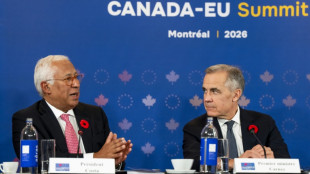 From minerals to AI, EU and Canada to forge new alliance

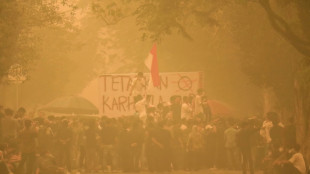 Fire pollution killed 3,560 people in Indonesia in September: report

 Ian Wright and Jamie Carragher split on Liverpool-Arsenal prediction
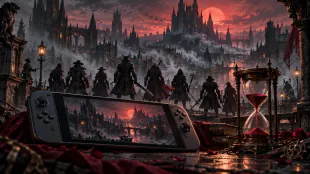 The Duskbloods delayed as Nintendo Switch 2 release moves to 2027
 Russia turns to NATO countries for prosthetics amid war-related shortages

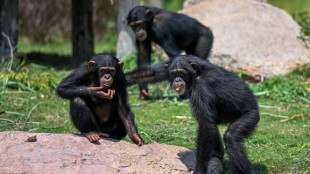
 Researchers on island encounter giant spider legs emerging from a burrow
 Britain's King Charles lands in ex-colony Guyana

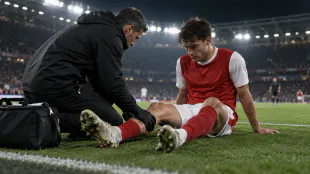 Arsenal assess Bukayo Saka fitness concerns before Liverpool meeting

 £10,000 garden project transforms a UK home into a miniature Greece
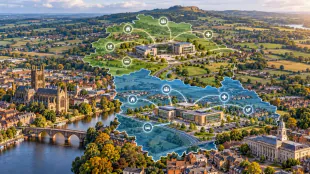
 Forest destruction tests Armenia-Azerbaijan peace push
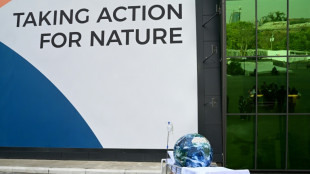 Deal still eludes nations on final day of UN nature talks
 Teen rallies take to the streets across Italy
 Netanyahu bloc finishes ahead in Israel vote, but well short of majority

 Rural US hospitals, collateral victims of Trump politics
 How Trump could interfere in US midterm elections
 As Republicans downplay abortion for midterms, four US states to vote
 No. 4 Indiana looks to revive offense against improving Minnesota
 Police close investigation into Hayden Panettiere death after coroner ruling

Karina, a seven-year-old war orphan who lives in Kyiv with her aunt, has vivid memories of life before her parents were killed fleeing invading Russian forces.
"I remember mom and dad. Me and dad ate sausages," she says with a giggle. The sausages "only with dad", she stresses, adding: "I helped mum wash the dishes and clean up."
The swelling number of orphans like Karina has added to the pressure on a care system already in need of reform before Russia invaded Ukraine in February last year.
More than 9,000 children -- many of them traumatised by their experiences in the conflict -- have lost their parents due to the war, according to Ukrainian social services.
Karina's mother and father died as the family tried to flee their village in the besieged northern region of Chernigiv in the early stages of the conflict.
An explosion -- potentially caused by a land mine or a shell -- killed her parents and catapulted Karina out of the car they were in.
"She had a concussion because she flew out the window," says Karina's aunt Ruslana Nosenko.
"On her back... the burns were dark, dark blue. They have not healed completely," says Nosenko, 22, who took Karina in after she had been treated in hospital in Chernigiv.
"Physically, I think she was very, very lucky, but psychologically she suffered a lot."
- Family home -
Over 100,000 children lived in Ukraine's institutional orphanages before the war -- the largest number in Europe after Russia.
Now, authorities are looking to place more children in foster homes and with families, providing financial incentives for carers.
But despite moves to make adoption easier, the process still involves too many hurdles for Nosenko.
"You need to have an official income, unlike mine," says Nosenko, who studies in Kyiv and has a child of her own.
"I simply couldn't process the adoption, and at this stage I can't process it either, because I'm a student."
At their Kyiv apartment, Karina practices playing the keyboard for Nosenko, who acts as the girl's guardian in lieu of adoption.
A month after the incident, Karina was reunited with her aunt, who broke the news of her parents' death to the girl.
"She was very nervous. She cried a lot," Nosenko says, recalling how Karina would wake up in the night sobbing.
Nosenko took Karina to a psychologist, who encouraged her to write letters to her parents to work through the trauma.
Protecting children from the "psychological consequences" of the war has become a challenge, according to Ukraine's first lady Olena Zelenska, who has campaigned on the issue.
The horrors of war meant "a large number of our children, like adults, have anxiety disorders", Zelenska said.
- Back to Bucha -
Ukrainian armed forces found the corpse of Nazar Gavrilyuk's father when they retook Bucha from occupying Russian forces, along with the bodies of scores of other civilians.
"It was my brother's friend, he went into the yard and saw three bodies," says the 18-year-old from his home in the town, just outside Kyiv, where Russian forces are accused of war crimes.
Like Karina, Nazar has found a new home with his grandmother after losing his father.
"When I came back here, the whole street was bombed out," recounted Nazar, after sheltering in west Ukraine during Russia's capture of Bucha.
"I walked down the street and there were dead people lying on it, two in a ditch and another dead person further down."
His own father was found on the ground next to Nazar's uncle and another "unknown person" from neighbouring Irpin.
"His teeth were knocked out, maybe they were beaten, we don't know anything," says Nazar's grandmother Olga Gavrilyuk, pulling up a of her son's corpse on her phone.
The Russian soldiers in Bucha quickly lost hope of taking Kyiv in a matter of days and defeating Ukraine, says Nazar.
"And so they went after peaceful people."
G.P.Martin--AT