
Cuba still in crisis two years after historic protests / Photo: YAMIL LAGE - AFP

 WhiteBIT Launches Bitcoin Lightning Network Support, Powered by Voltage

 Oil surges, stocks sink as US reportedly eyes fresh Iran strikes
 Anne Carson: modern takes on Greek classics
 Canada's Anne Carson wins Nobel literature prize
 Ethiopia drones hit Eritrean troops in Tigray

 Russian strike on buses kills 30 in frontline Ukrainian city
 Thailand begins extradition process against Chinese journalist

 Quarantine, unease and rumours: Russian city grapples with plague scare
 Taiwan says exports hit record in September on AI demand
 Marc Marquez vows to 'attack' Martin's lead at Indonesian MotoGP
 Diplomats, schools in Saudi take safety measures after blasts heard: sources to AFP

 In Beijing, EU trade envoy says deficit with China 'unsustainable'
 Sri Lanka's de Silva quits as Test captain

 Alcaraz feeling 'mentally fresh' ahead of Shanghai return
 Israel drastically reduces British diplomatic presence in Jerusalem
 Stocks fall further as oil surge fans fresh inflation worries

 North Korea demands South show 'utmost respect' to restore relations
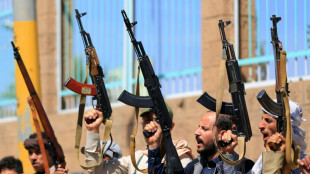 Saudi says three dead in airport attacks claimed by Houthis

 'Mad dream': New showcase for African film opens in London

 All Blacks coach Rennie says Wallabies exit 'part of the game'

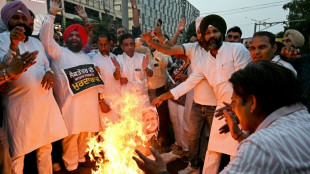 The growing protests against India's poll body - and PM Modi
 Stocks fall further as oil spike fans fresh inflation worries
 Bad COP, worse COP? EU tempers hopes for UN climate summit

 Rookie Henry named in Wallabies midfield to face All Blacks
 Housing crisis set to dominate Spain's snap election
Two years after unprecedented anti-government protests rocked communist Cuba, the deep economic and social problems that drove people to challenge a government notoriously intolerant of dissent have only gotten worse.
There are endless queues for food, fuel and medicine, inflation is in the double digits, tourism is battling to recover, and there has been a drop in sugar production -- another mainstay of the economy.
A lack of foreign currency and peso devaluation have caused prices to rise and ever more Cubans are seeking to flee the island.
On July 11 and 12, 2021, similar complaints sparked spontaneous protests in dozens of cities and towns by people chanting, "Freedom!" and "We are Hungry."
A year later, President Miguel Diaz-Canel promised the country of 11 million people would soon emerge from a "complex" economic situation worsened by six decades of US sanctions and the coronavirus pandemic, which bludgeoned the critical tourism sector.
But another year on, little, if anything, has changed.
"In the short term, the government has very little room to maneuver," Cuban political scientist Arturo Lopez-Levy, who works at the Autonomous University of Madrid, told AFP.
Diaz-Canel, in office since 2018, has been hobbled by "precarious levels of food and energy security" bequeathed by his predecessors Fidel and Raul Castro, said Lopez-Levy.
- Credibility eroded -
After almost six decades of near-total state control of the economy, Havana authorized small and medium enterprises in 2021.
This has gone some way toward alleviating shortages of certain products, but widened inequalities because of higher prices out of reach of many who rely heavily on government handouts.
Increasingly fed up with the state of affairs, Cubans have become less hesitant to express their discontent with the authorities.
Last year, there were intermittent demonstrations against power outages in several provinces in a country where political opposition is not allowed and protests prior to 2021 were very rare indeed.
In May this year, dozens of people demonstrated against food and drug shortages in Caimanera, a town some 1,000 kilometers (621 miles) from the capital.
These protests were not organized but rather "ad hoc" reactions to difficult living conditions, said Lopez-Levy.
For sociologist Rafael Hernandez, editor of the Temas social sciences magazine, the demonstrations were telling of an "erosion of... government credibility, of its policies for emerging from the crisis."
- 'New wave of repression' -
As Cubans have become emboldened, the government has reacted with arrests and harassment, according to activists, and by moving to mute the dissident discourse with intermittent internet blackouts.
According to rights group Justicia11J, the country is dealing with a "new wave of repression."
More than 1,500 people were arrested after the 2021 protests, and hundreds have been behind bars ever since.
According to official data, 488 have been sentenced to terms of up to 25 years for crimes such as contempt and public disorder.
Many activists have left the country.
The government blames the United States for the discord, reiterating through its official mouthpiece Granma on Monday that Washington bore "direct responsibility" for the protests.
"The human rights situation in Cuba continues to deteriorate," Amnesty International said in May, pointing to a new penal code adopted last year that critics say was designed to preemptively quell any displays of public discontent.
Under the law, a prison term of up to two years can be incurred for demonstrations by one or more people "in breach of provisions."
The Vatican, the European Union and the United States have all called for the release of imprisoned demonstrators.
In preparation for the two-year anniversary Tuesday, police and security forces have deployed in large numbers in the streets of Havana, AFP has observed.
P.A.Mendoza--AT