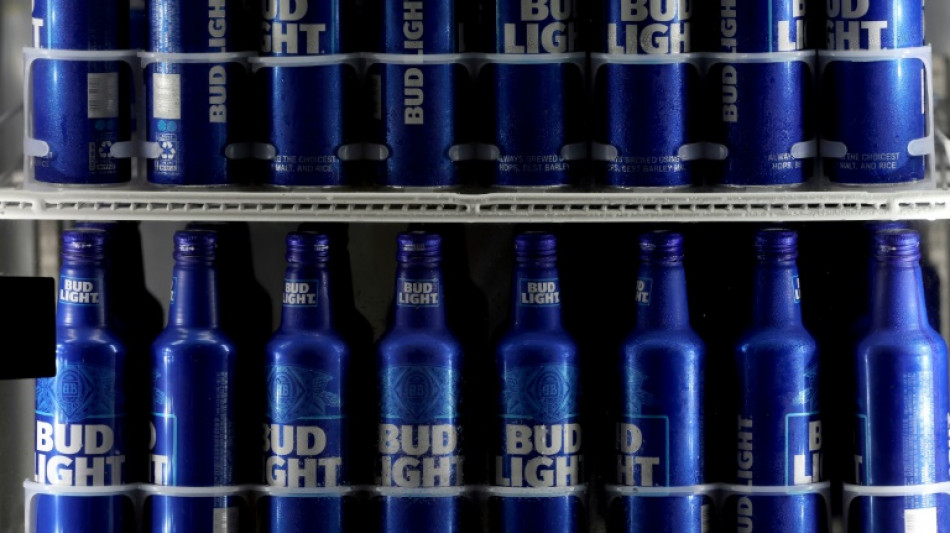
Culture wars put American companies on the defensive / Photo: Rob Carr - GETTY IMAGES NORTH AMERICA/AFP

 HSBC 'consults' over UK unit job cuts amid AI adoption
 UK court quashes five ex-traders' Libor rate rigging convictions

 XM Receives “Global Customer Experience Leader Award 2026” at the TrustFinance Performance Awards
 Stocks slide as oil climbs on Mideast flareup

 Heavy casualties in Ukraine after Russian strikes

 French wine harvest set to hit historic low

 Kyiv 'cannot agree' to EU membership limiting food exports: minister
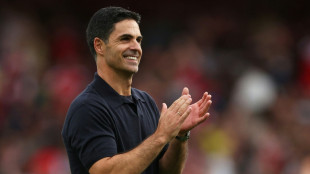
 Arteta targets more Arsenal glory after signing new deal until 2030

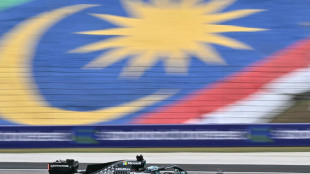 Russell hit with Singapore grid penalty for taking new power unit
 Spotify expands audiobooks to more than 180 markets

 French-Japanese duo wins chemistry Nobel for solving molecular 'mystery'

 England's Nations League surge helps heal World Cup wounds
 Mayor of opposition stronghold Izmir defects to Erdogan party
 Mertens beats Gauff to set up Swiatek clash at China Open
 Benin full of pride at role in Messi's last dance
 France suspends stun grenade use at student protests ahead of PM speech

 Indonesian court hears 'negligence' complaint against state over fires, haze
 Rubio in Greece to urge against Western civilisation 'decline'

 Micron workers at Taiwan plant vote in favour of strike

 In 'The Social Reckoning,' Jeremy Allen White takes on Facebook's 'frightening' ambition

 Chip industry activists call for South Korea to recognise cancer cases
 Famine-scarred southern Madagascar braces for El Nino
 How the EU regulates lobbyists
 I.Coast refuge offers lifelong care for youngsters scorned as 'sorcerers'

 Indian central bank hikes rates for first time in more than 3 years

Boycotting a beer, attacking products celebrating the LGBTQ community, and criticizing shareholders for promoting diversity: In the face of growing criticism from conservatives, American companies are backtracking on progressive corporate initiatives.
For Bud Light beer, it was a partnership with a transgender influencer that triggered the ire of right-wing consumers, and calls for a boycott.
Typically, such a protest has little impact, but this time in-store sales have seen a slump, with Bud Light even losing its position as the best-selling beer in the United States to Modelo Especial in recent weeks, according to Bump Williams Consulting.
Anheuser-Busch InBev, Bud Light's parent company, quickly launched a marketing counteroffensive with a more typically patriotic ad featuring American landscapes, followed on Wednesday by a campaign highlighting its employees.
The Target discount retailer, for its part, chose to withdraw certain items marketed for Pride Month due to threats against employees.
And at annual shareholder meetings, the number of resolutions opposing companies' inclusion of environmental, social and governance (ESG) criteria -- particularly on diversity -- has more than doubled in the past three years, according to the Sustainable Investment Institute (SII).
- Reaction to Trump -
While such resolutions usually garner very few votes, they are nevertheless having an impact.
Larry Fink, the head of asset manager BlackRock, which has promoted sustainable investments in recent years, recently told a conference in Colorado that he has stopped using the term "ESG" because it has become too politicized.
This new vigilance extends to the world of sport: after some players voiced reluctance over wearing rainbow symbols, the National Hockey League decided that teams should no longer wear special jerseys supporting LGBTQ rights because they had become a "distraction."
"The tension of navigating between groups of people that think very, very differently has always been there," said Alison Taylor, a specialist in corporate ethics at New York University.
But the situation has changed as political life has become increasingly polarized, she added.
Corporations "got involved in controversial questions in 2017-2018, when there was a lot of organized resistance to Trump -- this seemed like a really good way to attract young people and generate shareholder value," she said.
While the prospect of affecting real change on issues like abortion and gun control no longer seems possible in the political arena, young people have come to believe they can bring pressure to bear via business, according to Taylor.
- Lobbyists at work -
Unlike their elders, for whom political involvement boils down to the ballot box or party donations, younger people "are more inclined to bring their politics into how you invest, into how you shop, even into your office," said David Webber, a specialist in investor activism at Boston University.
The sharp reactions to some company initiatives have been amplified by political leaders including Florida governor and 2024 presidential candidate Ron DeSantis, who targeted Disney over some of its progressive positions.
And DeSantis is not alone.
"Conservative organizations," financed in part by companies in the oil and gas sector, "started a campaign to pass legislation in different states to target ESG practices," Webber said.
So far, the results have been mixed.
"Some companies may, at least, back away from some of the rhetoric on ESG. But we've seen very little serious reallocation of assets," he said.
Driven by customers, shareholders and employees, companies have no choice "but to be involved in some political issues," Daniel Korschun, a marketing specialist at Drexel University, told AFP.
However, "people really start to react negatively when they feel like they're being pushed too far," as was the case in the Bud Light controversy, he added.
"There's a very delicate balance between advocating and pushing too hard," he said.
In response, "many managers are pulling back for the moment until they can figure out this new terrain that they're in," he added.
J.Gomez--AT