French politicians worry about surge in pre-election violence

 Malaysia's Firefly extends flight cancellations due to haze

 IMF upgrades 2026 growth forecast but warns of 'split' outlook
 Infantino could pull off 'Houdini' act as critics struggle for candidate

 France braces for fresh nationwide student demonstrations
 Ahead of Israel vote, desert town becomes frontline against ultra-Orthodox expansion

 El Nino Watch: the impacts around the world this week

 Man City, PSG clash at contrasting time for state-backed projects
 Melbourne imam denies links to suspected flydubai hijacker

 Coventry crush Newcastle to climb out of relegation zone

 'Devastating' waves leave California beach homes on brink of collapse

 Meta says its new AI models on par with OpenAI, Anthropic

 Talarico rejects mental health conspiracy theory after return from flu
 Brazil presidential candidate Flavio Bolsonaro to visit jailed father

 Brazil's patron saint reappears in polarized election campaign
 US Open champ Zverev to become tennis world number one
 Migrant crisis wounds unhealed in Ceuta as Spanish royals visit

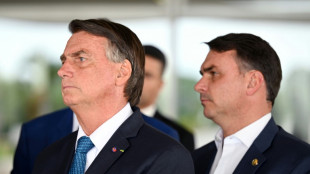 Brazilian judge allows Flavio Bolsonaro to visit jailed father
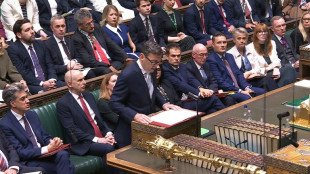
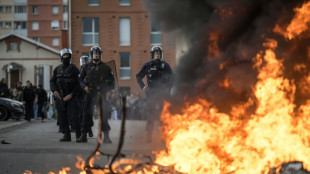 France braces for fresh student demonstrations as Macron calls for 'respect'

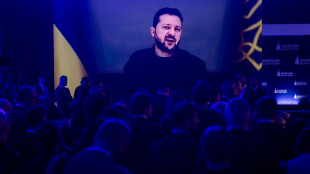 Zelensky doubtful on Russian acceptance of Trump's 'energy ceasefire'

 Federal agents search home of Trump critic Ilhan Omar: government

 Pakistan detains hundreds from ex-PM Khan's party as protests falter

 Australia's Smith off field after being struck on helmet

 UK retains early access to test latest US AI models
 Top NATO commander warns Russia any attack would be 'futile'

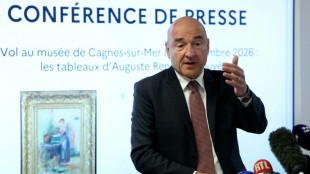 Stolen Renoir paintings found behind wall in France: prosecutor

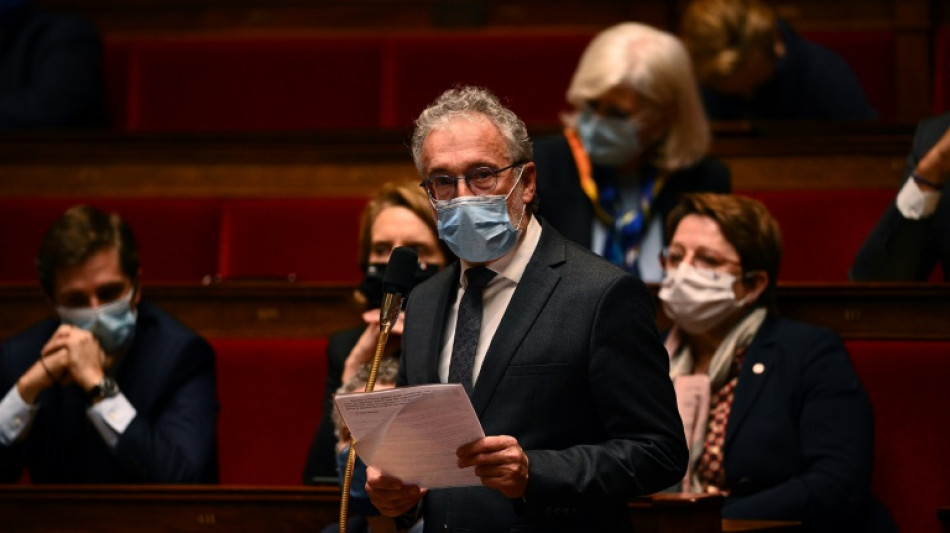
French ruling party lawmaker Pascal Bois was at home asleep a few days after Christmas when firefighters banged on his front door to tell him his garage was in flames.
Startled by the noise in the early hours of the morning, Bois stumbled out of bed and went to inspect the damage, seeing the outside structure consumed by fire with his electric vehicle inside.
"I realised very quickly that it was a deliberate act," said the married father of two, who had been on alert after receiving a bullet in the post in November.
"There's a moment of shock, of course, but I got over it fairly quickly and did my best to keep calm."
As well as the fire, graffiti had been daubed on the outside wall of his home in Chambly, 35 kilometres (21 miles) from Paris, saying: "No to the pass" and "It's going to explode".
The attack came as parliament was debating legislation to create a mandatory "vaccine pass" that meant only people jabbed against Covid-19 could enter bars and restaurants.
Bois, along with other members of parliament from President Emmanuel Macron's Republic on the Move party, was in favour.
With France less than three months from the first round of presidential elections, to be followed by parliamentary polls in June, concern is growing about an increase in attacks against elected figures, particularly ruling party lawmakers.
Explanations range from the radicalisation of the anti-vax movement and a long-term trend of declining faith in the French democratic system to Macron's policies and personality.
- Increased protection -
Since the attack on Bois' home and a separate assault on an overseas island lawmaker who was pelted with seaweed on his doorstep, Interior Minister Gerald Darmanin has ordered greater police protection for parliamentarians.
In addition to the physical attacks, anonymous death threats in writing or over social media have exploded in numbers.
In the first 11 months of 2021, a total of 1,186 elected figures including 162 lawmakers lodged complaints for threats made against them, a rise of 47 percent compared with 2020, interior ministry figures show.
"Unfortunately over the last few years, there has been an increase in offences against elected figures," Darmanin told RTL radio, adding that anti-vaxxers were lately responsible for "huge numbers of complaints about threats".
A recent survey showed that, for a significant minority of French people, such offences were justified.
In a poll published by the Jean-Jaures Foundation think-tank in November, more than one in ten people said they approved of "violent behaviour towards lawmakers and their staff, at their offices or homes".
A total of 40 percent of people thought that the directly elected lower house of parliament was of "little use" or "no use at all" -- a huge increase from a comparable study in 1985 that showed only 13 percent felt this way.
Last Tuesday, all the heads of the main political parties in parliament entered together along with the speaker Richard Ferrand in a rare show of unity to denounce what they called "the rise in hatred."
"When it comes to representatives of the people being assaulted on the basis of their opinions or their votes, it is the heart of democracy that is attacked," they wrote in a public letter.
- 'Yellow Vest' movement -
Isabelle Sommier, a specialist in political violence at Paris' Sorbonne University, says attacks against elected figures have increased significantly since the election of Macron in 2017.
Some parliamentarians have had their office windows smashed, others have been victims of arson. In certain cases, they have arrived at work to find that protesters have bricked up their doors overnight.
Attacks on homes, like the one experienced by Pascal Bois on the morning of December 30, are still rare.
"We're seeing an increase in the phenomenon in terms of absolute numbers but above all in the level of violence," said Sommier, who co-authored the book "Political Violence in France" earlier this year.
"Over the last few months and weeks, it's been accelerating."
Part of the explanation can be found in the so-called "Yellow Vest" anti-government movement, composed mostly of protesters from rural areas and small towns, whose often violent demonstrations shook the country from 2018.
The anti-vax movement appears to overlap with the "Yellow Vests" in many respects, geographically and socio-economically, Sommier notes.
Sommier said that Macron had radicalised this fringe of the French population through his pro-business policies, as well as his highly centralised way of governing, and his abrasive personal style.
The 44-year-old leader, who was slapped in the face during an impromptu walkabout in southeast France in June, declared earlier this month that he wanted to "piss off" the unvaccinated.
Sommier emphasised that France is less violent than in the volatile post-war period that saw major social unrest, as well as several assassination attempts on former president Charles de Gaulle.
But after the murder of two lawmakers across the Channel in Britain since 2016, many French elected figures are feeling jittery.
"I'm a bit more watchful of things around me," Bois told AFP.
"And I keep a look out to make sure I'm not being followed in my car. All of us have become used to doing the same thing."
Ch.P.Lewis--AT