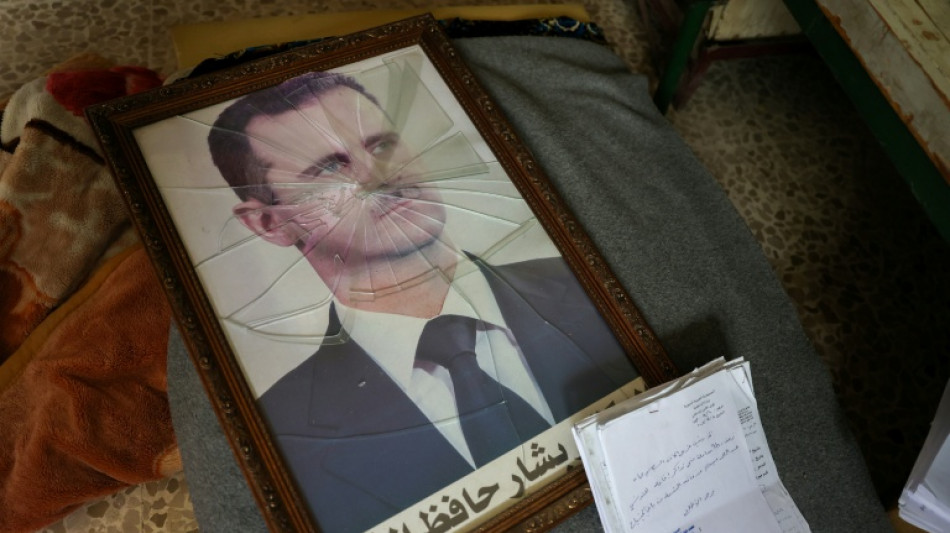
Syria sentences Bashar al-Assad to death in absentia over atrocities / Photo: OMAR HAJ KADOUR - AFP

 Zach Hickerson Recounts Hayden Panettiere's Final Moments in New Interview

 Luxembourg Housing Petition Passes Threshold for Parliamentary Consideration

 Raheem Sterling Receives Suspended Sentence After Lamborghini Crash

 Audience to Choose the Set List at Luxembourg's First FAMIL Jukebox Night

 Luxembourg Pay Rise Delayed as Regional and World Headlines Develop

 Chennai Urbanist Sashna Develops 'Anniki' Card Game to Gamify Tamil Nadu History

 Transport Minister Defends Land Seizure Powers for Toronto-Quebec City High-Speed Rail

 UAE Weather Forecast: Scattered Showers and Fog Expected as Temperatures Drop
A Syrian court on Tuesday sentenced former ruler Bashar al-Assad to death after a trial in absentia, convicting him of atrocities committed during the country's nearly 14-year civil war.
It is the first such ruling under Syria's transitional leaders who ousted Assad in December 2024, vowing to provide justice and accountability for crimes committed under his rule.
Assad fled to Moscow as Islamist-led forces closed in on Damascus after a lightning offensive.
At a court in Damascus, Judge Fakhr al-Din al-Aryan convicted Assad for crimes including "premeditated murder, the intentional killing of more than one person, the intentional killing of children under 15 years... torture, torture leading to death, and deprivation of liberty on multiple occasions -- classified as crimes against humanity and war crimes".
"He is therefore sentenced to death."
Syria in April began proceedings against Assad and other officials accused in person and in absentia of atrocities during the country's civil war, which erupted with the former authorities' brutal repression of pro-democracy protesters.
More than half a million people were killed and millions displaced, while tens of thousands of people disappeared, many into the country's brutal prison system.
The court also sentenced six former military and security officials in absentia to death including Assad's brother Maher, who ran the army's elite Fourth Division and also fled the country.
Those convicted included former defence minister Fahd al-Freij and Louay al-Ali, who headed military intelligence in Daraa province in 2011.
- Torture -
The court convicted the officials for crimes including murder, incitement to murder, torture leading to death and repeated deprivation of liberty, also considered "crimes against humanity" and "war crimes".
Former security official Atif Najib -- the only one in the dock -- was also sentenced to death for "crimes against humanity" committed when he was head of political security in Daraa province, the cradle of the country's 2011 uprising.
Najib, a cousin of Assad who was arrested in January last year, was convicted for crimes including murder, "the intentional killing of children under 15", and "torture leading to death".
The acts attributed to him are "crimes against humanity", the court said as it handed down "the harshest punishment against him, which is the death penalty".
Syria's uprising began in Daraa in March 2011, after 15 students were arrested for allegedly writing anti-government slogans on the city's walls.
Residents said the students were tortured, leading to a protest to demand their release that ended in bloodshed.
Security personnel suppressed peaceful demonstrations with force and fired live ammunition to disperse sit-ins at several locations.
Najib was dismissed after the crackdown, as the protests spread to other provinces.
Aryan said Najib had denied the charges against him and showed "no remorse".
Assad took the Syrian presidency in 2000 after the death of his father Hafez.
R.Chavez--AT


