'Pariah' Putin mocks global isolation: analysts

 Trump, White House post video of UK man killed by tiger
 Saudi employee arrested for allegedly bugging OpenAI office
 Atletico sink Man Utd as Viking deny Bayern in Champions League
 Man United's Martinez blasts board's lack of investment

 Meet A7 International, an Innovative Global Platform Designed to Reinvent the International Payments Market
 Shakhtar hope London move a reminder of Ukraine conflict
 Tresoldi hat-trick fires Brugge past Inter Milan
 Rams axe kicker Mevis after misses cost victory over Bills: reports
 Yamal stays cool at boiling Galatasaray to lift Barcelona to victory
 Arsenal cruise past Lille into share of Champions League lead
 Trump ousts Greece ambassador over ethics scandal

 Reese Witherspoon, France's Mediawan to buy Hello Sunshine
 Bipartisan US senators urge Trump to scrap Russian diesel deal
 Ex-gang leader sentenced to minimum 40 years for Tupac murder
 Cornell suspends frat parties after alleged gang rape
 Man City deserve to keep titles, says PSG's Luis Enrique
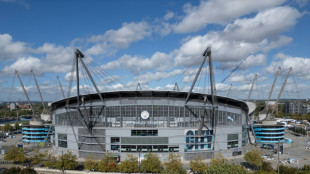 Regulator 'will resign' if any political interference in Man City case

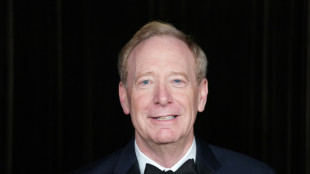 Microsoft's Brad Smith calls for 'real and effective' AI safety standards
 Anthropic warns of AI 'worms' spreading across smart gadgets
 Big US banks report strong earnings and stay bullish on AI
 Iraola backs Barcola, Wirtz to come good for Liverpool
 In a first, AI helps UK lawmaker find her voice in parliament
 Pope Leo in Rome hospital for lung operation

 EU watchdog says smart glasses must give 'clear warnings' when recording
 Houthis say Saudi Arabia strikes oil site in Yemen's capital
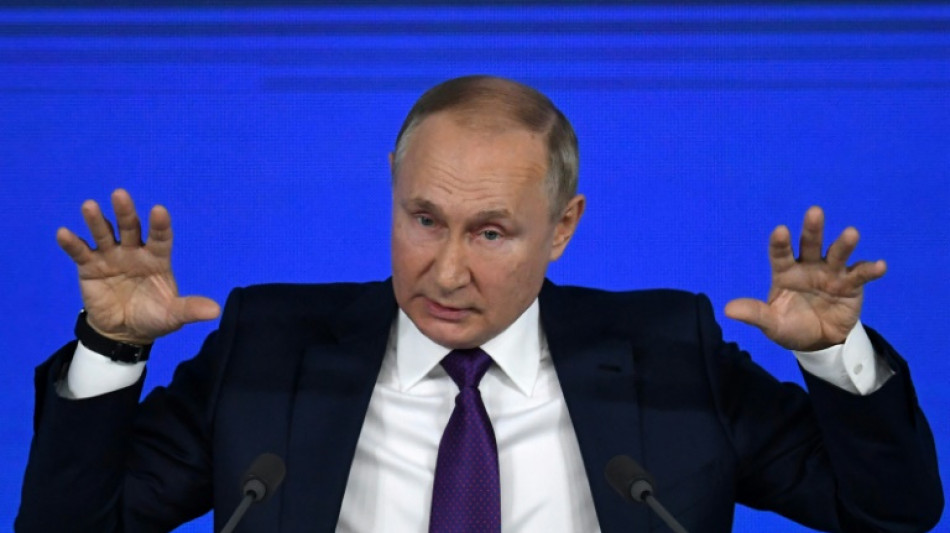
Russia's invasion of Ukraine risks making President Vladimir Putin an international pariah, but he does not fear such isolation -- quite the contrary, experts say.
The attack on Thursday led the United States and its allies to agree on a "devastating" sanctions package against Russia, after NATO, EU and G7 leaders condemned the invasion and vowed to hold Moscow accountable.
"Putin is now recognised as THE most imminent threat to our system of Western liberal market democracy," said Timothy Ash, an emerging markets strategist at BlueBay Asset Management.
Western leaders "feel totally let down and threatened by Putin", who has marked himself out as "the number one pariah" of the West, he added in a note to clients.
The result, said Comfort Ero, president and CEO of the International Crisis Group think-tank, is that Russia "is likely to find itself in unprecedented political and economic isolation for a long time".
Russia was already targeted with rounds of sanctions after Moscow's 2014 annexation of Ukraine's Crimean peninsula and after the poisoning of Kremlin critic Alexei Navalny in 2020.
But no measure seemed to have any effect on the Russian president, other than increasing his intransigence.
"For a year and a half the Kremlin has actively prepared for the fact that the West will impose the most severe sanctions possible," Tatiana Stanovaya, founder of the R.Politik analysis firm, told AFP.
For Putin, "sanctions don't have the aim of preventing Russian aggression but of curbing Russia's development," she said, adding that Moscow expects a long confrontation with the West.
Among possible further measures, Washington and Brussels could cut Russia off from SWIFT, the global financial messaging system used to move money around the world, although US President Joe Biden noted on Thursday that is not a step much of Europe yet "wishes to take".
Russia has prepared itself, particularly by growing its foreign exchange reserves, which total about $640 billion.
"Abundant currency reserves, the soaring price of oil and a low debt-to-GDP ratio will help Russia weather the immediate hit of the sanctions," said Oleg Ignatov, a Russia expert with the International Crisis Group.
"But in the longer-term, they will compound the country's economic stagnation."
- 'Necessary measures' -
Russia is one of the world's leading producers of crude, which soared to levels not seen since 2014 after the invasion began.
Massive sanctions would make Russia "a global market pariah and uninvestable", said Ash, pointing to the free-fall experienced by Russia's stock market on Thursday.
The Kremlin says it has foreseen such developments. "In order that this emotional period be as temporary as possible, all necessary measures have been taken," Kremlin spokesman Dmitry Peskov told reporters.
He also downplayed the diplomatic impact.
"Of course we could have problems with a number of states. But we were having problems with these states even before," Peskov said.
In fact, Putin's Russia seems determined to shake the foundations of international security.
"This is not just a European security crisis," said Ero. "The repercussions of this war for global security, too, will be severe and lasting."
Alexander Baunov, a senior fellow at the Carnegie Moscow Center, said Russia will obviously become "for a time, a pariah", and the longer its Ukraine operation lasts "the more economic links and engagements between Russia and other countries will unravel".
Isolated diplomatically and economically from the West, Putin could turn elsewhere, such as China or Iran. Both of those countries have so far seemed hesitant to condemn Russia.
Pakistan's Prime Minister Imran Khan was visiting Moscow on Thursday.
Beijing said it understands Moscow's "reasonable concerns on security issues" over Ukraine, while Tehran said "the Ukraine crisis is rooted in NATO's provocations."
J.Gomez--AT