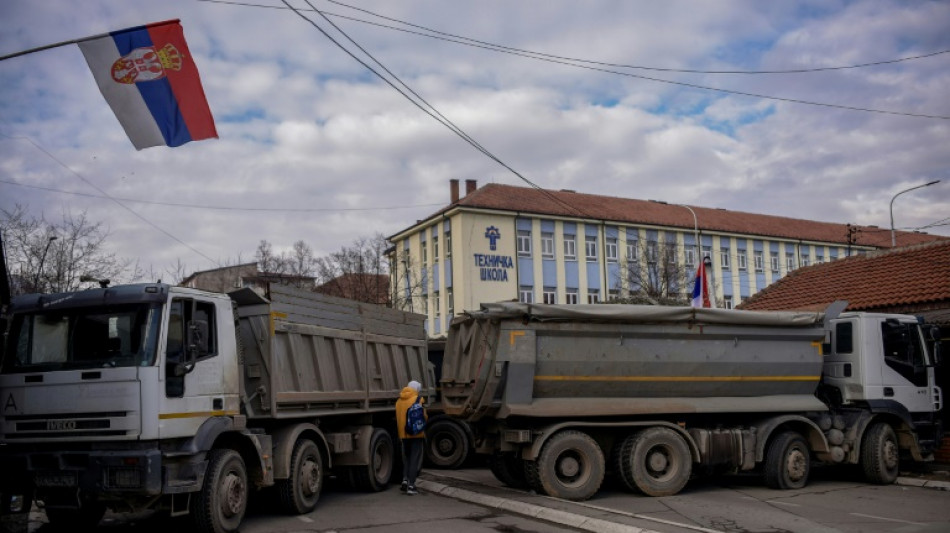
Kosovo's main border crossing with Serbia open as tensions ease / Photo: Armend NIMANI - AFP

 Japan's busiest rail station tests robot bins
 Anthropic says AI systems moving towards building themselves
 Asian stocks boosted by falling oil, yen weakens after BoJ rate hike
 Pakistan court blocks expulsion of Afghan medical college students
 Athletes 'can't take it any more' as Asian Games issues mount
 Allen lights up Bills' new stadium with 41-31 win over Lions
 Afghan medical students in Pakistan hope court stops college expulsions
 AI doomsday warnings unlikely to slow IPOs but questions linger
 ICC eyes China in bid to expand cricket
 Nkunku craving freedom and fun on RB Leipzig return
 Bhutan's traditional archers lose ground to development
 Asian stocks track Wall St rally as oil prices drop
 South Korea makes Asian Games complaint over Japan warlord ceremony
 US aid cuts are killing Kenyan sex workers
 October 7 survivors, families take centre stage in Israel vote
 Captain Mat Ryan axed from Socceroos squad for Brazil games
 US approves sale of 48 F-35 jets to Saudi Arabia
 Staging Your Home for Sale: Cheap Upgrades That Make a Difference

 InterContinental Hotels Group PLC Announces Transaction in Own Shares - September 18
 DataMeds AI Litigation Settlement Extinguishes ~$19 million In Liabilities and Retires 364,099 Common Sharessked

 The Records Company Announces Filevine and Litify Integrations to Simplify Record Retrieval for Law Firms
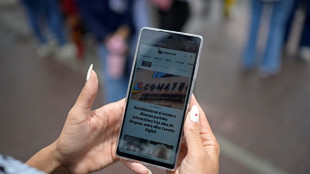 Venezuela unblocks some censored news sites
 Samba stars on debut in Man City rout of Norwich
 Oversight Board blasts 'inadequate' Meta safeguards for AI deepfakes
 The Easter Island origins of buzzy Malkovich drama 'Wild Horse Nine'

Kosovo's primary border crossing with Serbia was back open Thursday, dialling down growing tensions that had drawn international calls for de-escalation.
Barricades were dismantled on the Serbian side of the Merdare border point and Kosovo announced the crossing was open a day after Washington and Brussels urged both to ease a simmering crisis.
The latest trouble erupted on December 10, when ethnic Serbs put up barricades to protest the arrest of an ex-policeman suspected of being involved in attacks against ethnic Albanian police officers -- effectively sealing off traffic on two border crossings.
Serbian President Aleksandar Vucic announced removal of the barricades late Wednesday during his meeting with Kosovo Serb representatives near the border.
Kosovo police on Thursday said in a statement that the "Merdare border crossing point has been opened for traffic and has returned to full normality".
Kosovo declared independence from Serbia in 2008, after a bitter war in late 1990s.
But Belgrade still refuses to recognise it and encourages Kosovo's 120,000 ethnic Serbs to defy Pristina's authority -- especially in the north where they make up the majority.
- 'Controlled conflict' -
After the roadblocks were erected, Kosovar police and international peacekeepers were attacked in several shooting incidents, while the Serbian armed forces were put on heightened alert this week.
The European Union and the United States voiced concern over the situation, urged immediate de-escalation and said they are working with both Serbia and Kosovo leaders to seek a political solution to the crisis.
Political analyst Aleksandar Popov said tensions in Kosovo are so high that it would "only take one stray bullet" to significantly aggravate the situation.
However, he labelled the recent unrest a "controlled conflict" and an arm-wrestling contest between Belgrade and Pristina over the influence in the north, where authorities for years have been seeking a special status within Kosovo.
"Pristina gave Serbs the reason to protest by making arrests, the barricades were orchestrated by Belgrade and international peacekeepers mediated to prevent escalation.
"The minute it looked like it was getting out of hand, the West used diplomatic means to stop the whole thing," Popov told AFP.
- 'Feel cheated, abused' -
Around a dozen protesters who were still at a barricade site in Rudare, near Mitrovica, voiced dissatisfaction with the decision to remove the roadblocks.
"It makes no sense, we fought for rights that were not fulfilled, we feel cheated, abused," a 25-year-old man, who refused to give his name, told AFP.
"Why did we come to the barricades, if everything ended this way?" asked a 38-year-old protester, who also spoke on condition of anonymity.
In a move that initiated a calming of the situation, a Pristina court ordered Wednesday that the former police officer, whose detention Serbs cited as the main reason for erecting the barricades, be released from prison and placed under house arrest.
Northern Kosovo has been on edge since November when hundreds of ethnic Serb workers in the Kosovo police as well as the judicial branch, including judges and prosecutors, walked off the job.
They were protesting a controversial decision to ban Serbs living in Kosovo from using Belgrade-issued vehicle licence plates -- a policy that was eventually scrapped by Pristina.
The mass walkouts created a security vacuum in Kosovo, which Pristina tried to fill by deploying ethnic Albanian police officers in the region.
On Wednesday, Belgrade's ally Russia voiced support for Serbia and said it was "very closely" following the developments
Kosovo's 1.8 million population is predominantly ethnic Albanian.
E.Hall--AT