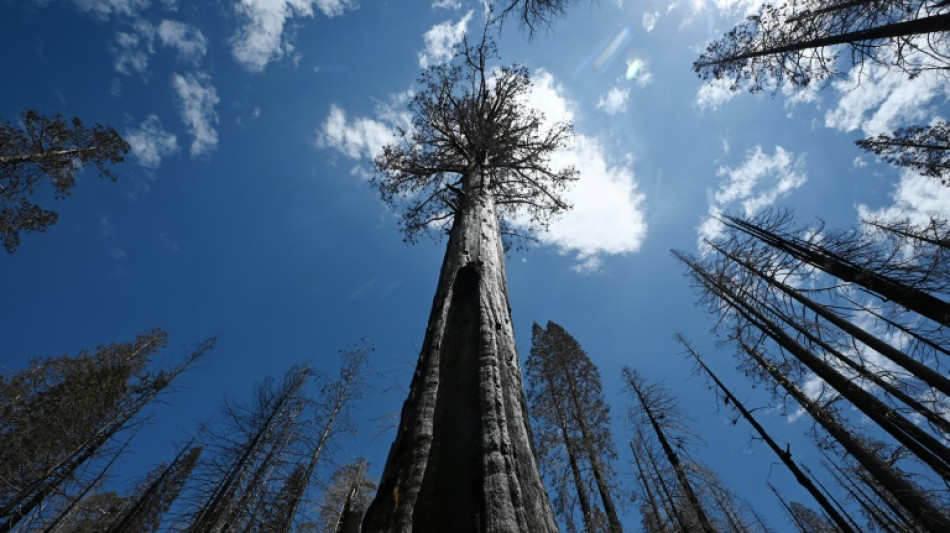
Giant redwoods thriving in the UK: experts / Photo: Robyn Beck - AFP

 New Zealanders pick endangered black robin as Bird of the Year

 Asia stocks rise on AI, US-China trade talks optimism

 Malaysia's 'elephant whisperer' fights to save Borneo's endangered giants

 'I live in fear': 1.5 million Pakistani children sexually exploited online

 Cowboys beat Commanders, Vikings down Bears as star QBs injured
 4 Hacks for Yearlong Savings on Your Kids' Wardrobes

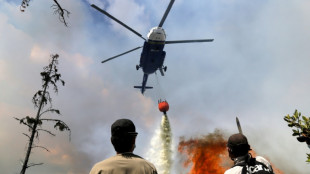 Forest fire threatens tourist town in Colombian Andes

 Torres on target again as PSG beat 10-man Marseille in Ligue 1

 Germany's Merz vows to stay course despite new election defeats

 Carrick demands Man Utd response after 'pathetic' jibes

 Liverpool boss Iraola urges Isak to raise his level

 Evenepoel wins record 4th straight world time-trial title

 France's Macron, Canada's Carney announce closer ties

 Carrick defends troubled Man Utd after Fulham escape

 Horror movie 'Resident Evil' tops N. American box office

 Germany's Merz vows to stay course despite new vote losses

 Man City outgun Sunderland despite Brobbey hat-trick, Man Utd rescue Fulham draw

 Mourinho blames ref committee for Real Madrid derby defeat
 Maresca craves a 1-0 win after eight-goal Man City thriller

 Atletico Madrid beat Real Madrid in tense derby clash
 Reusser retains world time-trial title

 Man City outgun Sunderland despite Brobbey hat-trick, Liverpool win at Bournemouth

 Top US, Chinese economic officials meet ahead of Trump-Xi summit

 Erdogan's LGBTQ crackdown 'first step of election campaign': activist

 Mass drone barrage on Moscow kills two

Endangered giant redwood trees are thriving in the UK but could also be significantly contributing to capturing carbon emissions, according to research published on Wednesday.
The towering giant sequoias, which can soar as high as 90 metres (295 feet) and live for up to 3,000 years, were first planted in the UK in the mid-19th century.
There are now some 500,000 across the country -- more than the 80,000 or so in their native California.
Research by University College London (UCL) and published in the Royal Society Open Science journal, found that "the most massive species" of redwood can potentially pull an average of 85 kilograms of carbon from the atmosphere per year.
It is the first time the growth rate and resilience of the trees have been analysed in the UK.
"Giant sequoias are some of the most massive organisms on Earth and in their native range make up some of the most carbon-dense forests in the world due to their great age," said Ross Holland, the lead author of the research.
"We found that UK redwoods are well adapted to the UK and able to capture a large amount of carbon dioxide."
Sequoias, which have wide trunks and can survive blazes that would wipe out forests of other tree species, were first imported to the UK as seeds and seedlings in 1853.
The trees, which were rare at the time, became a symbol of wealth and power in Victorian-era Britain.
Many were planted at the entrance to large houses and estates.
To assess the adaptability of giant sequoias to the UK's milder climates and varied rainfall patterns, the researchers compiled a map, pinpointing the locations of nearly 5,000 individual trees across the country.
They analysed 97 individual trees at Benmore Botanic Gardens in central Scotland, at Kew Garden's Wakehurst Place in the south of England and at a mixed woodland in Havering Country Park east of London.
Terrestrial laser scanners were used to map the trees in 3D, enabling researchers to accurately measure the heights and volumes of the trees without having to cut them down.
The tallest was approximately 54.87m tall -- towering over most native UK species but modest in comparison to its far older American relatives.
Researchers calculated average growth rates of the trees at the three sites, which they said would be important for the analysis of climate changes in the future.
"Currently, these trees are probably more important for their aesthetic and historical interest than they are for solving the climate crisis," said senior author Mat Disney.
"But as more are planted we need to know how they will grow."
D.Lopez--AT

