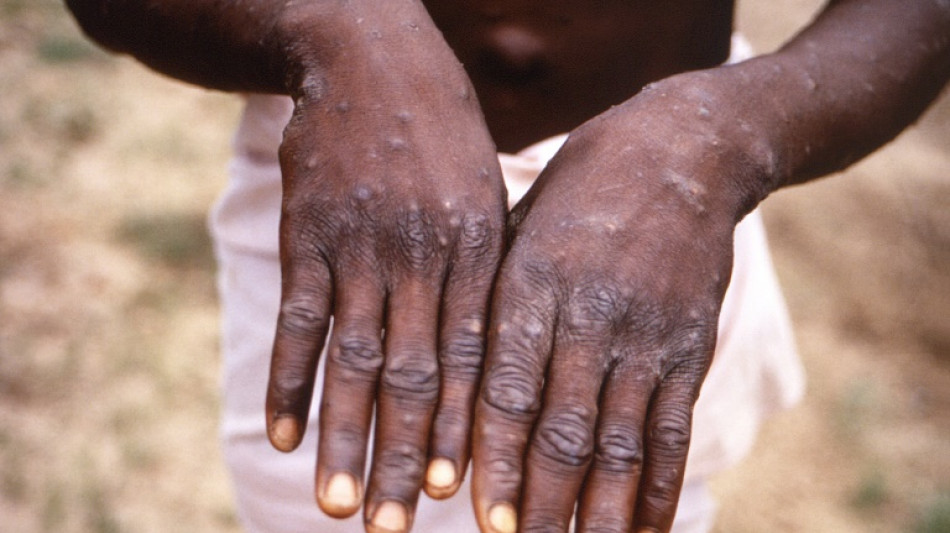
WHO to assess if monkeypox an international health emergency / Photo: Brian W.J. Mahy - Centers for Disease Control and Prevention/AFP

 NBA close to picking new $12-13bn Vegas team owners: report
 LA28 Olympics torch relay to visit all 50 states
 Spain brush aside Croatia in Nations League, England down Czechs
 Trump hails 'morally binding' AI self-regulation pledge
 Yamal inspires Spain to Croatia romp on World Cup homecoming

 UN to hold fourth informal poll of secretary-general candidates
 Who are the Emiratis behind crisis-hit Manchester City?
 Singer Angelique Kidjo urges Africans to 'create together'

 Alleged Rihanna mansion shooter mentally fit for trial, says judge
 Mystery over UK airbase scare as police find petrol not explosives
 OpenAI unveils low-cost AI model, a day after shelving Astra upgrade
 Premier League confirms Man City guilty of serious financial breaches
 Brazil's Lula turns to Bad Bunny tune to criticise Trump ahead of polls
 Nigerian dancer eyes world record after seven-day marathon
 Swiss regulator concludes Julius Baer bank probe
 Brazil's patron saint pulled into latest election scrap

 Football overload leaves players near 'breaking point', warns Tebas
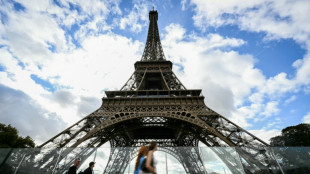 Paris Eiffel Tower says chief to step down after uproar over removing women staff
 Amaze Holdings (NYSE: AMZE) Executes Binding LOI to Acquire BullionFX | Alchemy, a Decentralized Gold-Backed Financial Ecosystem for Valued at US$155 Million
 Clashes between French teens, police as school blockades intensify
 Stocks move sideways despite oil moving lower

 African leaders to gather in Egypt for business summit
 UK decides against charging foreign visitors for museums

 Dallaglio to sell England World Cup winners' medal
 Brazil come from behind to beat Australia 4-2 in friendly
The World Health Organization said Tuesday it would hold an emergency meeting next week to determine whether to classify the global monkeypox outbreak as a public health emergency of international concern.
The UN agency is also working to change the name of the disease, which was long confined to Western and Central Africa until more than 1,000 cases were detected in dozens of countries across the world over the last two months.
"The outbreak of monkeypox is unusual and concerning," World Health Organization chief Tedros Adhanom Ghebreyesus told journalists.
"For that reason I have decided to convene the Emergency Committee under the international health regulations next week, to assess whether this outbreak represents a public health emergency of international concern".
The emergency committee will meet on June 23 to discuss the designation, which is the highest alarm the UN agency can sound.
- New name -
Tedros added that the "WHO is also working with partners and experts from around the world on changing the name of monkeypox virus... and the disease it causes."
"We will make announcements about the new names as soon as possible."
The announcement comes after more than 30 scientists wrote last week that there was an "urgent need for a non-discriminatory and non-stigmatising nomenclature for monkeypox".
"In the context of the current global outbreak, continued reference to, and nomenclature of this virus being African is not only inaccurate but is also discriminatory and stigmatising," they wrote.
While monkeypox was first discovered in macaques, many cases are believed to be transmitted to humans by rodents.
The normal initial symptoms of monkeypox include a high fever, swollen lymph nodes and a blistery chickenpox-like rash.
However, the US Centers for Disease Control and Prevention said last week that current cases do not always present flu-like symptoms, and rashes are sometimes limited to certain areas.
Tedros said that 1,600 confirmed monkeypox cases and 1,500 suspected cases have been reported to the WHO this year from 39 countries, 32 of which have been recently hit by the virus.
While 72 deaths have been reported in countries where monkeypox was already endemic, none have been seen in the newly affected countries, Tedros said.
"Although WHO is seeking to verify news reports from Brazil of a monkeypox-related death there," he added.
- No mass vaccination -
To fight the global spread, the WHO aims to recommend "tried-and-tested public health tools including surveillance, contact-tracing and isolation of infected patients".
However, the WHO does not recommend mass vaccination against monkeypox, he said, after the European Union said Tuesday it had purchased almost 110,000 vaccine doses.
"While smallpox vaccines are expected to provide some protection against monkeypox, there is limited clinical data, and limited supply," Tedros told journalists.
"Any decision about whether to use vaccines should be made jointly by individuals who may be at risk and their health care provider, based on an assessment of risks and benefits, on a case-by-case basis."
Rosamund Lewis, WHO's technical lead for monkeypox, told journalists that there are a few smallpox vaccines that may be protective against monkeypox.
But "much of the data that we have is from years gone by, and/or from clinical studies -- there is not a lot of clinical data," she said.
She called on countries that are vaccinating to share their research and pointed to a set of interim guidance documents released by the WHO.
Tedros also emphasised that vaccines must be "available equitably wherever needed," adding that the WHO is working with its member states "to develop a mechanism for fair access to vaccines and treatments".
A.Ruiz--AT