'Unreliable partner': S.Africa's HIV clinics scramble over US aid freeze / Photo: STEPHANE DE SAKUTIN - AFP/File

 With elections ahead, Latvia's Russian-speakers reject Moscow's help
 Brazil football clubs face massive sponsorship blow from betting ban
 ChatGPT maker wants to be the App Store for AI as safety concerns grow
 Women fight fires and sexism in Indonesian Borneo

 Forsling's OT blast lifts Florida over Carolina in NHL opener

 Hurricane Polo sweeps over Mexico's Pacific coast, heads inland
 Grynspan pulls ahead in race to lead UN: diplomat

 Trump touts AI boss pledge to self-regulate

 Oil down, but stocks lower as bond yields rise
 England break down stubborn Czechs to claim first Nations League win
 UN Security Council extends Haiti anti-gang force by 6 months

 Manchester City guilty of Premier League charges: What comes next?
 Man City chief Soriano slams Premier League 'conspiracy theory'

 Hurricane Polo sweeps over Mexico's Pacific coast

 Man City must be relegated after guilty verdict says club's former chairman

 German far-right aims to lead Saxony-Anhalt govt in December
 Little damage as Hurricane Polo sweeps over Mexico's Pacific coast

 Manchester City guilty of breaking financial rules - Premier League

 FIFA boss Infantino blasted as would-be 'emperor' by UEFA's Ceferin
 Stocks move lower despite oil prices dropping
 AI driving up innovation investment: UN

 UN Security Council extends Haiti mission by 6 months

 Man Utd do not deserve medals if Man City stripped of titles: Rooney
 Vana Completes Expanded Staking as Part of the Vega Upgrade, Publishes Expanded VANA Token Economics
 Spain to cap gas price hikes, extend fuel discounts

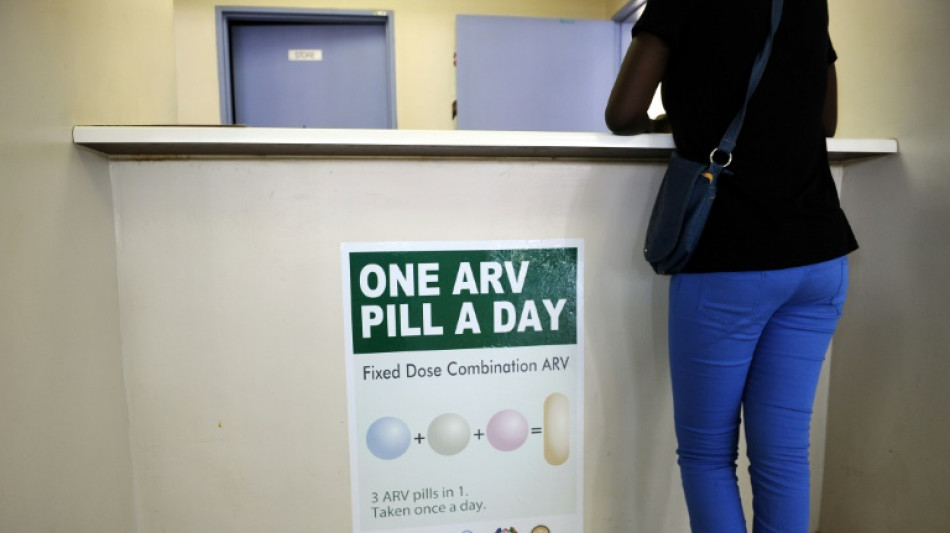
The gates at a Johannesburg LGBTQ clinic called OUT have been closed for more than a week and HIV prevention and treatment services suspended for its 6,000 clients.
The lights are also off at the University of the Witwatersrand's HIV project, a leader in the provision of services to sex workers in South Africa, a country with one of the largest HIV-positive populations in the world.
They are among the several South African HIV/AIDS healthcare providers that have been confused, angry and scrambling for survival since US President Donald Trump issued a 90-day freeze last week on Washington's foreign aid.
"Short-term, I hope that some money can flow so that medium- and long- term, we can make other plans," said Dawie Nel, the director at OUT, whose Engage Men's Health clinic in Johannesburg has a note fixed to the gate that announces it is "temporarily closed".
South Africa is one of the largest recipients of funds from the US HIV/AIDS response programme called PEPFAR, a project launched in 2003 and now paused by the funding freeze.
PEPFAR accounts for 17 percent of the country's HIV budget, ensuring some 5.5 million people receive anti-retroviral (ARV) treatment, according to the health ministry.
"The US is a totally unreliable partner," said Nel. "The system is very volatile and chaotic."
OUT's services identify around four to five cases of HIV a day along with other sexually transmitted diseases, he said.
It had been banking on $2 million in US funds to continue until September to provide its 2,000 clients with HIV treatment and another 4,000 clients with the preventative drug PrEP.
- 'Left behind' -
Around 14 percent of South Africans, around 8.45 million people, were HIV positive in 2022, according to government statistics, one of the highest rates in the world.
After a slow response to its AIDS crisis that cost more than 2.5 million lives, the country today has one of the world's biggest HIV treatment programmes.
"The PEPFAR-fund freeze will take South Africa and the world back in terms of the gains we have made in our response to HIV," the Treatment Action Campaign's Anele Yawa said in a statement.
"People are going to be left behind in terms of prevention, treatment and care."
Since the freeze was announced, a waiver for humanitarian aid, including life-saving treatments, has been issued but many organisations are unclear whether it applies to them.
The Wits University's Reproductive Health and HIV Institute has posted on its Facebook page that its Key Population Programme clinics for sex workers and transgender people were "closed until further notice".
The implications of the USAID stop order were being reviewed "and mitigation plans are being developed and deployed", Wits Health Sciences dean Shabir Madhi said in a statement.
- 'Undue suffering' -
South Africa's government has vowed to make up the difference in HIV funding by reallocating budgets for "key priorities".
But what those priorities should even be "is difficult to say unless we have a more informed decision from the Americans", Munya Saruchera, director of the African Centre for Inclusive Health Management at Stellenbosch University, told AFP.
The country may however be able to leverage its presidency of the G20 this year to "lead the Africa bloc into collective discussions with Western countries" to secure resources, he said.
The retreat in foreign aid spending by the United States, the world's largest foreign aid donor, "creates opportunities for other countries like China", said Craig Lasher, senior policy fellow for health advocacy group Population Action International.
But prolonged delays in filling funding gaps will pose "undue suffering" to health service workers and the communities they support, Lasher said.
"The longer they last, the more difficult it will be to rebuild the programmes," he warned.
N.Mitchell--AT