Bulgaria court ruling turns spotlight on gambling addiction / Photo: Nikolay DOYCHINOV - AFP

 With elections ahead, Latvia's Russian-speakers reject Moscow's help
 Brazil football clubs face massive sponsorship blow from betting ban
 ChatGPT maker wants to be the App Store for AI as safety concerns grow
 Women fight fires and sexism in Indonesian Borneo

 Forsling's OT blast lifts Florida over Carolina in NHL opener

 Hurricane Polo sweeps over Mexico's Pacific coast, heads inland
 Grynspan pulls ahead in race to lead UN: diplomat
 Trump touts AI boss pledge to self-regulate

 Oil down, but stocks lower as bond yields rise
 England break down stubborn Czechs to claim first Nations League win

 UN Security Council extends Haiti anti-gang force by 6 months

 Manchester City guilty of Premier League charges: What comes next?
 Man City chief Soriano slams Premier League 'conspiracy theory'
 Hurricane Polo sweeps over Mexico's Pacific coast
 Man City must be relegated after guilty verdict says club's former chairman

 German far-right aims to lead Saxony-Anhalt govt in December
 Little damage as Hurricane Polo sweeps over Mexico's Pacific coast
 Manchester City guilty of breaking financial rules - Premier League

 FIFA boss Infantino blasted as would-be 'emperor' by UEFA's Ceferin
 Stocks move lower despite oil prices dropping
 AI driving up innovation investment: UN

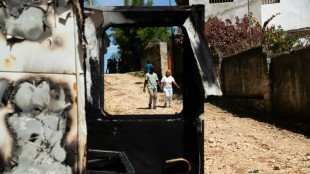 UN Security Council extends Haiti mission by 6 months
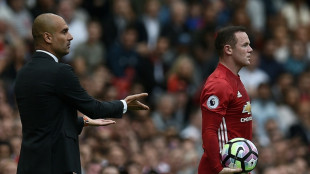 Man Utd do not deserve medals if Man City stripped of titles: Rooney
 Vana Completes Expanded Staking as Part of the Vega Upgrade, Publishes Expanded VANA Token Economics

 Spain to cap gas price hikes, extend fuel discounts

Lazar was overcome by a "deep sense of fear": his wife had just found out that he had racked up thousands of euros worth of debt after his attempts to control his gambling addiction had failed.
Despite voluntarily signing up to a register of gambling addicts supposedly banned from betting, the 36-year-old IT worker still managed to lose around 5,000 euros ($5,200) on a sports betting website.
Feeling desperate, Lazar -- not his real name -- took the sports betting company to court for allowing him to bet, and he won.
Despite initially having had "little hope", in October the Sofia court found in favour of Lazar, who is now trying to help others "who are faced with the same problem" in Bulgaria, where gambling is widespread.
Lazar had secretly funded his habit with loans but soon reached the point where "there was no way to hide it" anymore from his wife.
His battle against addiction is by no means unique in the European Union's poorest country, where the government is struggling to help people control the habit.
"In Bulgarian society, it (gambling) is seen as a lack of will, not as a public health issue," said Lazar, who despite having become an advocate on this issue still declined to give his real name because of the stigma.
His lawyer, Kristina Karakoleva, hailed an "unprecedented" court decision -- which the betting company is appealing -- that can "save lives" by highlighting a largely ignored scourge.
- Communist legacy -
One out of 10 Bulgarians has engaged in gambling other than buying lottery tickets, according to a survey last year by the MarketLinks institute.
Like other countries in the former east European communist bloc, Bulgaria set up a state-run lottery in the 1950s that offered tempting prizes.
Foreigners were also allowed to gamble at casinos, often set up in luxury hotels and infiltrated by the communist security services.
The sector is now worth several billion euros, according to Tihomir Bezlov, a researcher at the Sofia-based think tank CSD.
Big-prize jackpot money paid out in 2023 alone represented nearly three percent of GDP.
On the boulevards of the capital Sofia, gaming company adverts promise huge winnings, while 20 casinos and hundreds of smaller outlets are open to the country's 6.5 million people, in addition to 24 companies offering popular online games.
In recent years, the government has vowed to better regulate the sector and to fight addiction, including by banning private lotteries and by establishing the register of people blocked from betting sites and rooms.
Some 41,000 citizens have voluntarily requested to be registered on this list but recently conditions were relaxed, making it possible to unsubscribe after a period of just one month.
As a result, around 8,000 people have crossed off their names.
"Thirty days is not enough to heal," lamented Lazar.
"I needed six months just to realise that I was addicted" and much longer "to be able to control myself" knowing that "you never really get out of addiction," he said.
- 'Credit spiral' -
An avid tennis player, Lazar started betting on sports some 15 years ago.
He eventually quit his job because he was earning more through betting than he was as an IT worker.
But after a few years, his luck changed and he found himself trapped in a "credit spiral", forced to return to work and taking out ever-bigger loans to satisfy his addiction.
When he started a family, he tried to quit -- but failed.
Despite signing up to the gambling-ban registry, he managed to bet the equivalent of 10,000 euros and lost almost half of it.
It was worth two months' salary.
"At times like this, anger grips you, you withdraw into yourself, you don't want to admit defeat," he said.
He is now seeing a psychologist.
The gamblers' registry is important, said Karakoleva, who specialises in this type of case.
"They (my clients) try to have a stable life, to preserve the unity of their family. But as long as they have temptations, they are like Sisyphus," she said, referring to the mythical ancient king condemned for eternity to roll a boulder up a hill.
But while the registry is "one of the most effective prevention measures for vulnerable people... it cannot be the only tool," said Angel Iribozov, president of Bulgaria's gaming industry association.
Iribozov advocates prevention campaigns and telephone assistance.
Gambling addicts can "easily hide" their vice, said Lazar.
"The hardest part is overcoming the shame," he said.
S.Jackson--AT