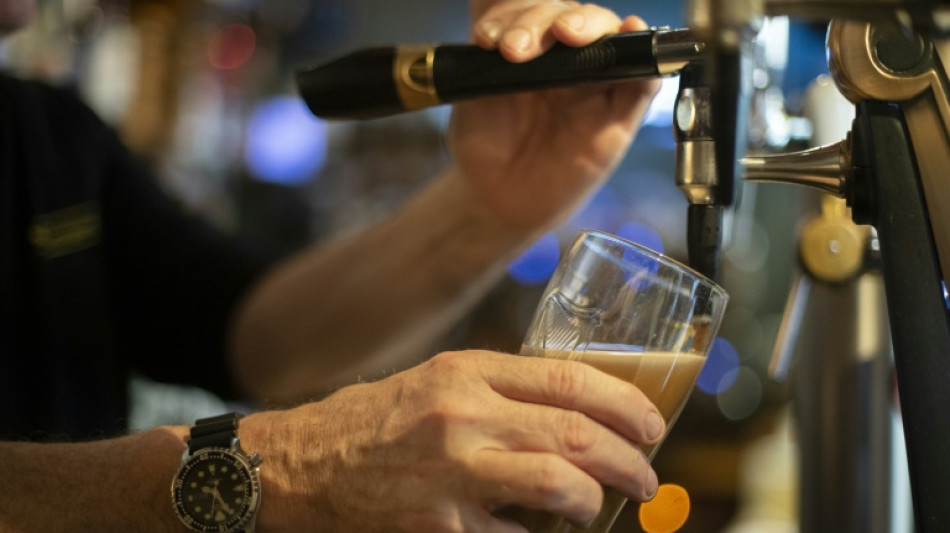
Alcohol should have cancer warning label: US surgeon general / Photo: FRED TANNEAU - AFP/File

 With elections ahead, Latvia's Russian-speakers reject Moscow's help

 Brazil football clubs face massive sponsorship blow from betting ban

 ChatGPT maker wants to be the App Store for AI as safety concerns grow

 Women fight fires and sexism in Indonesian Borneo

 Forsling's OT blast lifts Florida over Carolina in NHL opener

 Hurricane Polo sweeps over Mexico's Pacific coast, heads inland

 Grynspan pulls ahead in race to lead UN: diplomat

 Trump touts AI boss pledge to self-regulate

 Oil down, but stocks lower as bond yields rise

 England break down stubborn Czechs to claim first Nations League win
 UN Security Council extends Haiti anti-gang force by 6 months

 Manchester City guilty of Premier League charges: What comes next?

 Man City chief Soriano slams Premier League 'conspiracy theory'

 Hurricane Polo sweeps over Mexico's Pacific coast

 Man City must be relegated after guilty verdict says club's former chairman

 German far-right aims to lead Saxony-Anhalt govt in December

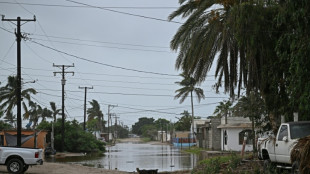 Little damage as Hurricane Polo sweeps over Mexico's Pacific coast

 Manchester City guilty of breaking financial rules - Premier League

 FIFA boss Infantino blasted as would-be 'emperor' by UEFA's Ceferin

 Stocks move lower despite oil prices dropping

 AI driving up innovation investment: UN

 UN Security Council extends Haiti mission by 6 months
 Man Utd do not deserve medals if Man City stripped of titles: Rooney

 Vana Completes Expanded Staking as Part of the Vega Upgrade, Publishes Expanded VANA Token Economics

 Spain to cap gas price hikes, extend fuel discounts

The United States' top government doctor on Friday called for health warnings on alcoholic drinks to highlight that they cause cancer and urged a reassessment of daily consumption limits due to the risks.
Surgeon General Vivek Murthy said that the connection between alcohol and cancer has been known since the 1980s, with mounting evidence reinforcing the dangers. Yet, mandatory warning labels fail to address the health threat.
"Alcohol is a well-established, preventable cause of cancer, responsible for about 100,000 cancer cases and 20,000 cancer deaths annually in the United States," Murthy said in a statement, emphasizing that this toll exceeds the approximately 13,500 alcohol-related traffic fatalities each year.
"Yet the majority of Americans are unaware of this risk," he added, underscoring the urgent need for public education.
Introduced in 1988, the existing warning label only states that "women should not drink alcoholic beverages during pregnancy because of the risk of birth defects" and that "consumption of alcoholic beverages impairs your ability to drive a car or operate machinery, and may cause health problems."
Murthy called on Congress to modernize these labels to reflect the now well-established cancer risk, as other countries including South Korea and Ireland have done.
Alcohol consumption raises the risk of at least seven types of cancer, including breast, colorectal, liver, mouth, throat, esophageal, and laryngeal cancers. For breast cancer alone, alcohol accounts for 16.4 percent of all cases.
But public awareness lags far behind. A 2019 survey found that only 45 percent of Americans identified alcohol as a cancer risk factor, compared to 91 percent for radiation exposure, 89 percent for tobacco use, 81 percent for asbestos exposure, and 53 percent for obesity.
The new advisory also questioned the adequacy of US dietary guidelines, which recommend a daily limit of two drinks for men and one for women.
Alarmingly, 17 percent of alcohol-related cancer deaths occur among individuals who stay within these limits, suggesting the need for a reevaluation.
Health care providers also have a critical role to play, the advisory noted, by informing patients about the risks of alcohol, offering interventions and providing referrals for treatment as needed.
Alcohol contributes to cancer through four key mechanisms.
It metabolizes into acetaldehyde, which damages DNA; it induces oxidative stress, harming DNA, proteins, and cells; it disrupts hormone levels, including estrogen, which increases breast cancer risk; and it heightens absorption of carcinogens, including from tobacco.
T.Sanchez--AT