Monkeypox can be stopped outside endemic countries: WHO / Photo: John SAEKI - AFP

 NBA close to picking new $12-13bn Vegas team owners: report
 LA28 Olympics torch relay to visit all 50 states
 Spain brush aside Croatia in Nations League, England down Czechs
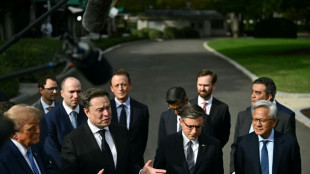
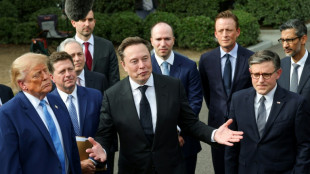 Trump hails 'morally binding' AI self-regulation pledge
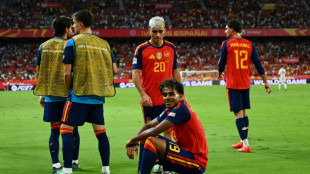 Yamal inspires Spain to Croatia romp on World Cup homecoming

 UN to hold fourth informal poll of secretary-general candidates
 Who are the Emiratis behind crisis-hit Manchester City?

 Singer Angelique Kidjo urges Africans to 'create together'

 Alleged Rihanna mansion shooter mentally fit for trial, says judge
 Mystery over UK airbase scare as police find petrol not explosives

 OpenAI unveils low-cost AI model, a day after shelving Astra upgrade
 Premier League confirms Man City guilty of serious financial breaches
 Brazil's Lula turns to Bad Bunny tune to criticise Trump ahead of polls

 Nigerian dancer eyes world record after seven-day marathon
 Swiss regulator concludes Julius Baer bank probe

 Brazil's patron saint pulled into latest election scrap

 Football overload leaves players near 'breaking point', warns Tebas
 Paris Eiffel Tower says chief to step down after uproar over removing women staff

 Amaze Holdings (NYSE: AMZE) Executes Binding LOI to Acquire BullionFX | Alchemy, a Decentralized Gold-Backed Financial Ecosystem for Valued at US$155 Million
 Clashes between French teens, police as school blockades intensify

 Stocks move sideways despite oil moving lower

 African leaders to gather in Egypt for business summit
 UK decides against charging foreign visitors for museums

 Dallaglio to sell England World Cup winners' medal

 Brazil come from behind to beat Australia 4-2 in friendly

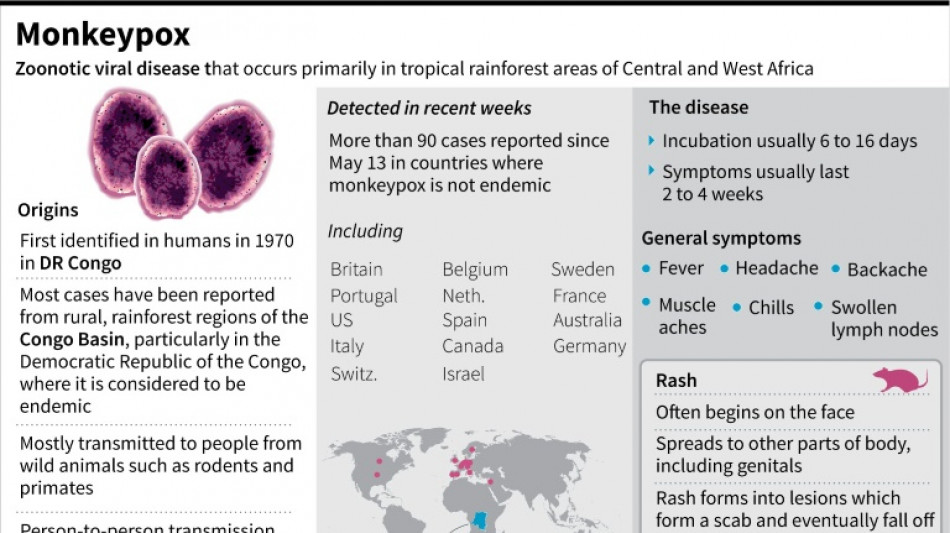
The monkeypox outbreaks in non-endemic countries can be contained and human-to-human transmission of the virus stopped, the World Health Organization said Monday.
Fewer than 200 confirmed and suspected cases had been recorded so far, the WHO's emerging disease lead Maria Van Kerkhove said.
"This is a containable situation, particularly in the countries where we are seeing these outbreaks that are happening across Europe, in North America as well," Van Kerkhove told a live interaction on the UN health agency's social media channels.
"We want to stop human-to-human transmission. We can do this in the non-endemic countries.
"We're in a situation where we can use public health tools of early identification, supported isolation of cases.
"We can stop human-to-human transmission."
Van Kerkhove said transmission was happening via "close physical contact: skin-to-skin contact", and that most of the people identified so far had not had a severe case of the disease.
Rosamund Lewis, who heads the smallpox secretariat on the WHO emergencies programme, said monkeypox had been known for at least 40 years and a few cases had appeared in Europe over the last five years in travellers from the endemic regions.
However, "this is the first time we're seeing cases across many countries at the same time and people who have not travelled to the endemic regions in Africa", she said.
She cited Nigeria, Cameroon, the Central African Republic and the Democratic Republic of the Congo.
"It is primarily in the animal kingdom in forested areas. Now we're seeing it more in urban areas," she said.
- Mutation studies -
Lewis said it was not yet known whether the virus had mutated but viruses in the wider orthopoxvirus group "tend not to mutate and they tend to be fairly stable.
"We don't yet have evidence yet that there is mutation in the virus itself," she said. Virologists will be studying the first genomic sequences of the virus coming through, she added.
Van Kerkhove said a major global meeting next week would discuss research, epidemiology, diagnostics, therapeutics and vaccines.
Andy Seale, strategies advisor at the WHO's global HIV, hepatitis and sexually transmitted infections programmes, stressed that while the virus could be caught through sexual activity, it was not a sexually transmitted disease.
"While we are seeing some cases amongst men who have sex with men, this is not a gay disease, as some people in social media have attempted to label it. That's just not the case.
"Anybody can contract monkeypox through close contact."
Van Kerkhove added that as surveillance widened, experts did expect to see more cases.
N.Mitchell--AT