US breast cancer rate rising sharply even as deaths fall: study / Photo: ANNE-CHRISTINE POUJOULAT - AFP/File

 'No limits': Marathon world record holder Sawe chasing history

 Countdown begins to biggest-ever Rugby World Cup

 Bangladesh women lose ground after quota reform

 Vietnam admits 'differing opinions' on Hanoi development

 Stocks temper gains as oil pares heavy losses, US data in focus
 New Zealand denies breaching climate commitments to EU

 Albert becomes youngest US scorer in 4-2 win over Chile

 Pirate island's plunging population shows Greece's demographic decline
 With elections ahead, Latvia's Russian-speakers reject Moscow's help

 Brazil football clubs face massive sponsorship blow from betting ban
 ChatGPT maker wants to be the App Store for AI as safety concerns grow

 Women fight fires and sexism in Indonesian Borneo

 Forsling's OT blast lifts Florida over Carolina in NHL opener

 Hurricane Polo sweeps over Mexico's Pacific coast, heads inland

 Grynspan pulls ahead in race to lead UN: diplomat

 Trump touts AI boss pledge to self-regulate

 Oil down, but stocks lower as bond yields rise

 England break down stubborn Czechs to claim first Nations League win

 UN Security Council extends Haiti anti-gang force by 6 months

 Manchester City guilty of Premier League charges: What comes next?
 Man City chief Soriano slams Premier League 'conspiracy theory'

 Hurricane Polo sweeps over Mexico's Pacific coast

 Man City must be relegated after guilty verdict says club's former chairman

 German far-right aims to lead Saxony-Anhalt govt in December

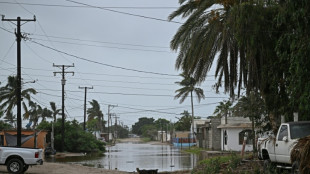 Little damage as Hurricane Polo sweeps over Mexico's Pacific coast

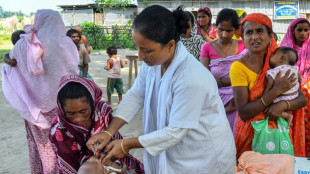
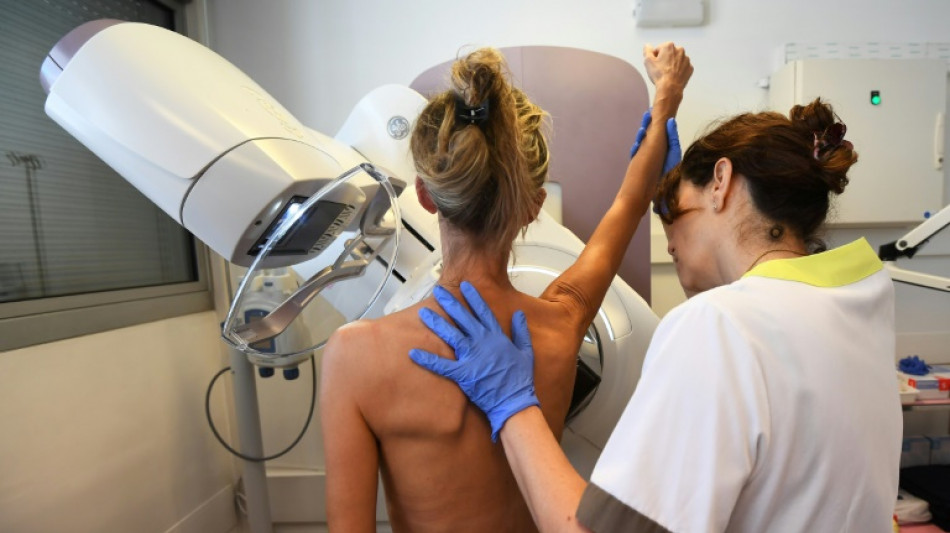
Breast cancer rates are rising sharply in the United States, driven by increases among younger women and Asian Americans, a study said Tuesday.
The biennial report by the American Cancer Society found the number of cases grew by one percent each year from 2012 to 2021, even as the overall death rate continued its historic trend of decline, falling 44 percent from 1989 to 2022.
Breast cancer is the second most common cancer diagnosed among US women, and the second leading cause of death from cancer, after lung cancer.
Approximately one-in-eight women in the US will be diagnosed with invasive breast cancer in their lifetime and one-in-43, or two percent, will die from the disease.
Over the past decade, the report said, breast cancer rates grew faster for women under the age of 50 than those older -- 1.4 percent annually versus 0.7 percent annually -- for reasons that aren't immediately clear.
By race, Asian American women had the most rapid increase in incidence followed by Hispanic, which the paper said "may be related in part to the influx of new immigrants, who have elevated breast cancer risk."
Overall, the breast cancer mortality rate fell 44 percent from 33 deaths per 100,000 women in 1989 to 19 deaths per 100,000 in 2022, resulting in around 517,900 averted deaths.
But despite decades of medical advancements in treatment and earlier detection, the benefits have been felt unevenly.
Mortality has remained unchanged since 1990 among Native Americans, while Black women experience 38 percent more deaths than white women despite five percent lower cases.
The paper said these findings highlighted "disadvantages in social determinants of health" and "longstanding systemic racism and has translated to less access to quality care across the cancer continuum."
For example, although Black women report getting mammograms more than White women, "they are more likely to have screening at lower resourced facilities and/or those that are not accredited by the American College of Radiology," the study said.
The authors recommended increasing racial diversity in clinical trials as well as community partnerships that boost access to high-quality screening among underserved women.
In April, an influential US medical body recommended women should get screened for breast cancer every other year starting from the age of 40.
The US Preventive Services Task Force (USPSTF) had previously said that women in their 40s should make an individual decision about when to start mammograms based on their health history and reserved its mandatory recommendation for people turning 50.
W.Moreno--AT