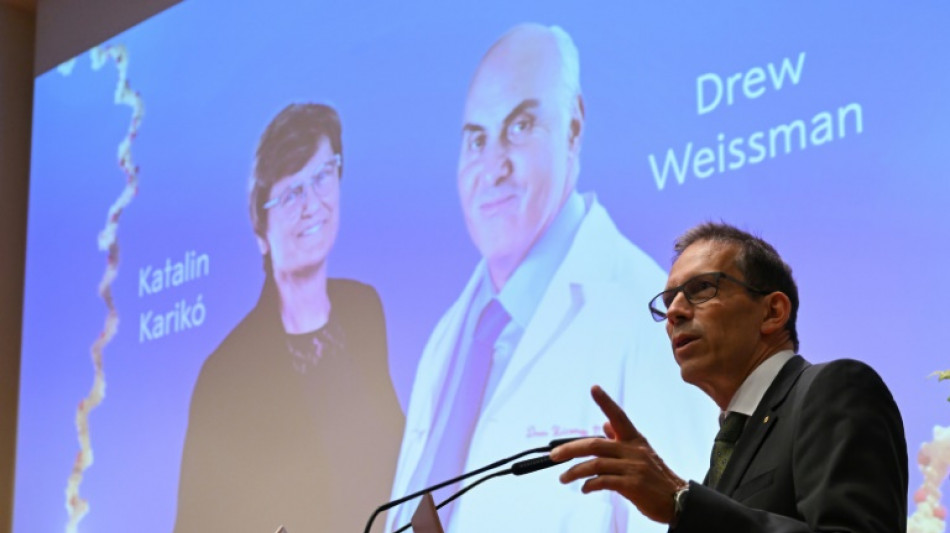
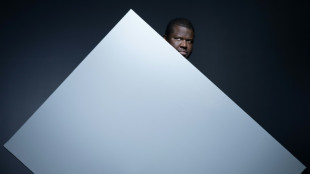
Drew Weissman, Nobel-winning mRNA pioneer / Photo: Jonathan NACKSTRAND - AFP

 Europe's surging inflation spreads gloom in stock markets

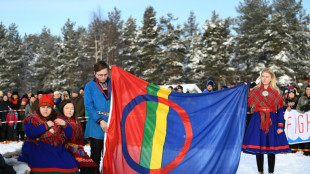 Truth commission demands compensation for Sweden's Sami people
 Japan win marathon penalty shootout to set up South Korea gold-medal clash

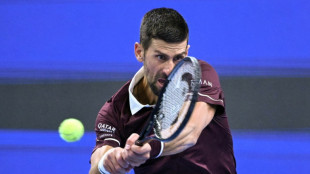 Djokovic grinds out opening-round win at China Open

 Northern Ireland police probe blockade of disputed parade
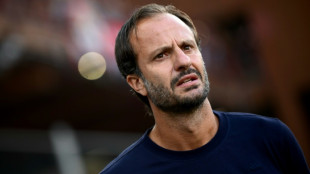
 UK PM Burnham reopens divisive debate on rejoining EU

 Man City future in doubt after guilty verdict

 'Do something,' begs Iranian woman after death sentence over protests

 China extends 52-year unbeaten record as Games organisers say sorry
 In Manchester, people say City scandal is 'shame for football'
 Stocks lacklustre as inflation data weighs on sentiment
 Israel-bound plane rerouted, pilots wounded in reported fight

 Truth commission on Sweden's Sami people seeks redress
 Energy costs spark inflation surges in France, Italy
 South Korea break China hearts to reach Asian Games football final

 Eala storms into Asian Games semi-finals to thrill adoring fans

 Turkey freezes ex-minister's assets as fund crisis grows

 What we know about the North Korean POW dispute

 Most equities rise after oil price plunge, US data in focus
 Polar oceans transformed as warming melts ice habitats: research

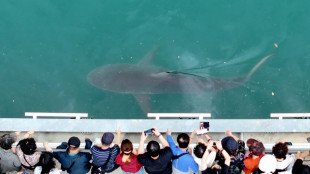 Lost shark becomes viral star in South Korea
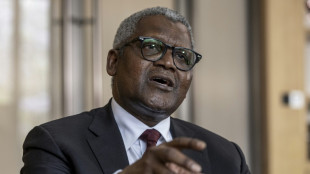 Dangote to launch $16bn refinery in Kenya
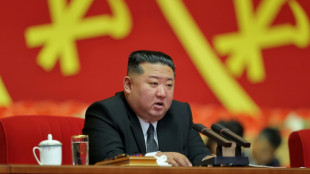 North Korean leader 'extremely obese': Seoul spy agency
 Yankees and pope-backed White Sox start MLB playoffs with wins

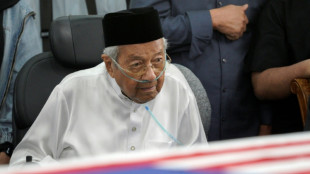 Malaysia's ex-PM Mahathir in hospital for observation
Drew Weissman's decades of research into mRNA technology paved the way for Covid-19 vaccines, finally earning a Nobel prize for the physician-scientist.
The 64-year-old University of Pennsylvania immunologist, who won the Nobel Medicine Prize along with long-time collaborator Katalin Kariko on Monday, is far from done.
His next quests include, among others, developing a vaccine against all future coronaviruses.
"There have been three (coronavirus) pandemics or epidemics in the past 20 years," Weissman told AFP recently, referring to the original SARS virus, MERS and Covid-19.
"You have to assume there's going to be more, and our idea was that we could wait for the next coronavirus epidemic or pandemic, and then spend a year and a half making a vaccine. Or we could make one now."
- Twin breakthroughs-
The world is now aware of the elegance of the mRNA (messenger ribonucleic acid) vaccines, that deliver genetic instructions to cells telling them to recreate the spike protein of the coronavirus, in order to trigger effective antibodies when they encounter the real thing.
But back when Weissman teamed up with Kariko in the 1990s, the research was considered a scientific dead-end, and working with DNA was considered a more promising avenue.
"We started working together in 1998, and that was without much funding and without much in the way of publications," he said.
In 2005, the pair found a way to alter synthetic RNA to stop it from causing a massive inflammatory response found in animal experiments.
"Just before our paper was published, I said 'Our phones are going to ring off the hook,'" he recalls.
"We sat there staring at our phones for five years, and they never rang!"
With a second big breakthrough in 2015, they found a new way to deliver the particles safely and effectively to their target cells, using a fatty coating called "lipid nanoparticles."
Both developments are part of the Pfizer and Moderna Covid-19 vaccines today.
- Helping people -
Weissman grew up in Lexington, Massachusetts.
His father and mother, both since retired, were an engineer and dental hygienist, respectively.
"When I was five years old, I was diagnosed as a type-one diabetic, and back then it was testing urine and taking insulin shots a few times a day," he recalled, and this motivated him to pursue science.
He was educated at Brandeis University and completed an MD-Phd program in immunology at Boston University.
As a young fellow at the National Institutes of Health, he worked for several years in Anthony Fauci's lab on HIV research, before finally arriving at his long-time home Penn.
Weissman was a practicing doctor until a few years ago, and says it brings him great joy that his invention has helped save millions of lives.
"I'm a clinician scientist, my dream since starting college and medical school was to make something that helps people. I think I can say that I've done that. So I am incredibly happy," he said.
Beyond vaccines, mRNA technology is also being heralded for its potential across medicine.
Weissman's team is working on using RNA to develop a single-injection gene therapy to overcome the defect that causes sickle cell anemia, a genetic blood disease that 200,000 babies are born with in Africa every year.
Significant technical challenges remain to ensure the treatment is able to correctly edit genes and is safe, but the researchers are hopeful.
Bone marrow transplant, an expensive treatment with serious risks, is currently the only cure.
B.Torres--AT