The fastest warming continent: Europe's deadly heatwaves / Photo: Tiziana FABI - AFP/File

 Turkey says news site closed for 'LGBTQ propaganda'
 Oil companies close in on Venezuela despite hurdles

 Turkey freezes ex-minister's assets as fund scandal grows

 Guardiola backs Man City after bombshell guilty verdicts

 G20 trade ministers open talks under strain of Trump tariffs

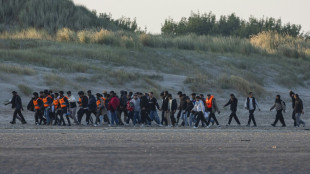 France in talks with UK to end 2025 migrant accord: ministry

 Europe's surging inflation spreads gloom in stock markets

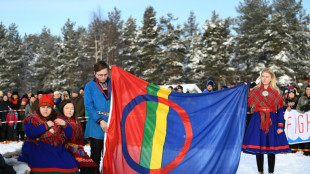 Truth commission demands compensation for Sweden's Sami people

 Japan win marathon penalty shootout to set up South Korea gold-medal clash

 Djokovic grinds out opening-round win at China Open

 Northern Ireland police probe blockade of disputed parade

 UK PM Burnham reopens divisive debate on rejoining EU

 Man City future in doubt after guilty verdict

 'Do something,' begs Iranian woman after death sentence over protests

 China extends 52-year unbeaten record as Games organisers say sorry
 In Manchester, people say City scandal is 'shame for football'
 Stocks lacklustre as inflation data weighs on sentiment

 Israel-bound plane rerouted, pilots wounded in reported fight

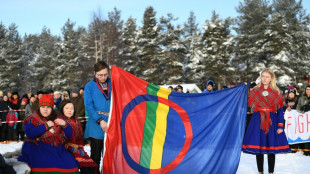 Truth commission on Sweden's Sami people seeks redress

 Energy costs spark inflation surges in France, Italy

 South Korea break China hearts to reach Asian Games football final

 Eala storms into Asian Games semi-finals to thrill adoring fans

 Turkey freezes ex-minister's assets as fund crisis grows

 What we know about the North Korean POW dispute

 Most equities rise after oil price plunge, US data in focus

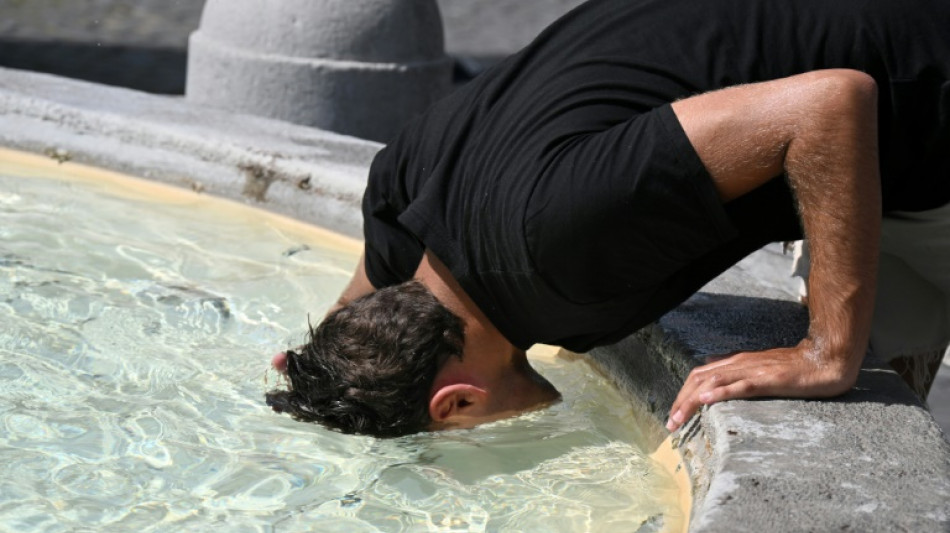
The sizzling temperatures experienced by several countries in southern Europe over the past days are part of a series of brutally hot, dry summers caused by climate change.
Spain has been sweltering under its fourth heatwave of the season, while Greece is struggling for the second time in a month against major wildfires.
Emissions of greenhouse gases are enabling increasingly intense and long-lasting heatwaves, especially in Europe, which the World Meteorological Organization says is the world's fastest warming continent.
AFP looks back at a series of heatwaves in Europe that have left tens of thousands of people dead.
- 2022: hottest ever -
The summer of 2022 was the hottest in Europe's recorded history, and caused the worst drought in centuries and devastating wildfires in France and Spain.
Two heatwaves, one in mid-June and one in July, also made it one of the deadliest summers in years, according to the Nature Medicine journal, which estimates the heat killed more than 61,000 people.
France recorded the biggest rise in heat compared to its previous summer average, with a jump of 2.43 degrees Celsius (36.37 Fahrenheit), Nature's figures showed.
The mercury topped 40C for the first time in the UK in July.
- 2021: blistering heat in Greece -
Between late July and early August, Greece endured the country's worst heatwave in over 30 years.
In Spain, temperatures hit 47C in parts of the south.
The resulting drought sparked large wildfires along the Mediterranean, from Turkey to Spain.
- 2019: Northern Europe swelters -
The summer of 2019 brought two heatwaves, one in late June and one in mid-July.
In France, temperatures hit an all-time record 46C in the southern town of Verargues.
In late July, northern Europe sizzled, with temperatures of 42.6C recorded at Lingen in northwestern Germany.
- 2018: drought drains the Danube -
The second half of July and beginning of August 2018 saw very high temperatures across much of Europe.
The Danube fell to its lowest level in 100 years in some areas, exposing World War II tanks in Serbia submerged since the conflict.
- 2017: months of mugginess -
Much of Europe, but especially the south, sweated in a series of heatwaves from late June well into August.
Spain experienced a record 47.3C on July 13 in the southern town of Montoro.
- 2015: back-to-back heatwaves -
It was heatwave after heatwave throughout the summer of 2015.
In Britain, roads melted and trains were delayed in what was at the time the hottest July on record.
- 2007: Greek forests ablaze -
Central and southern Europe were parched throughout June and July.
In Greece, the worst forest fires in half a century -- some believed to be the result of arson but others the product of heat and drought -- consumed four percent of the country's forests.
- 2003: 70,000 dead -
Britain, France, Italy, Spain and Portugal all experienced exceptional heat in the first half of August.
An EU study of 16 nations puts the number of excess deaths across the bloc during the heatwave as high as 70,000.
In France, most of the estimated 15,000-20,000 fatalities were elderly people left to fend for themselves. Since then the country has devised new systems to protect vulnerable people from the heat.
L.Adams--AT