Oregon turns on, tunes in to the power of magic mushrooms / Photo: Robyn Beck - AFP

 In Manchester, people say City scandal is 'shame for football'
 Stocks lacklustre as inflation data weighs on sentiment
 Israel-bound plane rerouted, pilots wounded in reported fight

 Truth commission on Sweden's Sami people seeks redress
 Energy costs spark inflation surges in France, Italy

 South Korea break China hearts to reach Asian Games football final

 Eala storms into Asian Games semi-finals to thrill adoring fans

 Turkey freezes ex-minister's assets as fund crisis grows

 What we know about the North Korean POW dispute

 Most equities rise after oil price plunge, US data in focus

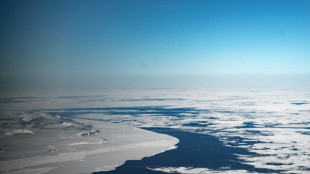 Polar oceans transformed as warming melts ice habitats: research

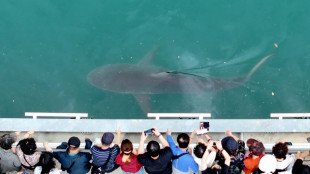 Lost shark becomes viral star in South Korea
 Dangote to launch $16bn refinery in Kenya
 North Korean leader 'extremely obese': Seoul spy agency
 Yankees and pope-backed White Sox start MLB playoffs with wins

 Malaysia's ex-PM Mahathir in hospital for observation

 'No limits': Marathon world record holder Sawe chasing history

 Countdown begins to biggest-ever Rugby World Cup
 Bangladesh women lose ground after quota reform

 Vietnam admits 'differing opinions' on Hanoi development

 Stocks temper gains as oil pares heavy losses, US data in focus

 New Zealand denies breaching climate commitments to EU

 Albert becomes youngest US scorer in 4-2 win over Chile
 Pirate island's plunging population shows Greece's demographic decline
 With elections ahead, Latvia's Russian-speakers reject Moscow's help

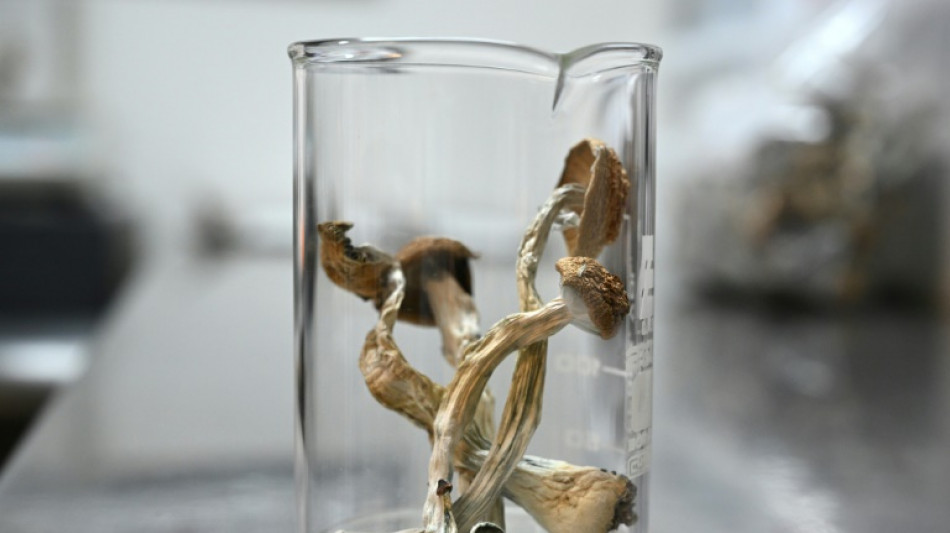
Tori Armbrust grows magic mushrooms.
Not secretly or furtively, but commercially. Because in the western US state of Oregon, it's legal.
Anywhere else in the United States "I would get in big trouble for this, 1,000 percent," she laughs.
From this year, licensed growers like Armbrust have been able to sell what the Aztecs called the "flesh of the gods" to centers offering psychedelic therapy sessions, a legalization that proponents say could offer real help to people struggling with psychological problems.
Hallucinogenic mushrooms have long been associated with America's counterculture, most closely with Timothy Leary, whose phrase "Turn on, tune in, drop out" helped define the 1960s.
After decades of being socially frowned upon, the active ingredient of such fungi, psilocybin, is now the subject of increasing research interest: a promising possible treatment for depression, addiction or post-traumatic stress.
Oregon, a rugged, rural state with a distinctly liberal streak, is defying a federal ban to allow people over the age of 21 access to magic mushrooms without a prescription, as long as they are ingested under the auspices of a certified facilitator.
A 'shroom trip under these circumstances lasts about six hours and must be followed by at least one -- non-trippy -- session of counselling.
- Tool -
Certification requires the completion of a 160-hour training course, and appeals to mental health professionals like Tyler Case, who paid around $10,000 for the qualification in the hope of being able to offer an alternative to patients with personality disorders that are often considered incurable.
Psilocybin is "a tool that can help people who... haven't found help anywhere else," the 44-year-old counsellor told AFP.
"We use powerful psychotropic medications all the time, do things that will alter the way people's brains function. Why not try this too?"
Scientists are still studying how psilocybin works, and little is known about its long-term use.
But research suggests that -- in common with other psychedelics such as LSD (acid) or MDMA (ecstasy) -- it increases neural connections, effectively re-formatting the brain and encouraging new ways of processing information that can help users resolve longstanding emotional or behavioral problems.
Tobias Shea thinks this re-formatting helped pull him out of a deep depression.
Two tours of Afghanistan with the US Army in which he lost comrades left Shea with debilitating anxiety that sometimes meant he was unable even to leave the house.
Psychotherapy and antidepressants did not work for him, so more than a decade before Oregon's legalization, he twice took mushrooms.
"My experience in both sessions involved visual hallucinations that resembled a colorful prism, like a rainbow that covered everything in my visual field," he said.
"Emotionally, I felt an abundant joy, and also an overwhelming sense of awe at the vastness and complexity of the universe, and wonder at how I was connected to everything around me."
Working with a facilitator, he "unpacked that scary content in my head" and was able to process it in a way that he is now comfortable with.
- 'Vulnerability' -
Such off-the-books use of mushrooms has long existed on the fringes of psychotherapy. But operating in grey areas left patients open to abuse.
Curbing bad behavior and establishing a legal framework is one of the main advantages of Oregon's move, says Elizabeth Nielson, a psychologist and founder of Fluence, one of the companies approved to train new supervisors.
In her workshops, trainers emphasize the "extreme vulnerability" of patients during their transcendental journeys.
Would-be facilitators are taught to intervene as little as possible so as not to influence their clients.
They must also agree beforehand which parts of the body can be touched, especially in cases where someone might be experiencing a bad trip.
While Oregon is out in front, the experiment in legalization is gaining ground elsewhere in the United States.
In November, Colorado voted to decriminalize hallucinogenic mushrooms and create "treatment centers." A dozen other states, including New York and California, are considering similar measures.
But beyond the therapeutic promises, there is another question: who will be able to afford such services?
The $3,500 sessions offered by Oregon's first licensed center, which has only just opened, are outrageous to some locals like Don, who runs a fungiculture shop in Portland.
"You can grow your own for $40," says the 49-year-old, who declined to give his last name.
"I feel that it's gonna be mainly towards the tourists."
E.Flores--AT