'He probably would've survived': Iran targeting hospitals in crackdown / Photo: Jack GUEZ - AFP

 Amaze Holdings (NYSE: AMZE) Executes Binding LOI to Acquire BullionFX | Alchemy, a Decentralized Gold-Backed Financial Ecosystem for Valued at US$155 Million
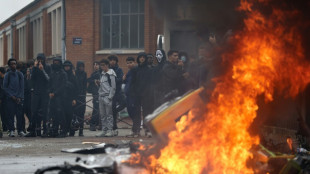 Clashes between French teens, police as school blockades intensify
 Stocks move sideways despite oil moving lower
 African leaders to gather in Egypt for business summit
 UK decides against charging foreign visitors for museums
 Dallaglio to sell England World Cup winners' medal
 Brazil come from behind to beat Australia 4-2 in friendly
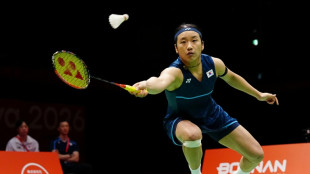 Ruthless An retains Asian Games badminton crown as Kunlavut triumphs

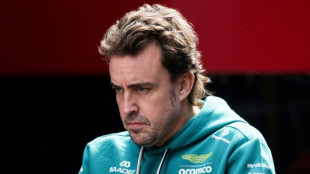 Alonso to stay with F1 team Aston Martin in 2027
 China badminton 'still strong' despite Asian Games slump
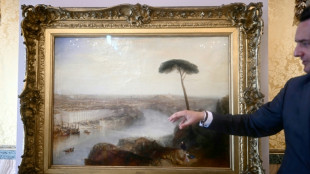 'Exceptional' Turner painting shown in Rome before sale
 European stocks climb as oil dips
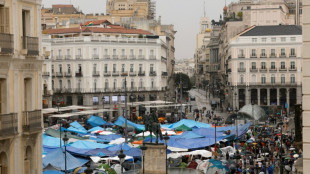 Spain aims to ban evictions until 2030 amid housing protests

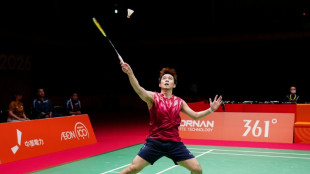 Kunlavut first Thai man to win Asian Games badminton singles gold
 French far right says antisemitism claims part of 'total war' to derail presidency bid
 'Gift from God': Rain brings relief from Indonesia toxic haze
 Ex-world snooker champion jailed for 7 years for child sex crimes
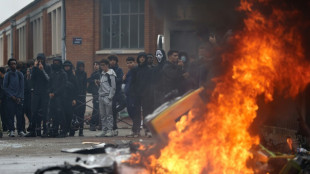 French teens clash with police as school blockades intensify
 FIFA accuses UEFA of 'misinformation campaign' in bid for World Cup papers
 Myanmar airstrike toll hits 50 as families gather dead
 STARTRADER Raises Lloyd's of London Client Fund Insurance to USD 30 Million in Aggregate
 North Korean DMZ landmine blasts 'violation of armistice': Seoul
 Sabalenka 'fresh' for first tournament since losing No.1 spot
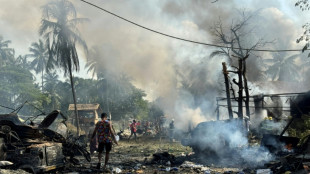 Myanmar airstrike death toll rises to 50: aid workers
 North Korean DMZ landmine blast 'violation of armistice'
Hospitals are no longer places of safety as Iran's crackdown on anti-government protests impacts all aspects of life, rights groups say, with authorities arresting wounded protesters and even the medics who treat them.
Activists accuse security forces of killing thousands of people and wounding more by directly firing on protests, often with birdshot that can leave metal pellets lodged in the body until hygienically extracted by a professional.
But rights groups say authorities have raided hospitals searching for people with wounds that suggest they were involved in protests. At least five doctors have meanwhile been arrested for treating them, according to the World Health Organisation.
Amnesty International said security forces had "arrested protesters receiving treatment in hospitals", adding it had received information that medical staff in central Isfahan province had been ordered to notify authorities about patients with injuries from gunshots and shotgun pellets.
The New York-based Center for Human Rights in Iran (CHRI) said it "has documented cases in which security forces raided hospitals to identify and arrest protesters injured during demonstrations".
In apparent response to the charges, Iran's health ministry this week urged those injured in the protests to go to hospital.
"Our advice to the public is that if they suffer any kind of injury, they should not try to treat it at home, and they should not worry about going to medical centres," the health ministry said, in a statement carried by state television.
- 'Raiding medical facilities' -
Sajad Rahimi, 36, from Iran's Gulf island of Qeshm, was badly wounded after security forces shot at him when he joined a protest in the southern province of Fars at the peak of the movement on January 9, according to Norway-based NGO Iran Human Rights.
But fearing he could be shot dead by security forces in a "coup de grace", he asked friends not to take him directly to hospital, said IHR, which has investigated this and several other cases and spoke to the man's brother.
Eventually, the family transferred him to hospital, but he died as a result of a deep wound caused by live ammunition and severe bleeding.
"The doctor said that if he had arrived at the hospital just ten minutes earlier, he would probably have survived," his brother told IHR.
The group said it had reports of "security forces raiding certain medical facilities and informal shelters for the wounded in order to arrest medical staff and volunteer first responders".
The Hengaw rights group, also based in Norway, highlighted the case of Dr Ali Reza Golchni, a physician from the city of Qazvin, northwest of Tehran, who it said had been arrested "for providing medical care to injured protesters".
- 'Grave violations' -
World Health Organisation director general Tedros Adhanom Ghebreyesus said he was "deeply concerned by multiple reports of health personnel and medical facilities in Iran being impacted by the recent insecurity, and prevented from delivering their essential services to people requiring care".
He said there were reports of "at least five doctors detained, while treating injured patients".
The World Medical Association (WMA) said it had received reports that security forces arrested injured protesters in both the Isfahan and the southwestern province of Chaharmahal-and-Bakhtiari.
"Hospital staff have also been instructed to report patients suffering gunfire injuries to security authorities, with non-compliance exposing them to prosecution and other reprisals," it said, citing information received by the WMA.
Hengaw also cited the case of Taher Malekshahi, a 12-year-old Kurdish-Iranian boy from Qorveh in western Iran who was severely injured after being shot in the face and eyes with pellet ammunition.
It said he lost one eye and suffered serious damage to the other, publishing a picture of his face with the boy's entire forehead pock-marked with pellet wounds.
It said while he was currently receiving intensive medical treatment in Tehran, "authorities have pressured his family to falsely claim he was wounded by 'terrorists' in exchange for state recognition as a war-disabled victim."
M.White--AT