One woman dies every 2 mins in pregnancy, childbirth: UN / Photo: ASHRAF SHAZLY - AFP/File

 Lula bans sports betting days ahead of Brazil's election

 Guatemala ensures survival of vulnerable 'fossil' fish

 Mancini finds positives in Italy loss, accepts fans' jeers

 Alcaraz helps Europe into Laver Cup lead

 Six missing after building collapses in historic Athens district

 Mbappe scores but suffers knee injury as Zidane gets debut France win

 Mancini's Italy return spoiled by Belgium defeat

 Rodri confident in Man City innocence despite reported charges

 Jay-Z rape accuser says she made 'false accusations'

 Senegal draw first match under Vieira and Nigeria survive scare

 Trump, Xi end summit long on pomp, but short on progress

 Russia not preparing for conflict with Europe, Putin says

 Trump's photo of Xi greeting carries signs of AI

 Six missing after building blast in historic Athens district

 Millions in US northeast brace for powerful storm

 Assefa seeks 'better than my best' at Berlin marathon

 US court refuses to overturn Pentagon ban on Anthropic

 Verstappen and Norris blame slow cars as Mercedes tops qualifying

 Crowds cheer pope in Paris after AI 'paradise of machines' warning

 Teen swimmer makes Games history as Thai, Chinese sprinters win gold

 Man City found guilty of 114 Premier League charges - reports

 Concerns over 'missing' UK explorer Ranulph Fiennes

 Suspected Paris killer of Argentine rugby star begs forgiveness

 Oil prices fall on cautious hopes for US-Iran progress

 Noskova, Muchova take Czech Republic into BJK Cup final

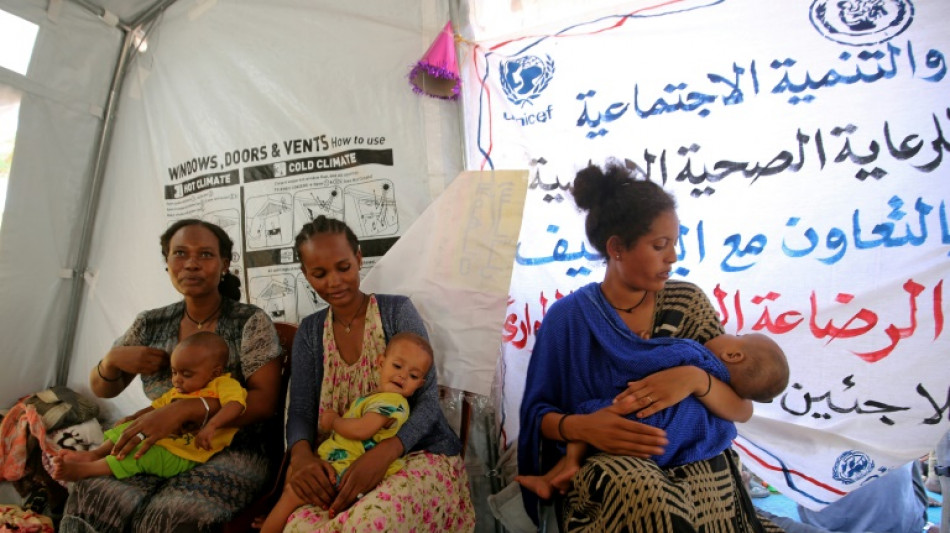
A woman dies every two minutes due to pregnancy or childbirth complications, despite maternal mortality rates dropping by a third in 20 years, the United Nations said Thursday.
Rates fell significantly between 2000 and 2015 but largely stagnated between 2016 and 2020 -- and in some regions have even reversed, the UN said.
The overall maternal mortality rate dropped by 34.3 percent over a 20-year period -- from 339 maternal deaths per 100,000 live births in 2000 to 223 maternal deaths in 2020, according to a report by the World Health Organization and other UN agencies.
Nonetheless, that means nearly 800 women died per day in 2020 -- or around one every two minutes.
Belarus recorded the biggest decline -- down 95.5 percent -- while Venezuela saw the highest increase. Between 2000 and 2015, the biggest rise was in the United States.
"While pregnancy should be a time of immense hope and a positive experience for all women, it is tragically still a shockingly dangerous experience for millions around the world," said WHO chief Tedros Adhanom Ghebreyesus.
"These new statistics reveal the urgent need to ensure every woman and girl has access to critical health services... and that they can fully exercise their reproductive rights."
The report found that between 2016 and 2020, maternal mortality rates dropped in only two of the eight UN regions: in Australia and New Zealand by 35 percent, and in Central and Southern Asia by 16 percent.
- 'Unconscionable' -
The rate went up in Europe and Northern America by 17 percent, and in Latin America and the Caribbean by 15 percent. Elsewhere, it stagnated.
The two European countries witnessing "significant increases" are Greece and Cyprus, the report's author Jenny Cresswell told journalists.
Maternal deaths remain largely concentrated in the world's poorest regions and in conflict-affected countries.
Around 70 percent of those deaths recorded in 2020 were in sub-Saharan Africa, where the rate is "136 times bigger" than in Australia and New Zealand, Cresswell said.
In Afghanistan, the Central African Republic, Chad, the Democratic Republic of Congo, Somalia, South Sudan, Sudan, Syria and Yemen -- all facing severe humanitarian crises -- rates were more than twice the global average.
Severe bleeding, infections, complications from unsafe abortions and underlying conditions such as HIV/AIDS are among the leading causes of death, the report said -- which are all largely preventable and treatable.
The WHO said it was "critical" that women had control over their reproductive health -- particularly about if and when to have children, so that they can plan and space childbearing to protect their health.
Natalia Kanem, head of the UN Population Fund, said the rate of women "needlessly" dying was "unconscionable".
"We can and must do better by urgently investing in family planning and filling the global shortage of 900,000 midwives," she said.
While the report covers data up to 2020, the WHO's Anshu Banerjee told journalists that the statistics since then look bleak, due to the Covid-19 pandemic and the economic crisis.
A.Anderson--AT