Trees could cut urban heatwave mortality by a third: study / Photo: Alberto PIZZOLI - AFP/File

 Black Sea drone attacks spell terror for Turkish sailors

 Canada judge to decide prison term for suicide poison seller

 Weinstein faces resentencing in New York for 2006 sex assault

 Outgoing UN chief makes climate push at New York summit
 AI risks, Iran war to take center stage at UN

 Badminton no.1 An tells dad to keep it down at Asian Games

 Runaway leader Antonelli eyeing third straight win

 Schoolgirl Yu, 13, fastest again in bid for third Asian Games gold
 Oil prices fall after Trump hails 'good' talks with Iran

 AI political ads warp reality ahead of US midterms

 Kenneth Branagh embraces action hero role -- to get in shape

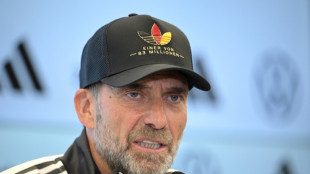 'New one' Klopp promises fresh approach as Germany reign begins

 Milne returns to New Zealand squad for India T20 series
 Warpaint London PLC Announces Interim Results

 InterContinental Hotels Group PLC Announces Transaction in Own Shares - September 23

 Is Pet Insurance Worth the Monthly Cost?

 US-led Americas coalition backs sanctions against crime groups

 'Star Wars' fans and art lovers line up for new Lucas museum
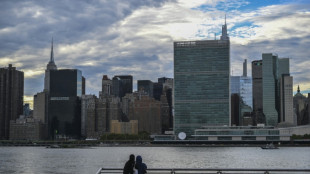
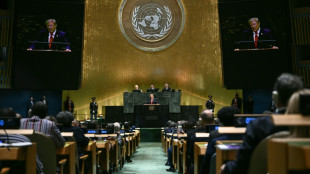 Trump renames AI 'super intelligence' as leaders jostle over dangers

 Oil prices retreat as markets welcome US-Iran talks

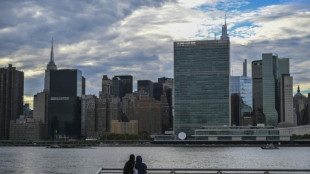 US refusing to give Sudan's de facto leader visa for UN: diplomatic sources, UN

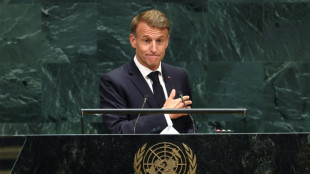 Macron urges world to choose UN over 'law of the jungle'

 All-rounder Jacks stars as England beat Sri Lanka in 1st ODI
 Man City peg back Bayern to start Women's Champions League
 Trump beats 'America first' drum at UN as allies tread carefully
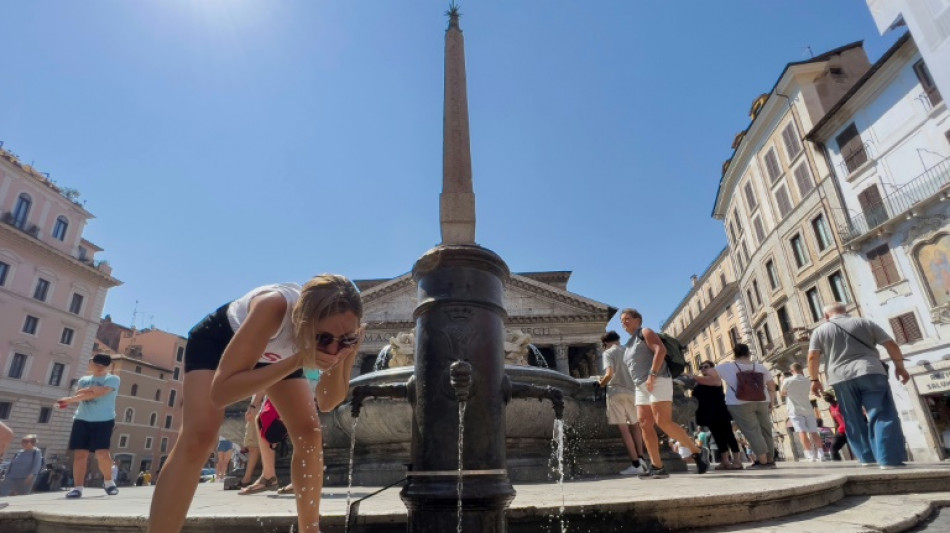
Planting more trees in urban areas to lower summertime temperatures could decrease deaths directly linked to hot weather and heatwaves by a third, researchers said Wednesday.
Modelling found that increasing tree cover to 30 percent would shave off 0.4 degrees Celsius (0.7 degrees Fahrenheit) locally, on average, during hot summer months, they reported in The Lancet.
Of the 6,700 premature deaths attributed to higher temperatures in 93 European cities during 2015, one third could have been prevented, according to the findings.
Currently, just under 15 percent of urban environments in Europe, on average, are covered by some kind of foliage.
The study is the first to project the number of premature deaths due to higher temperatures in cities that could be prevented by additional tree cover, said lead author Tamar Iungman, a researcher at the Barcelona Institute for Global Health.
"We already know that high temperatures in urban environments are associated with negative health outcomes, such as cardiorespiratory failure, hospital admission, and premature death," he said in a statement.
"Our goal is to inform local policy and decision-makers about the benefits of strategically integrating green infrastructure into urban planning in order to promote more sustainable, resilient and healthy urban environments."
Cities record higher temperatures than surrounding suburbs or countryside due to the so-called urban heat island effect.
This extra heat is caused primarily by a lack of vegetation, exhaust from air conditioning systems, along with dark-hued asphalt and building materials that absorb and trap warmth.
Climate change has already amplified the problem. Last year, Europe saw its hottest summer on record, and second warmest year.
- Health benefits -
Heatwaves around the world are seeing record-breaking peaks, and have increased in duration in recent decades.
Today, cold conditions still cause more deaths in Europe than hot weather. But climate models project that heat-related illness and death will present a bigger burden to health services within a decade.
"This is becoming increasingly urgent as Europe experiences more extreme temperature fluctuations caused by climate change," said Iungman.
The researchers estimated mortality rates for people over 20 years old between June and August 2015, accounting for 57 million inhabitants in total.
This data was analysed in relation to daily average city temperatures in two modelling scenarios.
The first compared the city temperature with and without urban heat islands. The second simulating temperature reduction if tree cover was increased to 30 percent.
On average, the temperature in cities was 1.5C warmer during summer 2015 than in the surrounding countryside. The city with the highest difference -- 4.1C -- was Cluj-Napoca, Romania.
Across all cities, 75 percent of the total population lived in areas at least one degree warmer, while 20 percent experienced temperatures at least two degrees higher.
Overall, cities with highest temperature-elated mortality rates were in southern and eastern Europe.
"This is an important piece of research," commented Laurence Wainwright, a lecturer at the University of Oxford's Smith School of Enterprise and the Environment.
"Urban tree planting -– on the right scale, in the right places, and under certain other conditions -– likely leads to a modest-yet-real reduction in heat-related deaths in many urban areas."
Earlier studies have shown that green spaces can have additional health benefits such as reducing cardiovascular disease, dementia and poor mental health, as well as improving cognitive functioning of children and the elderly.
A.O.Scott--AT