
IMF warns against 'costly' tax cuts to fight inflation / Photo: Stefani Reynolds - AFP

 Stock market optimism returns after tech selloff but Wall Street wobbles

 In Israel, Sydney attack casts shadow over Hanukkah

 Athletes to stay in pop-up cabins in the woods at Winter Olympics

 Decades after Bosman, football's transfer war rages on

 Nobel winner Machado suffered vertebra fracture leaving Venezuela

 Iran Nobel winner unwell after 'violent' arrest: supporters

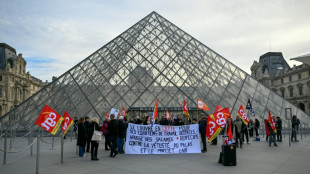 'Angry' Louvre workers' strike shuts out thousands of tourists

 Maresca committed to Chelsea despite outburst

 Showdown looms as EU-Mercosur deal nears finish line

 Wales captains Morgan and Lake sign for Gloucester

 Eurovision 2026 will feature 35 countries: organisers

 US-Ukrainian talks resume in Berlin with territorial stakes unresolved

 Driver behind Liverpool football parade 'horror' warned of long jail term

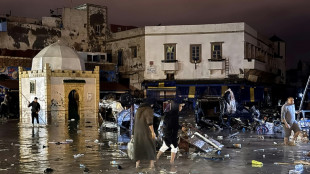 Flash flood kills dozens in Morocco town

 Australia to toughen gun laws as it mourns deadly Bondi attack

 Wales captain Morgan to join Gloucester

 Mariah Carey to headline Winter Olympics opening ceremony

 Louvre Museum closed as workers strike

 Japan's only two pandas to be sent back to China

 Australia to toughen gun laws after deadly Bondi shootings

 Australia defends record on antisemitism after Bondi Beach attack

 'Terrified' Sydney man misidentified as Bondi shooter

 EU-Mercosur trade deal faces bumpy ride to finish line

 Mbeumo faces double Cameroon challenge at AFCON

 England's Brook vows to rein it in after 'shocking' Ashes shots

| SCS | 0.12% | 16.14 | $ | |
| CMSC | -0.04% | 23.291 | $ | |
| RBGPF | -4.49% | 77.68 | $ | |
| RIO | -0.23% | 75.485 | $ | |
| RYCEF | 2.01% | 14.9 | $ | |
| VOD | 1.18% | 12.74 | $ | |
| NGG | 0.93% | 75.63 | $ | |
| BTI | 0.69% | 57.495 | $ | |
| GSK | 0.59% | 49.1 | $ | |
| BCE | 1.07% | 23.6465 | $ | |
| CMSD | 0.21% | 23.3 | $ | |
| RELX | 1.76% | 41.103 | $ | |
| BP | -0.54% | 35.07 | $ | |
| AZN | 1.51% | 91.21 | $ | |
| JRI | 0.1% | 13.58 | $ | |
| BCC | -1.84% | 75.125 | $ |
Soaring food and energy prices are raising the risk of social unrest, but attempting to tame costs through tax cuts, subsidies and price controls would be too costly, the IMF said Wednesday.
The fund's comments, in its latest Fiscal Monitor report, come as food prices have surged by half since 2019 while energy bills soared in the wake of Russia's invasion of Ukraine.
"Countries all around the world are facing more pressing and more painful trade offs," Vitor Gaspar, director of the International Monetary Fund's fiscal affairs department, told AFP as the crisis lender holds its annual meetings in Washington this week.
The combination of inflation along with food and energy price surges point to a cost-of-living crisis, he said.
Countries spent heavily to protect their economies during the pandemic, then faced supply chain issues as they emerged from Covid lockdowns.
Inflation soared further after Russia invaded Ukraine in February, with food and energy costs going through the roof, forcing central banks to raise interest rates aggressively.
"Households are struggling with elevated food and energy prices, raising the risk of social unrest," the IMF Fiscal Monitor report said.
But, it added, "fiscal policy trade-offs are increasingly difficult, especially for high-debt countries where responses to the Covid-19 pandemic exhausted their fiscal space."
- 'More generous' food aid -
As governments operate within tighter budgets, prioritizing policies and programs becomes vital, the report said, adding that key goals are ensuring access to affordable food and protecting low-income households from inflation.
There appears to be an "association between social unrest and episodes of spikes in food prices," while fuel prices are politically sensitive, IMF fiscal affairs department deputy director Paolo Mauro told reporters.
Countries have to be selective in giving support, he said, but the IMF recommends being "more generous" on food as a need for survival.
However, with long-lasting supply shocks and broad-based inflation, attempts to cap surging costs through price controls, subsidies or tax cuts will be "costly to the budget and ultimately ineffective," the IMF warned.
Officials should instead allow prices to adjust and provide targeted cash transfers to the most vulnerable.
Most countries should continue "tightening" their budgets, the report said.
Asked about Britain's controversial tax-slashing plans, which rocked the pound and raised the country's borrowing costs, Gaspar told reporters that monetary and fiscal policies should be consistent, with markets "looking for certainty in a very uncertain world."
"The expectation is that the announcement of a full-fledged fiscal plan on October 31 accompanied by a macroeconomic forecast... will contribute to give to the market the certainty that it seeks," he said.
Countries may need to raise added revenues and contain the growth of other expenditures as they prioritize policies, the IMF report said.
Fiscal costs can be offset by measures like taxes, it added, suggesting that a permanent tax on "windfall profits" from fossil fuel extraction based on excess gains "can be considered" if an adequate instrument is not already in place.
But the report cautioned that low-income countries will need more global humanitarian assistance and emergency financing given their limited resources, adding that the biggest challenge comes from the food price surge.
A.Taylor--AT