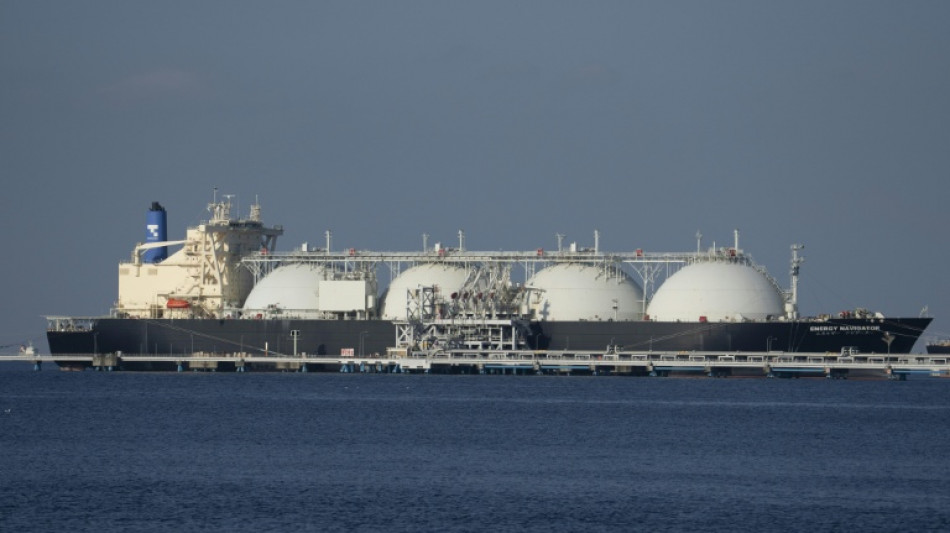
Could gas prices return to 2022 highs on US-Iran war? / Photo: Yuichi YAMAZAKI - AFP/File

 South Africa economy shrinks ahead of local elections

 CapTLX Expands Institutional-Oriented Platform for Access to U.S. Capital Markets
 UK's Prince George starts at Eton College
 French far right keeps guarded silence over AfD Germany triumph
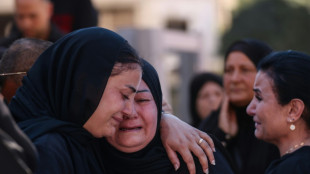
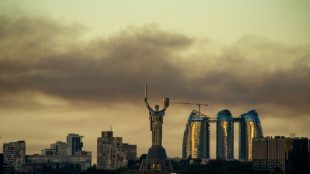 Russia-Ukraine talks possible this month, Zelensky says, as Moscow pounds Kyiv
 Turkish Airlines will be new Liverpool shirt sponsor in £300 mn deal
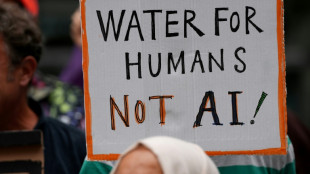 On London's Brick Lane, a data centre sparks local battle
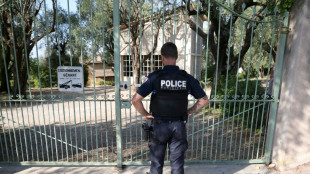
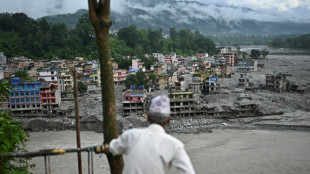 Nepal flood death toll rises as rescuers scour tunnels

 France's Mistral sees value soar with 3 bn euro cash infusion

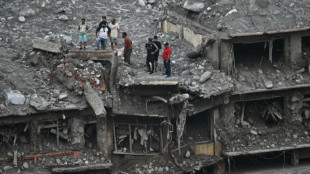 Nepal glacier saw exceptional heat before collapse caused deadly floods: researcher

 Ethiopia boosts drone production to fight rebels
 Yemen rebels hit Saudi Arabia with wave of strikes, wounding 73
 Nepalis mark a year since deadly protests that toppled government

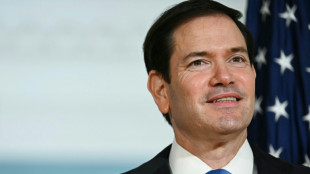 Rubio launches Latin America tour to cement US influence
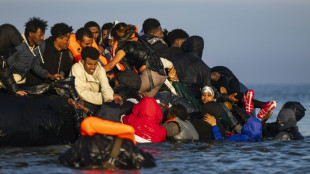 France tries 14 over deadliest Channel migrant crossing disaster
 Australia threatens hefty fines if big tech fails 'duty of care'
 Zverev romps into quarter-finals as Darderi downed
 Kauai on tornado watch as Hurricane Lowell nears Hawaiian islands
 Pakistan roll the dice in search of consolation win over England

 Yen extends gains as traders eye rate hike, tech rallies again
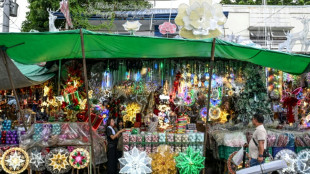 'The ber months': Christmas arrives early in the Philippines
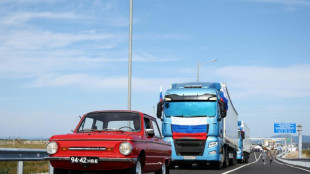 N. Korea calls Russia bridge a sign of tighter ties

 US sanctions threaten to crush Iranian students' dreams
 Former champ Gauff holds off Jovic to reach US Open quarter-finals

 Formation Metals Extends A-Zone 200 Metres to the South and Identifies a New Vein Set, Returning 2.53 g/t Au over 11.8 Metres and 1.41 g/t Au over 20.6 Metres at the Advanced N2 Property

European gas prices have more than doubled owing to the US-Iran war, just as Europe needs to replenish its reserves ahead of winter.
AFP examines the severity of the current spike, comparing it with energy price shocks in the wake of Russia's invasion of Ukraine.
- Why are reserves a key concern? -
Since the 2022 Russia invasion, the European Union has required member states to fill their gas reserves each year to at least 80 percent capacity by November 1 in order to mitigate the risk of shortages during the coldest months.
With less than two months to go before the deadline, current fill levels stand at an average of 67 percent, well below the 79-percent mark at the same time last year.
Much of the decline is owing to Germany, where stocks in Europe's biggest economy stand at just 53 percent of capacity compared to 71 percent this time last year.
This points to a surge in demand ahead of the current winter. Europe must also compete with Asia to secure liquefied natural gas (LNG) shipments.
"No comparably low storage level has been recorded at this time of year," said industry lobby group INES.
It cautioned that the "window for sufficient refill is closing".
The competition for gas stocks between European and Asian countries risks further driving up prices -- which have more than doubled to approach 75 euros per megawatt-hour owing to the conflict in the Middle East.
The war has effectively blocked the Strait of Hormuz, which before the conflict transported about one fifth of the world's LNG and oil.
- How high could prices go? -
The outlook for gas prices centre primarily on Qatar -- one of the world's largest LNG suppliers and whose exports rely on maritime shipping.
"If disruptions in the Strait of Hormuz persist through the winter, a price range of 100 to 150 euros per megawatt-hour is plausible," Julien Mathonniere at Energy Intelligence told AFP.
Another variable could be the climate, noted Jonathan Schroer, a strategist at UniCredit.
He said the El Nino weather phenomenon over the summer had made temperatures hotter in much of the world.
"This is significant because hotter weather creates more demand for power for cooling systems, driving higher electricity consumption, especially in Asia," which is home to major LNG importers China, India and Japan.
However, analysts consider it unlikely that there is a return to the 2022 price peaks -- when the European benchmark contract TTF briefly exceeded 300 euros per megawatt-hour.
- Why this crisis differs from 2022? -
In 2022, the shock stemmed from an EU policy decision to reduce reliance on Russian gas, which at the time provided 45 percent of the bloc's requirements, according to Schroer.
The sudden loss of these volumes forced European nations to urgently reorganise their supply chains and build new LNG terminals.
Today, the issue is less about a single supplier, rather more about tighter global supplies.
Europe is now more exposed to international competition for LNG cargoes than to a direct supply cutoff.
- Why the electricity sector appears less vulnerable? -
European countries are consuming less gas than in 2022 as they increasingly switch to renewables to generate electricity.
According to the European Commission, renewable energy accounted for nearly half of the EU's electricity generation in 2025.
Analysts believe this shift reduces the risk of a gas price spike translating into electricity bill hikes as severe as those seen in 2022, although costs are still expected to rise.
P.Hernandez--AT