-
 Pope urges French bishops to 'persevere' against clerical sex abuse
-
Bangkok floods send thousands into shelters after days of rain
-
 Decorated Indian badminton star calls Japan Asian Games 'very sad'
-
Assefa just misses women's world record at Berlin Marathon
-
 Asian Games chiefs say lessons learned over accommodation
-
Dramatic winners Zimbabwe to end five-year exile by tackling DR Congo

-
 UK's PM urges 'calm' as thousands seek to thwart flashpoint N.Ireland parade
-
Pope to meet victims of clerical sex abuse on France trip
-
 Thousands seek to thwart disputed N.Ireland flashpoint parade
-
How young is too young as child prodigies win big at Asian Games

-
 Swiss vote on what it means to be neutral
-
UK Labour party meets buoyed by Burnham but eager for concrete plans
-
 Pope to meet with victims of clerical sex abuse during France trip
-
Thousands protest ahead of Mexican president's report on missing students
-
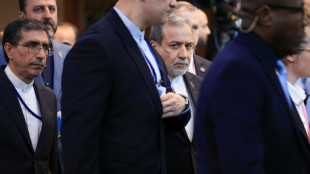 Iran stands firm on Hormuz plan after US rejection
-
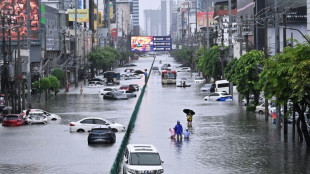
Bangkok floods force thousands into shelters
-
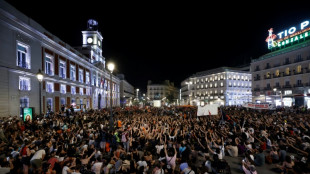 Madrid protest camp grows after eviction outrage
-
AI startup urges optimism from Europe despite safety fears

-
 Italy winemakers hail bumper harvest but cut output
-
'Godlike, invincible': Japan hails 11-year-old Games history-maker

-
 Kyiv shoppers feel the pinch from Russian strikes
-
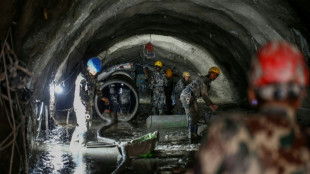
Nepal's hydropower ambitions face climate reality check
-
 Japanese anime actor fights TikTok over AI voice cloning
-
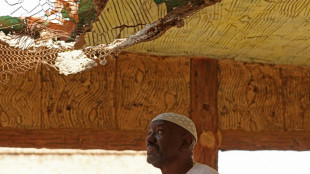
Power cuts, rubble: millions come home to find Sudan's capital unlivable
-
 Curtain falls on the romance of India's single-screen cinemas
-
Internationals keep Presidents Cup lead with late fightbacks
-
 Smells like teen spirit as US thrash Peru 4-1
-
Tuchel to 'keep pushing' England to reach Spain's level
-
 Cavy chaos: Hundreds attend New Zealand's biggest guinea pig show
-
Alcaraz saves match points to keep Europe ahead in Laver Cup

-
 Venezuela releases more political prisoners after opposition talks
-
Spain success driven by hunger to improve, says De La Fuente

-
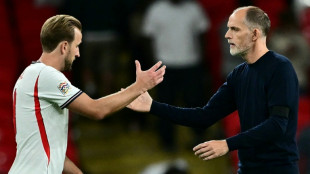 England's best 'for a long time' despite Spain defeat, says Kane
-
Lyon collapse at Stade Francais to suffer first Top 14 loss

-
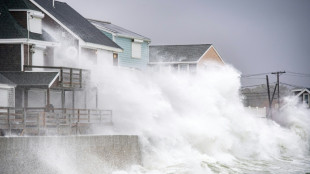 Powerful storm pummels northeast US with rain, high winds
-
Oyarzabal and Spain sink England again as Modric shines for Croatia

-
 Filmmaker Mike Leigh wins top prize at Spain festival with 'last film'
-
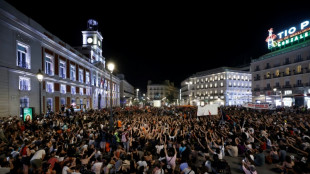
Housing protesters camp in central Madrid after mass demonstration
-
 Spain beat England in Nations League to extend unbeaten run
-
Louise Trotter expands her palette at Bottega Veneta

-
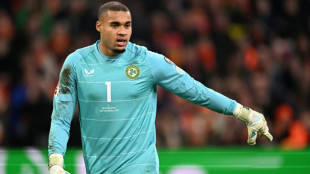 Ireland squad vote to play Israel tie despite Gaza unease
-
Pope prays at Lourdes after huge Paris mass

-
 Gutsy Vollering wins cycling road race world title
-
USA trims International lead after Presidents Cup four-balls
-
 Vollering wins cycling road race world title
-
Russia accuses Europe of blocking Ukraine talks, as strikes drag on
-
 Man City's meteoric rise clouded by dark shadow
-
'He said hello': Families pray with pope on Paris avenue

-
 Mbappe out for two weeks or more with knee injury say Real
-
Pope celebrates giant Paris mass, flies to Lourdes
US reports 'wave of strikes' on Iran as war returns
The United States launched a wave of strikes against Iran on Wednesday, after it reimposed a naval blockade in a return to war between the two foes.
Nearly a month after they signed a memorandum of understanding towards ending the Middle East war that began in February, the two sides resumed fighting with strikes on targets across the region.
Iran's Revolutionary Guards said they targeted the US Fifth Fleet in Bahrain, where the military said it had intercepted attacks against civilian targets, while Jordan's armed forces said they had downed three missiles from the Islamic republic.
US President Donald Trump warned, meanwhile, threatened to widen strikes next week to hit power plants and bridges unless Tehran returns to the negotiating table.
"Next week it gets really bad for them," he told Fox News. Despite a return to hostilities, mediated talks between the two sides have not formally ended.
At the heart of the resumption of hostilities has been the dispute over the Strait of Hormuz, a waterway that is crucial for global oil and gas flows.
- Agreement 'dismantled' -
Iran blockaded Hormuz after the US and Israel launched their massive attack on February 28, using it for leverage against its foes for months before briefly reopening it, and then again vowing it would be closed "until the US ends its aggression".
The US, in turn, has reimposed its own blockade of Iran's ports, though Trump has backed down on a planned 20 percent levy on ships using the strait.
Deputy Foreign Minister Kazem Gharibabadi said the renewed US blockade "has, in a way, dismantled the Islamabad memorandum", referring to the interim deal reached last month to halt hostilities and pursue peace talks.
Days after the return to war, US Central Command (CENTCOM) said it launched "a wave of strikes... designed to further degrade military capabilities Iranian forces have used to attack commercial shipping in the Strait of Hormuz."
Iranian state media reported explosions near the port city of Bandar Abbas, on the island of Qeshm and on Bandar Imam Khomeini. It later said fresh US strikes hit the southern port city of Bushehr, home to the country's only civilian nuclear plant.
In the capital Tehran, there was no sign of a return to conflict, with ordinary Iranians thronging cafes to watch the France-Spain World Cup semi-final in huge crowds, AFP journalists saw.
But in Kuwait, repeatedly targeted throughout the war, locals were anxious.
"Every day, I wake up wondering whether the situation will de-escalate or worsen," said Mustafa Mohamed, a 39-year-old Sudanese accountant in the Gulf country. "It has become difficult to feel at ease or plan anything because uncertainty grips everyone."
George Atef, a 38-year-old Egyptian civil servant in Kuwait, said: "What exhausts me most is not knowing when this situation will end -- the waiting itself has become draining."
- Trump scraps levy -
Since the war began, Iran has asserted its control over the Strait of Hormuz and opened fire on ships for taking routes it says are unauthorised.
"The retaliatory operations of the fighters will continue, and the Strait of Hormuz will remain closed until the United States ends its acts of aggression," the Guards said.
A Norwegian tanker was hit by an explosion caused by an unidentified device off the Omani coast early Tuesday, the crisis response company MTI Network said.
And Kuwait said one of its naval vessels was struck during an Iranian missile and drone barrage, wounding four crew members.
Trump meanwhile said he was scrapping a planned levy on ships passing through the Strait of Hormuz that he announced Monday, replacing the fee with trade deals with Gulf allies.
"I have decided to replace the 20% United States Reimbursement Fee with Trade and Investment Deals that the various Gulf States will be making into the United States," Trump said in a post on his Truth Social network.
Since last week, renewed US attacks have killed at least 30 people in Iran, government spokesman Fatemeh Mohajerani said.
Separately, the military announced that seven of its personnel were killed in Wednesday's strikes on the southeast.
Israeli Prime Minister Benjamin Netanyahu, whose country has not so far rejoined the war, warned Iranian leaders on Tuesday that Israel would deal a heavy blow if they launched an attack on his country.
Speaking from Dimona, a southern town widely believed to house Israel's undeclared nuclear arsenal, he told them: "Do not count on things remaining quiet if you attack us."
P.A.Mendoza--AT