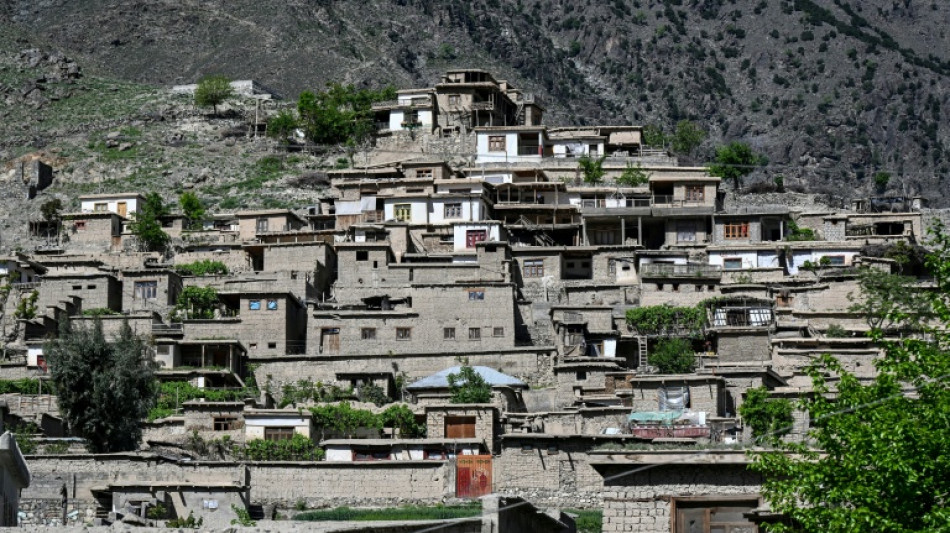
War with Pakistan halts school for Afghan border children / Photo: Wakil KOHSAR - AFP

 All contenders for UN chief receive veto: diplomat

 UN climate panel fails to agree date for global warming update: envoy

 Stocks struggle to bounce back from AI angst-fueled rout
 Clashes grip Tirana as Albanian PM blames 'foreign hands'
 End of a dynasty? Dodgers digest playoff drubbing
 Troyes sack sporting director Blanchard amid sexism claims
 Trump's new press secretary out after less than week

 EU backs Ukraine on Starlink, but can't fill gap
 Itauma coming to terms with Hrgovic heavyweight loss

 NBA tells sportsbooks to ban certain bets and parlays: report

 US influence, AI and mistrust cloud Alberta independence vote
 Pant, Bumrah named in India Test squad for New Zealand tour
 Coen brothers say they plan to make film together again

 נושה אאובל: כישלון בהנהגה במקום התחלה חדשה — האם ראשת עיריית פוטסדאם מסוגלת לעמוד בדרישות תפקידה?
 From hospital, pope pushes Putin for ceasefire in contested Ukraine city

 King of the Mountains Carapaz joins NSN Cycling team
 S.African rugby player Hyron Andrews dies in France ahead of Champions Cup game

 Maresca says Man City 'more together' after financial charges

 Zelensky drums up European backing as Trump ties slump

 Food crisis 'looming' after global energy shock, UN agriculture fund says

 'Sportswashing' or investment? Rwanda F1 stirs debate and doubts

 Stocks mostly bounce back after rout fuelled by AI angst
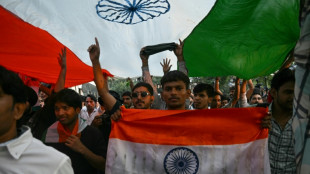
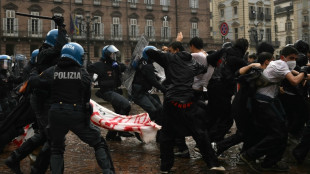 Italy braces for 'autumn of discontent' as students protest

 Flick confirms return of Barcelona duo Raphinha, De Jong
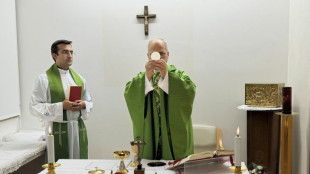 Pope celebrates mass in hospital after cancer operation

There are no children in the Afghan border village of Barikot, where the school has been smashed by shells and the playground sits deserted after weeks of war with Pakistan.
Almost all of the 8,000 residents fled after the conflict erupted in late February, but AFP journalists travelled to the remote area of the Hindu Kush just after the road to Barikot reopened this week.
Ruhollah Khpalwak, a shopkeeper whose store was destroyed, stood in the school science lab that was littered with broken glass.
"This is the school where I studied. I feel really sad," said the 23-year-old.
The site had welcomed pupils from primary through to high school, but the complex had extensive damage that residents attributed to Pakistani fire.
Dust covered the abandoned books, while outdated schedules hung on the walls.
The Barikot school is one of 22 in need of urgent reconstruction in Afghanistan's northeastern Kunar province, according to the United Nations Office for the Coordination of Humanitarian Affairs (OCHA).
About 12,000 students displaced or affected by the war need safe spaces to learn or catch up on classes in Afghanistan, OCHA said in a report this month.
Along Barikot's high street, shops were shut, and some had been reduced to rubble.
Hundreds of civilians were killed in Afghanistan along the border and elsewhere in the country, according to the UN, before China brokered talks that largely halted fighting.
Pakistan's military did not respond to AFP's request to comment on its troops hitting Barikot, including the school and a medical centre.
Islamabad accuses Afghanistan of harbouring militants from the Pakistani Taliban, which has carried out deadly attacks in Pakistan.
Afghan officials deny the allegation. Asked whether such militants were present in Barikot, several residents, including shopkeeper Khpalwak, told AFP they did not know.
Faridoon Habibi, a pharmacist at the village hospital, said the situation "became very difficult" and staff were moved several kilometres (miles) away for their safety.
"This hospital was like my home," the 32-year-old said at the facility, which remains closed after being damaged.
The pharmacist referred to those across the border in Pakistan as brothers; the Pashtun communities have been divided for decades by a frontier drawn during the British colonial era.
Barikot residents blamed Islamabad -- not their neighbours -- for the violence.
- 'In dirt and sand' -
More than 94,000 Afghans have been displaced by the war, OCHA figures show, more than a quarter of them in Kunar province.
Thousands of them have settled along the banks of the Kunar River, living in makeshift tents made with UN tarpaulins, hessian sacks or pieces of plastic tied to tree branches.
It takes more than an hour to collect water from the nearest well because the river water is not drinkable.
Asmatullah Malangzay, a displaced computer technician, said life was tough in the camp.
"Our women have faced many problems," said the 26-year-old, who lives in a tent with his wife and three children.
"It's very difficult for them, because we don't have a proper toilet system here. We don't have enough water or a place for bathing," he told AFP.
Malangzay and his family had a rug on the floor, a few cushions and a gas stove.
Maisam Shafiey, spokesperson for the Norwegian Refugee Council, which supports displaced Afghans, said the situation was "dire".
"Their urgent needs are shelter, WASH (water, sanitation and hygiene) services, health services and other essential services," Shafiey told AFP.
Mohammad Nabi Gujar, 40, a displaced father of nine, said he was "upset because our children have been deprived of school".
The schools are already full in Marawara village, where the camp is located, and in the provincial capital Asadabad, said Kunar's information chief Najibullah Hanif.
Provincial authorities are trying to find solutions, Hanif told AFP, including transferring families to more organised camps that were set up for survivors of a devastating earthquake last year.
Mohammad Amin Shakir, 40, was a primary school principal before being displaced to a tiny tent.
"It makes me cry, those students who were busy with their studies," said Shakir, whose school for 200 pupils was shut.
"They are roaming here in dirt and sand. They are completely deprived of education here," he added.
"This is their life here: in tents."
H.Gonzales--AT